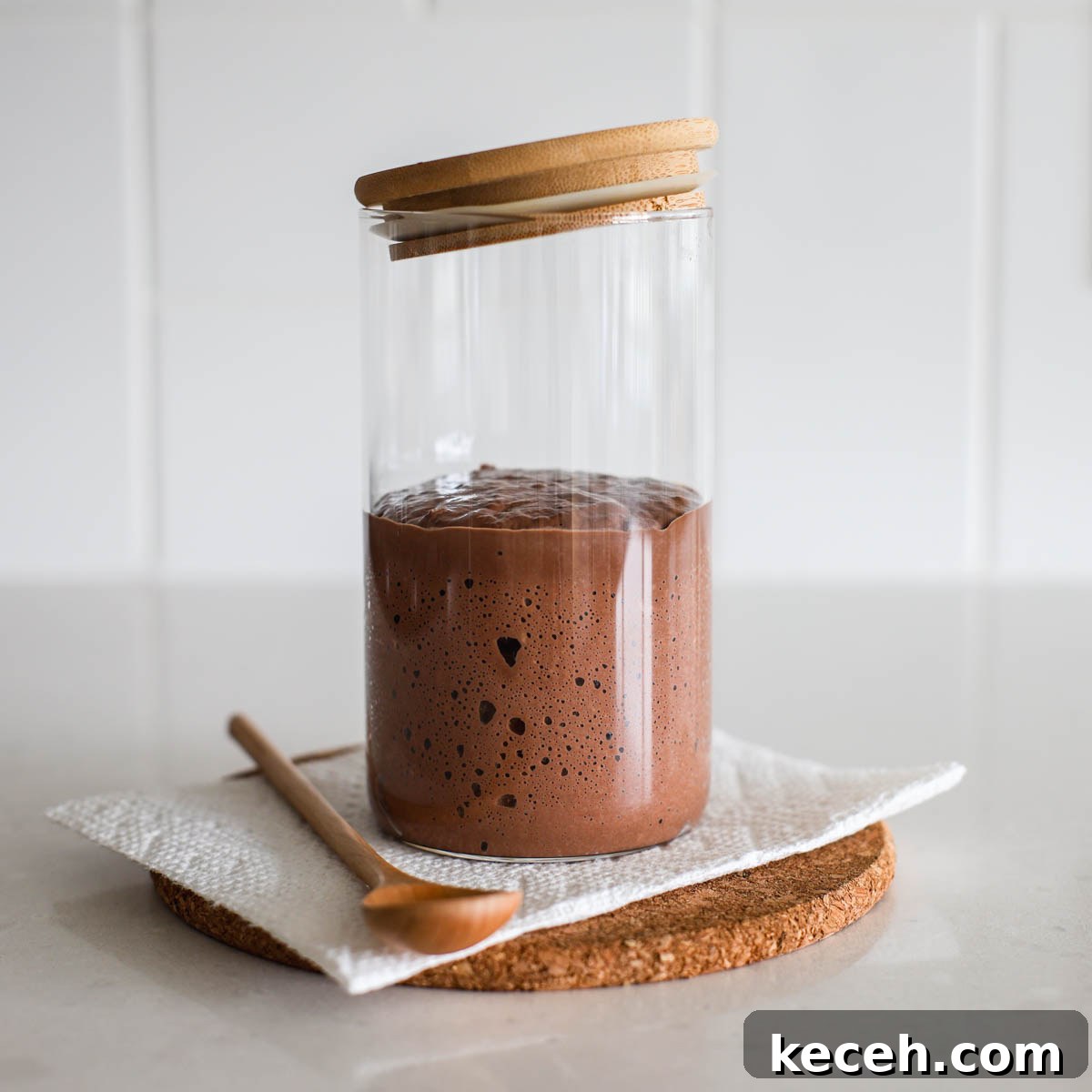
Sweet and bitter, made with raw cacao powder and white flour, a chocolate sourdough starter brings deeper cocoa notes to whole-grain loaves and elevates chocolate discard recipes with a rich, nuanced flavor.
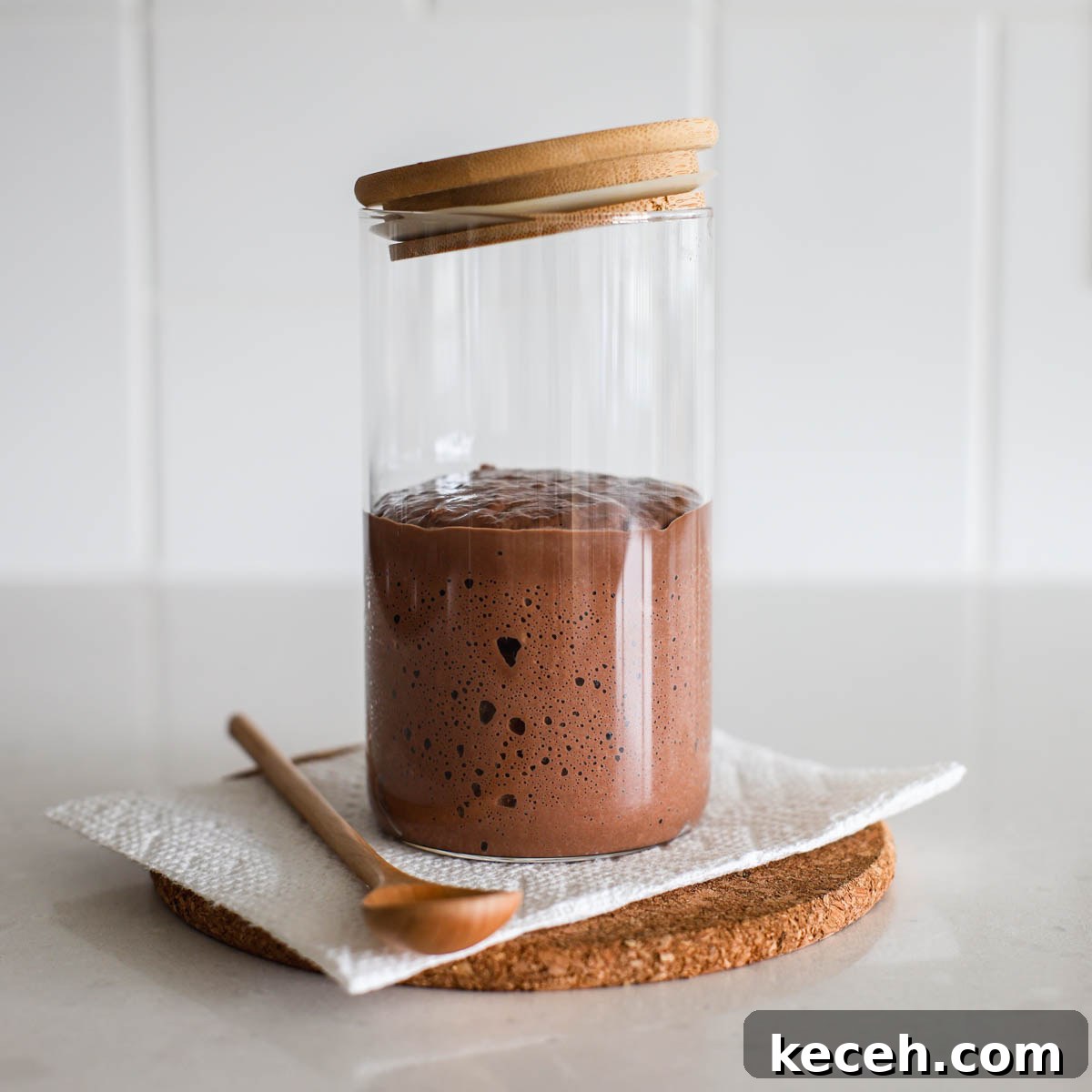
If you don’t yet have a wild starter, you can follow a step-by-step method to create one using whole wheat and white flour before trying this cacao variation.
What is a Chocolate Starter
A chocolate sourdough starter is simply a wild starter that includes raw cacao powder in its feed. Adding cacao introduces distinct flavor compounds and, because raw cacao can contain beneficial lactic acid bacteria, it can impart subtle complexity to the ferment.
Vanessa Kimbell mentions in Sourdough School that cacao beans, traditionally fermented in warm, humid conditions, host certain lactic acid bacteria that contribute to flavor. When you use raw (unroasted) cacao powder, some of those microorganisms and their flavor influences may transfer to your starter.
This starter recipe uses a small amount of sugar (about half the weight of the cacao) to support yeast activity, encouraging steady fermentation and building a robust culture. If you want a new and bold profile for your sourdough baking, a cacao starter is a fun experiment that can transform ordinary loaves and chocolate-based bakes.
Ingredients
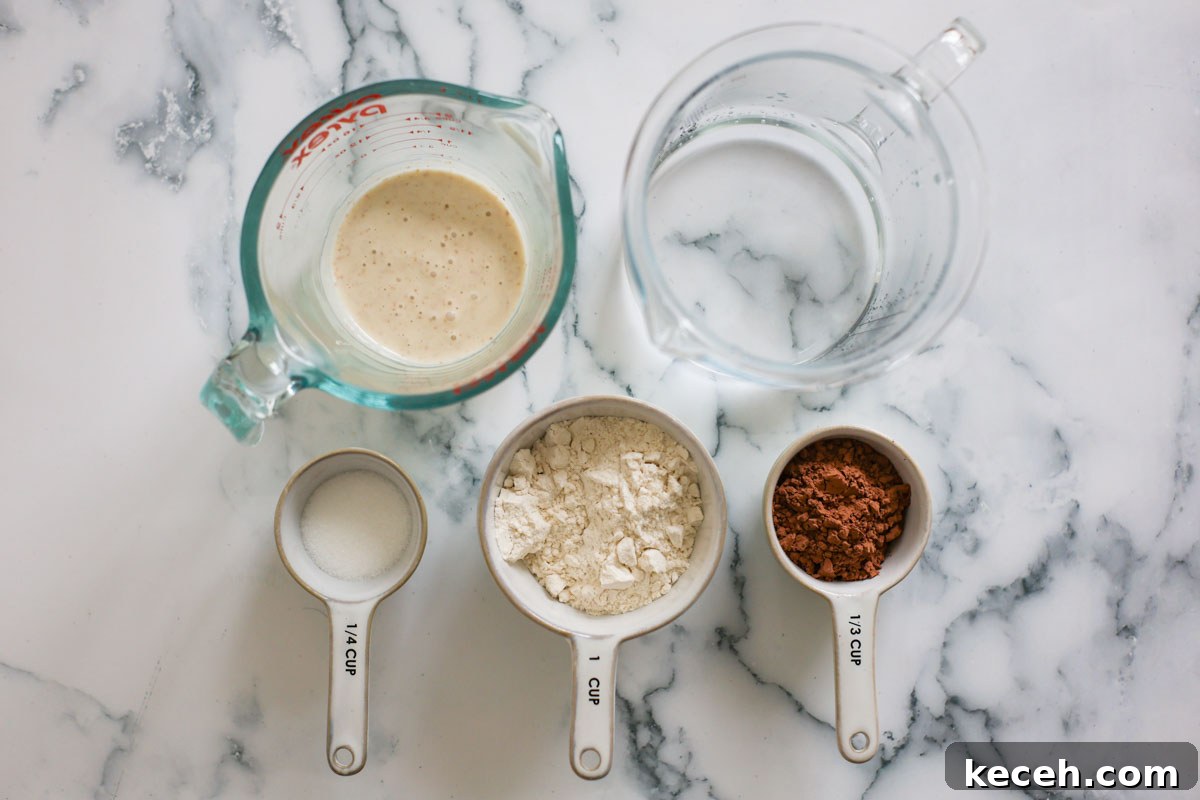
Sourdough starter. Begin with an active, established starter to create a cacao starter.
Raw cacao powder. Use raw (unroasted) cacao powder rather than roasted cocoa if you want to preserve any native fermentation-related bacteria. Roasting typically occurs between 250°F and 350°F (121°C–177°C) for 30–90 minutes, which reduces or eliminates those bacteria. Roasted cacao still adds delicious chocolate flavor, but it won’t provide the same microbial contribution as raw cacao.
This recipe also calls for sugar (granulated, caster, or raw cane sugar), white flour (or your usual feed flour), and water. Avoid non-nutritive sweeteners like monk fruit or erythritol.
How to Make a Chocolate Sourdough Starter
Start with a well-established sourdough starter—ideally at least two months old and reliable. A mature starter typically peaks 4–6 hours after feeding and has been used successfully in several bakes.
Tip: Keep only a portion of your regular starter for this conversion. Maintain a backup of your original starter so you can revert if needed.
Use either fed starter after it peaks or discard from recent feedings. In a clean jar, combine the sourdough starter with water and stir until the starter dissolves into the liquid. Add raw cacao powder, flour, and sugar, and mix thoroughly—just as you would when feeding a regular starter.
Make sure the cacao is lump-free. Raw cacao can clump if stored poorly; if needed, pass it through a fine mesh to remove lumps before mixing.
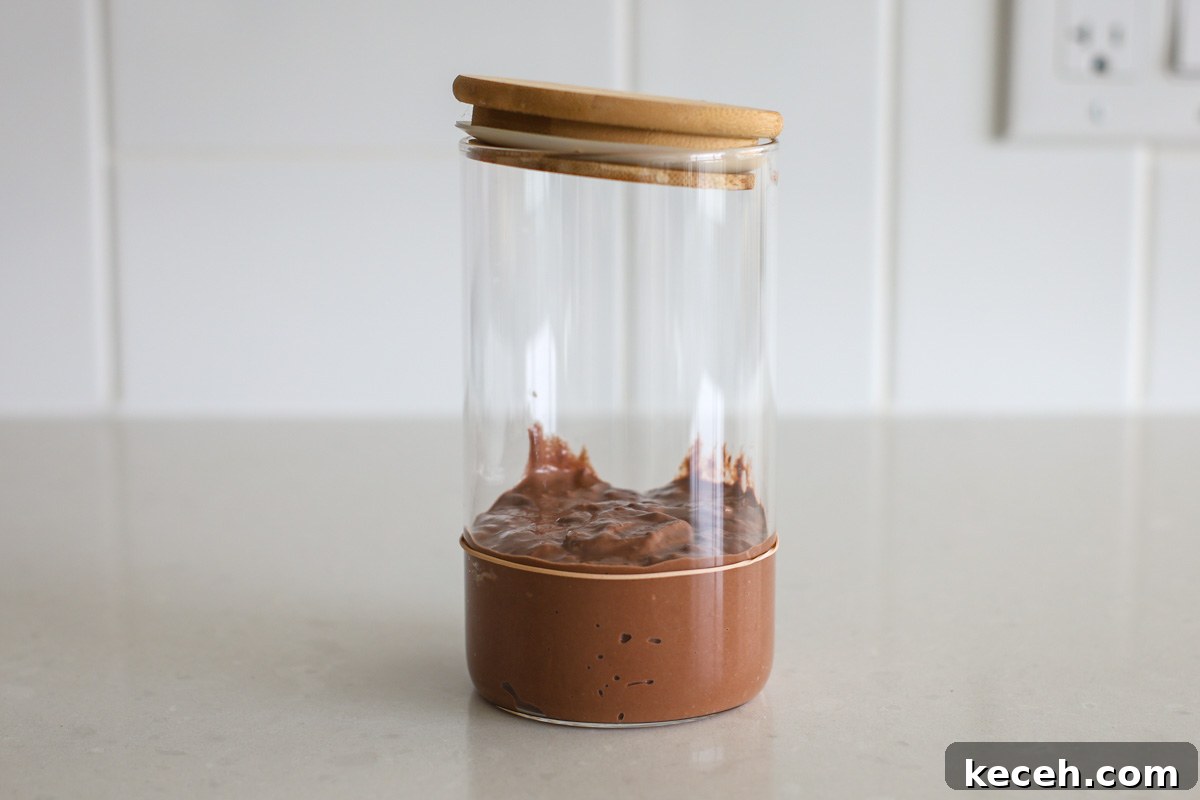
Cover the jar and leave it at room temperature. Mark the starting level with a rubber band to monitor rise. Because cacao absorbs more water than flour, the mixture may feel thicker than a typical starter feed.
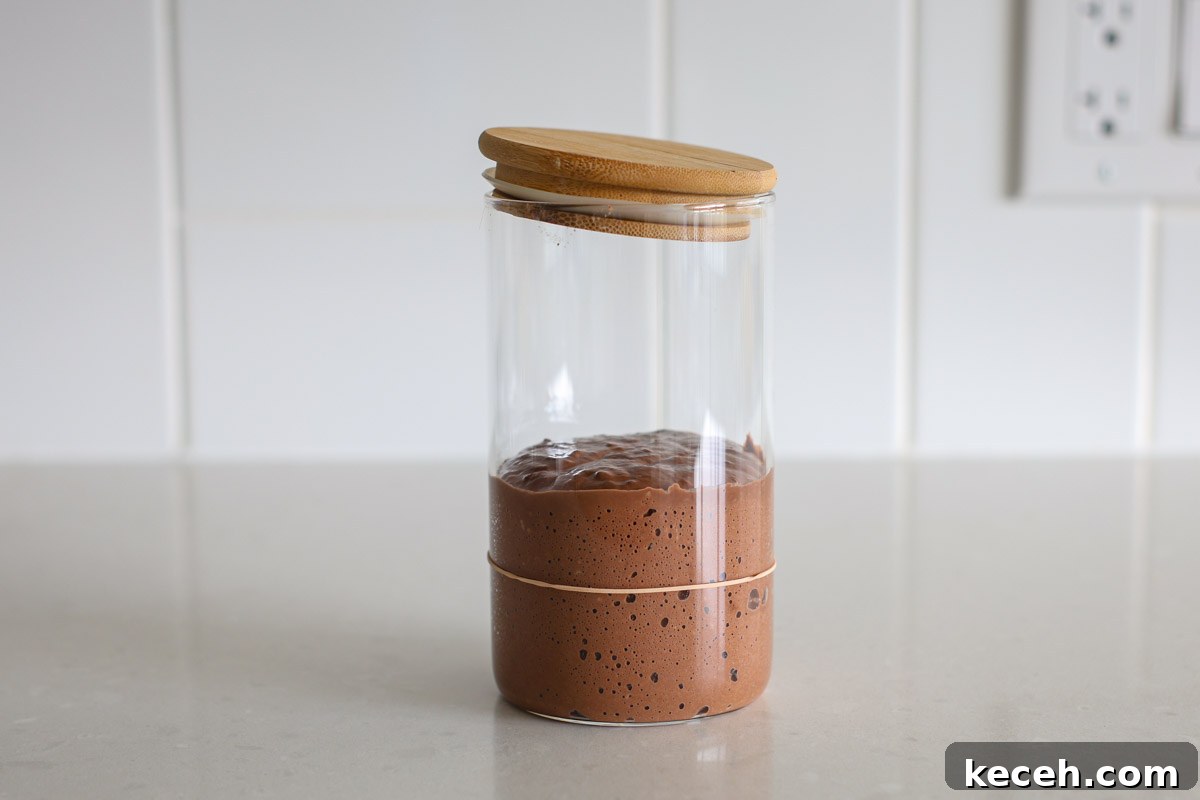
How to Maintain a Cacao Starter
You can prepare a cacao starter for a single recipe or maintain it as an ongoing culture.
Single use: Make the cacao starter when required, use it in your recipe, and discard the remainder rather than maintaining a separate culture.
Ongoing starter: Treat it like any other starter. Feed daily at room temperature or store in the refrigerator and feed once a week if you bake less often.
For continued maintenance, a useful feeding ratio is 1:2:2 (starter:water:cocoa-flour mix), where the cocoa-flour mix combines 80% white bread flour and 20% raw cacao by weight. Adjust ratios to suit your schedule and starter activity.
You can take the starter straight from the fridge, feed it, wait for it to peak, and then return it to cold storage. Properly refreshed, it will remain usable for several days.
Expert Tips
You don’t need whole wheat or rye to feed this starter—white flour works well with raw cacao.
Don’t convert your entire starter into a cacao version; always keep a regular starter backup. Drying a portion of your starter is an easy way to create a compact, long-term reserve.
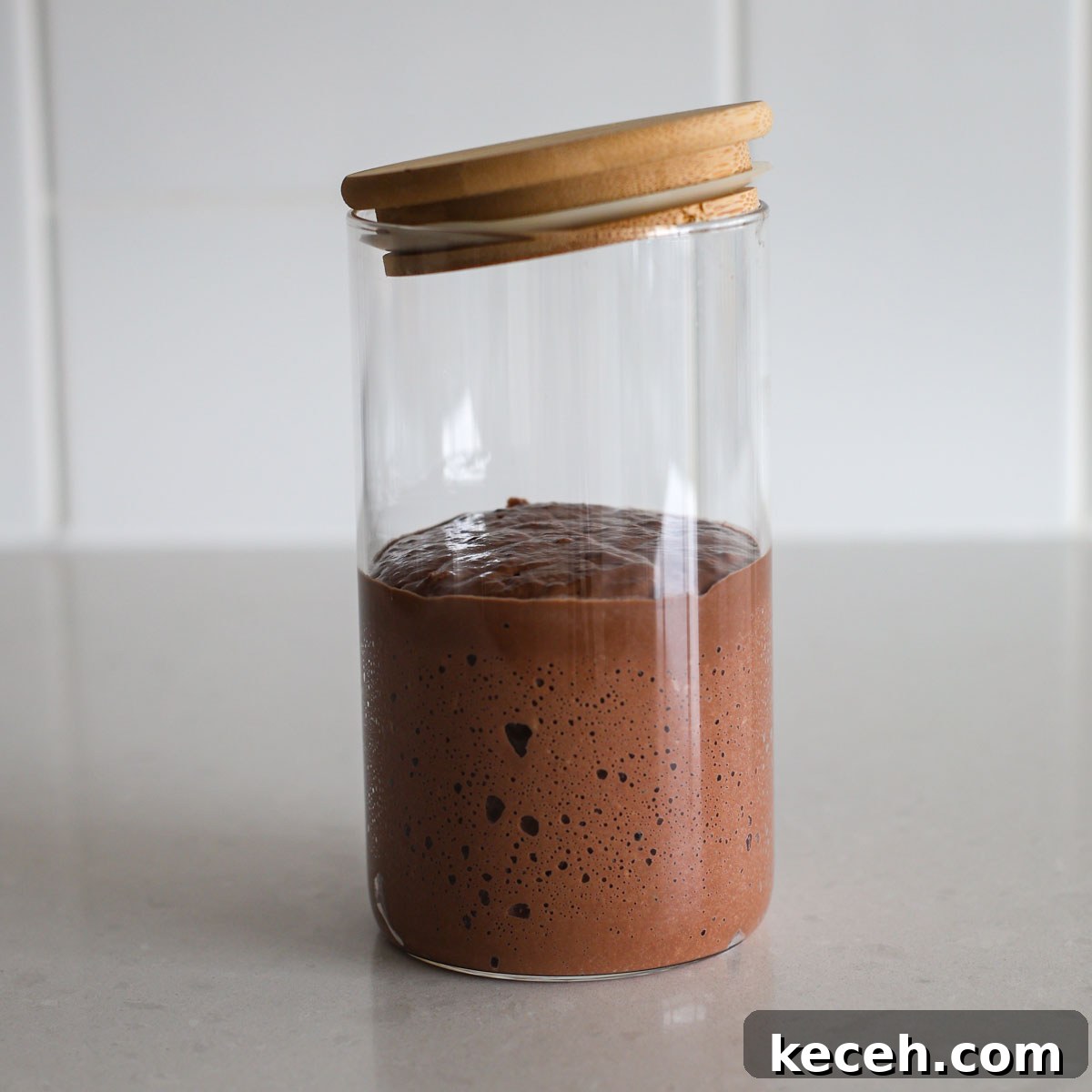
Where to use
A chocolate sourdough starter works well in many recipes: chocolate sourdough loaves, muffins, cakes, or any bake that benefits from a subtle cocoa character. It pairs especially well with chocolate, coffee, and whole-grain flavors but isn’t essential for success—wheat-only starters still bake excellent bread.
If you keep the cacao starter, you can also use the discard in recipes. Chocolate sourdough cake and chocolate sourdough muffins are great options that highlight the starter’s flavor.
Have you tried making a Chocolate Sourdough Starter? Please leave a star rating in the recipe card below — I’d love to hear how it went!
📖 Recipe
Sourdough Chocolate Starter
Tatiana Kamakura
Pin Recipe
Save
Equipment
-
1 Clean Jar
Ingredients
- 50 g sourdough starter
- 80 g white flour (all-purpose or bread flour)
- 20 g raw cacao powder
- 100 g water
- 10 g sugar
Instructions
-
Begin with an established starter (at least two months old) that reliably peaks 4–6 hours after feeding and has been used in successful bakes. Reserve only a portion to convert so you retain a backup of your regular starter.
-
In a clean jar, combine the starter and water, stirring until the starter dissolves into the liquid.
-
Add raw cacao powder, flour, and sugar. Mix thoroughly until fully combined, similar to a regular feeding.
-
Cover the jar and mark the starting level with a rubber band. Leave at room temperature and allow the starter to rise and peak.
-
Once the starter reaches its peak, it’s ready to use or to be fed again according to your maintenance plan.
Video
Notes
About flour. White flour is sufficient for feeding this starter—you don’t need whole wheat or rye unless you prefer those flavors.
About sugar. Use cane sugar (granulated, caster, or raw organic). Avoid non-nutritive sweeteners.
Flour-to-cacao ratio. A typical mix for feeding is 80% flour to 20% raw cacao; together they should equal the weight of the water added.