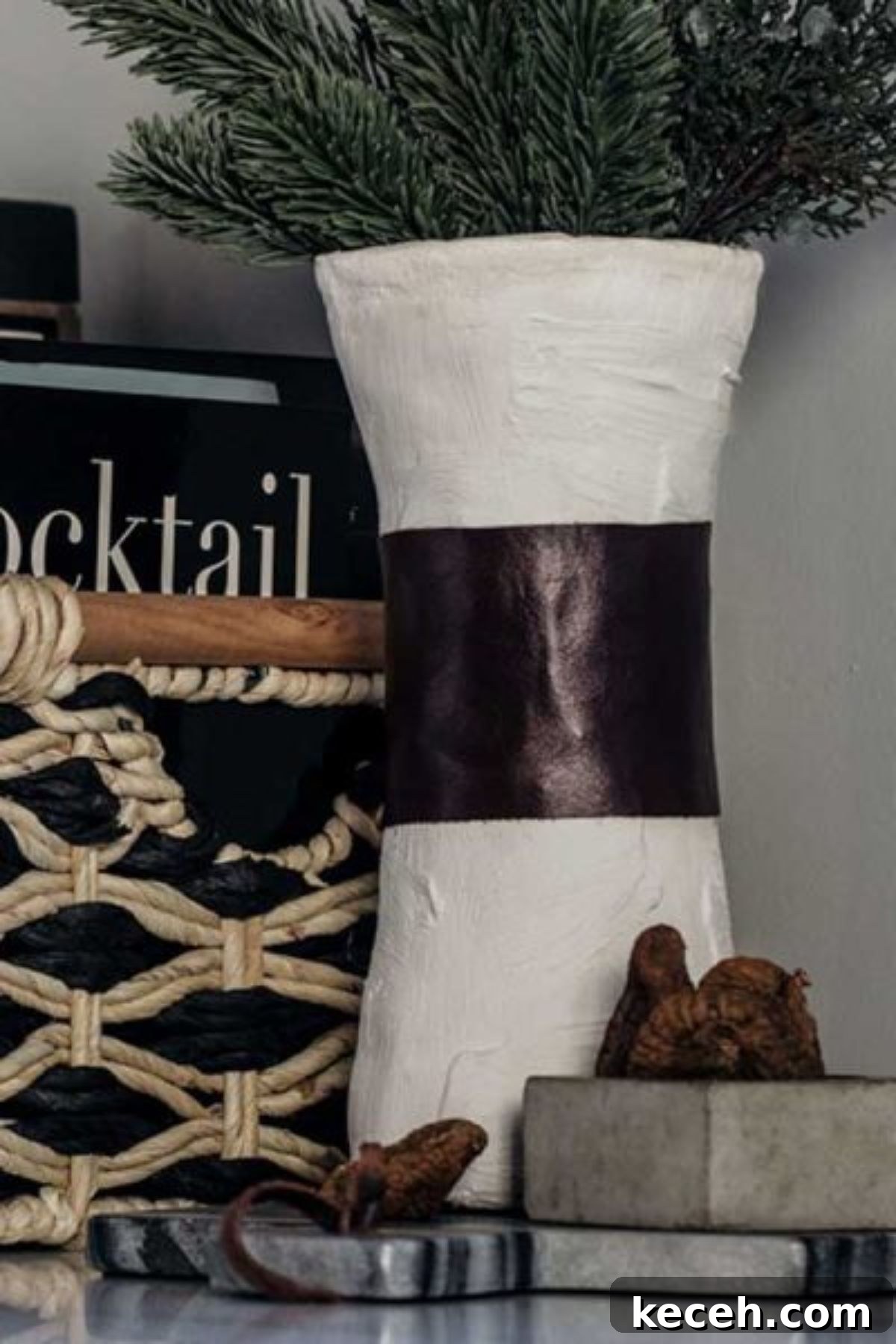
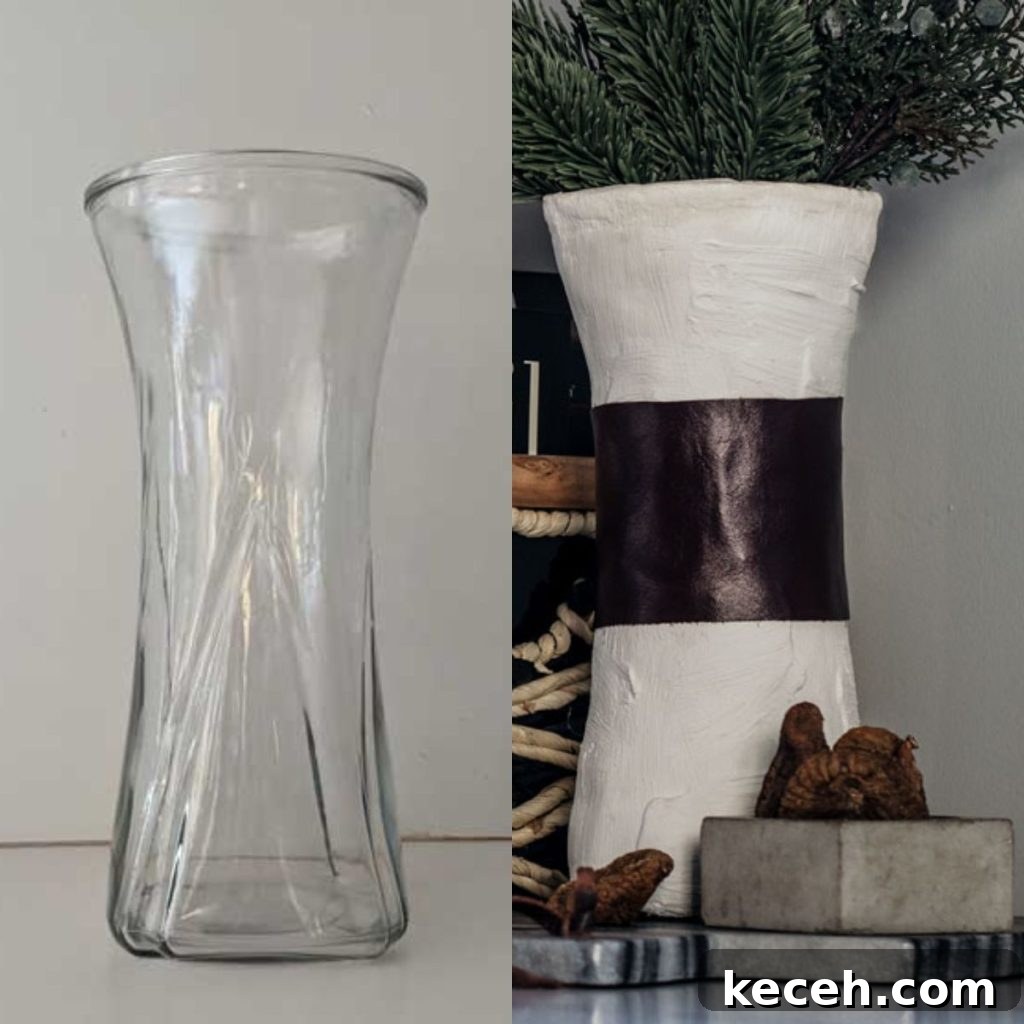
Sending flowers is a thoughtful gesture, but the clear glass vase that comes with them often feels bland—or worse, unattractive. Rather than toss it, you can upcycle a basic florist vase into a stylish faux pottery piece with a few inexpensive materials and a little time.
This simple DIY transforms an ordinary glass vase into a textured, pottery-like vessel using plaster and an optional leather accent. The trick is to give the plaster something to grip so it won’t chip or peel from the smooth glass surface.
To create a durable faux pottery finish, first build a textured base with plaster cloth gauze, then apply two coats of plaster and finish with a leather cuff if desired. Follow the steps below for a polished, handmade look.
How to Make a DIY Faux Pottery Vase
Materials Needed
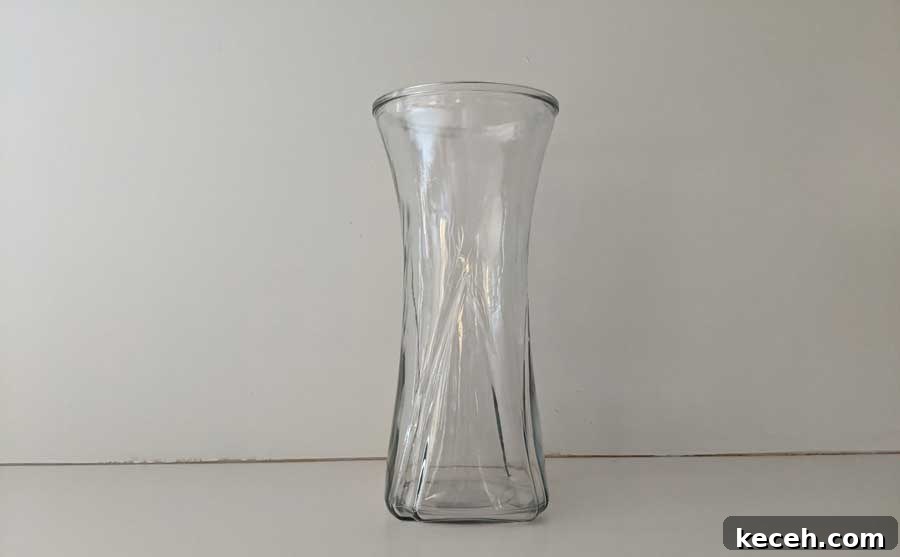
- Glass vase (thrifted or from flowers)
- Plaster cloth gauze
- Plaster of Paris
- Scissors
- Chip brush
- Leather scrap (optional)
- Hot glue gun
Step 1: Cut the plaster cloth into strips
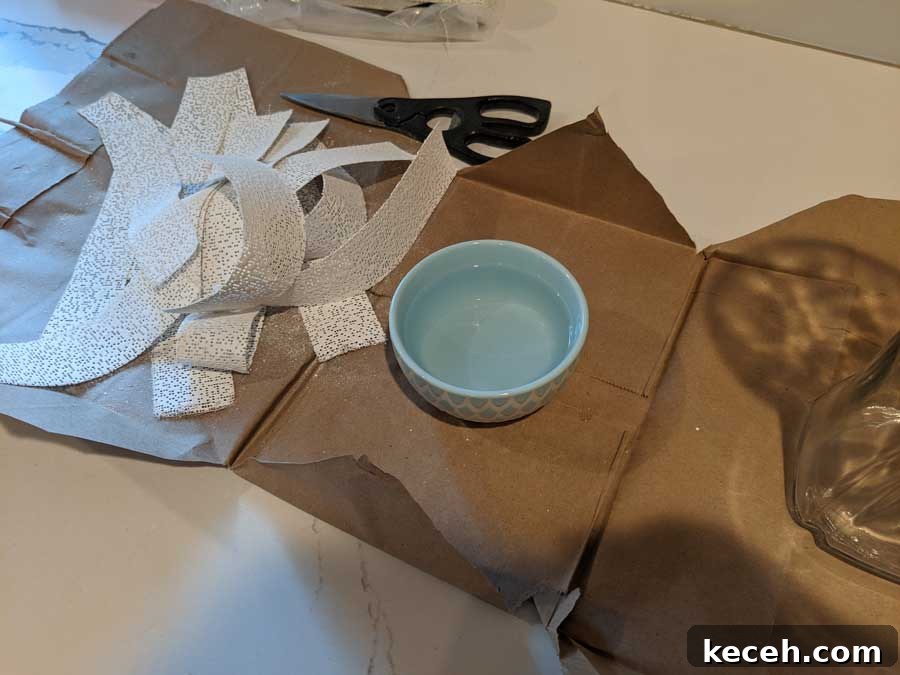
Cut the plaster cloth into roughly 2-inch wide strips. The plaster cloth creates a rough, secure base so the plaster topcoats will adhere to the glass. It also evens out any unwanted details on the vase’s surface.
While primer or paint can help adhesion, a plaster cloth shell gives a stronger bond and reduces the chance of the final plaster layer cracking or peeling later.
Dip each strip in water and smooth it over the vase in overlapping sections until the vase is covered. Allow the plaster cloth to dry completely—overnight is ideal.
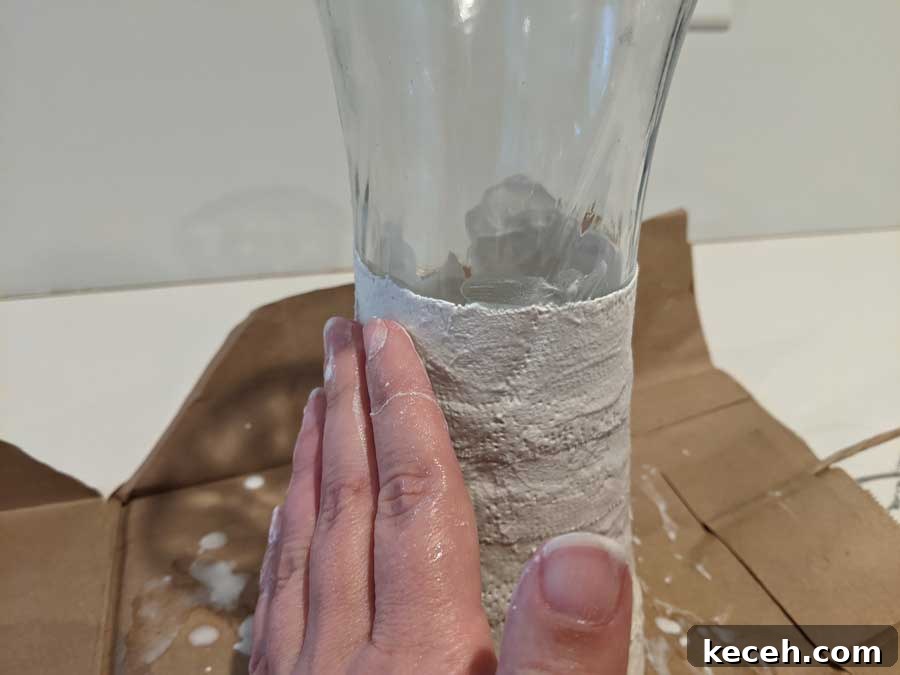
Once dry, you’ll have a textured shell that provides a firm surface for the next plaster coats.
Step 2: Paint a thick layer of plaster
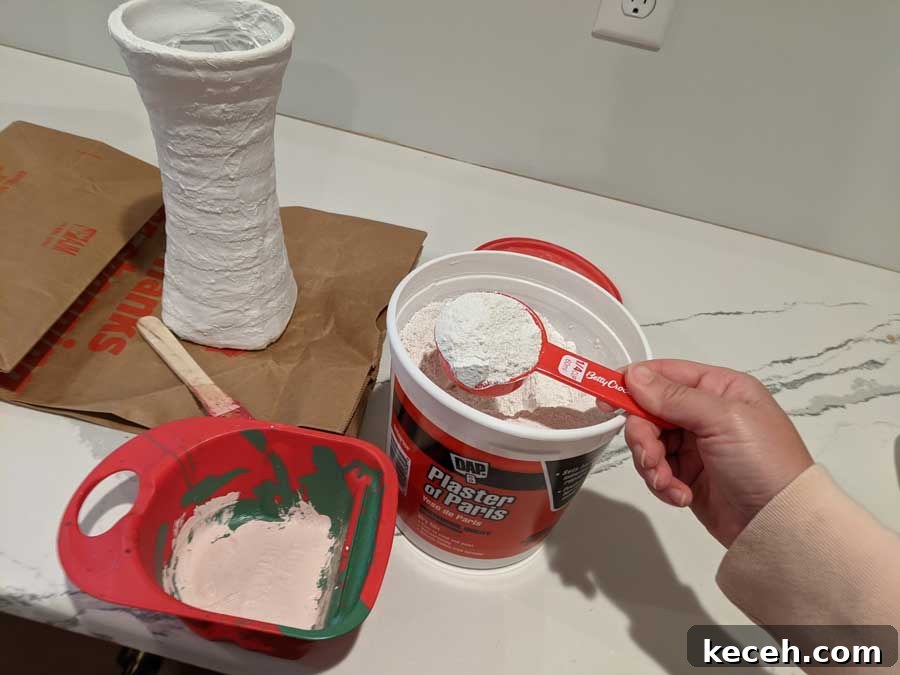
Mix a small batch of plaster in a 2:1 ratio (two parts plaster to one part cold water) and paint a thick, even coat over the plaster cloth layer.
Keep batches small because plaster sets quickly. For a medium vase I mixed about 2/3 cup plaster with 1/3 cup cold water—adjust quantities to your vase size.
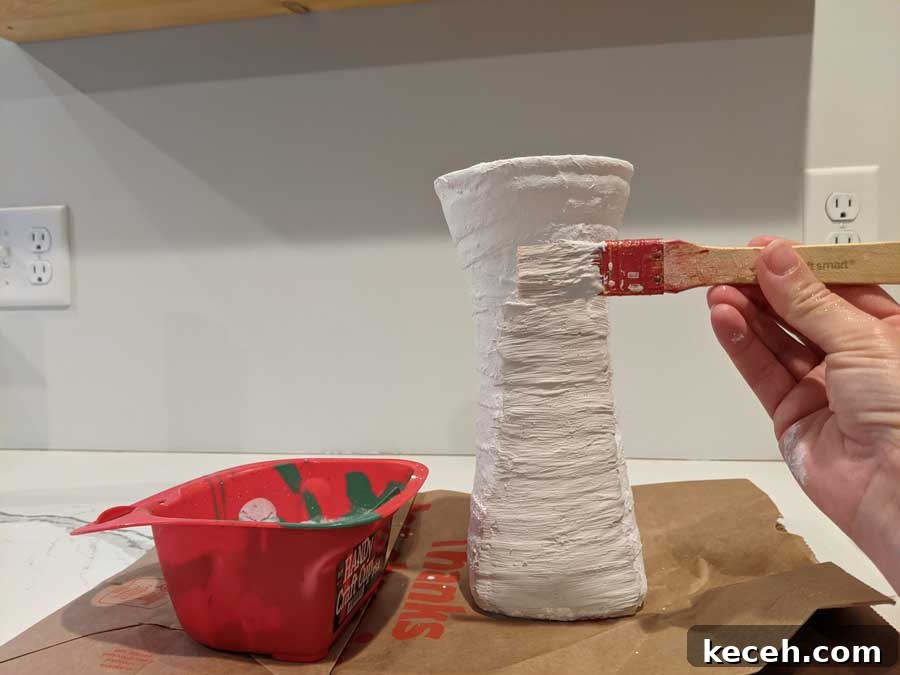
Use a chip brush to apply horizontal strokes until the surface is fully covered. Let this coat dry completely—overnight is recommended.
Step 3: Apply the final plaster layer
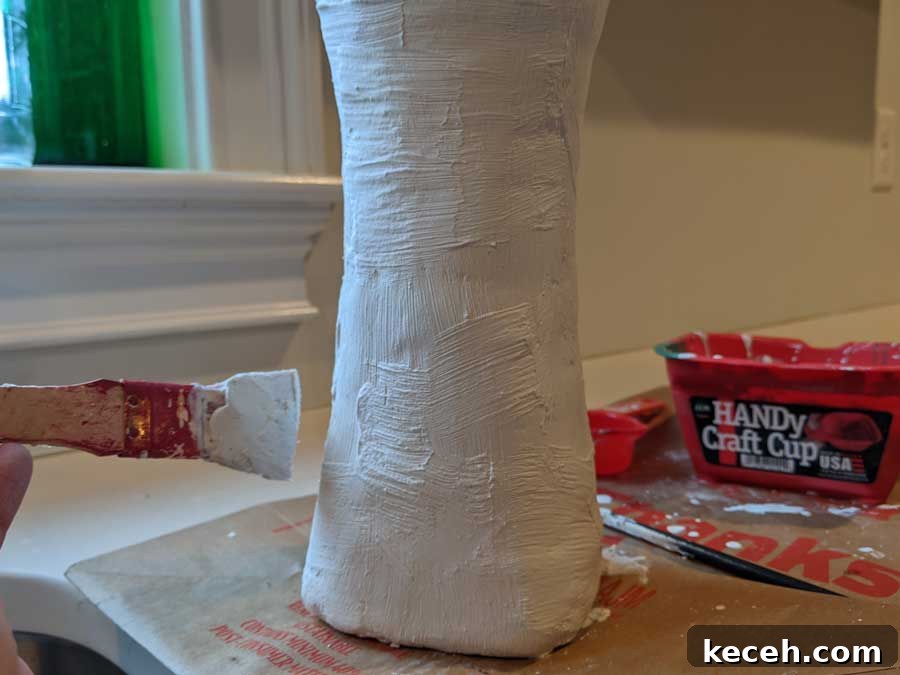
Mix another small batch of plaster at the same 2:1 ratio for the final coat. For this layer, use random crisscross and up-and-down strokes to build an organic, pottery-like texture and to smooth out any horizontal ridges from the previous coat.
Work quickly and avoid overworking the plaster—set times are short. Allow the final coat to cure according to the plaster manufacturer’s recommendations.
Step 4: Add a leather cuff (optional)
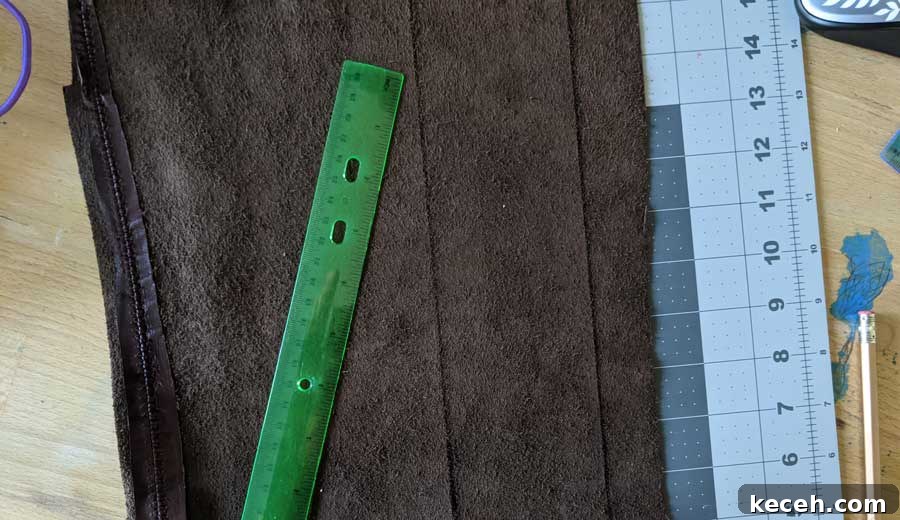
Cut a strip of leather to your preferred width and wrap it around the vase’s center for an added decorative accent. This step is optional but adds warmth and contrast to the plaster surface.
Trim the leather to fit, wrap it around the dried vase, and secure the ends with hot glue at the back. Leather scraps or remnants work well for this purpose.
Your faux pottery vase is complete!
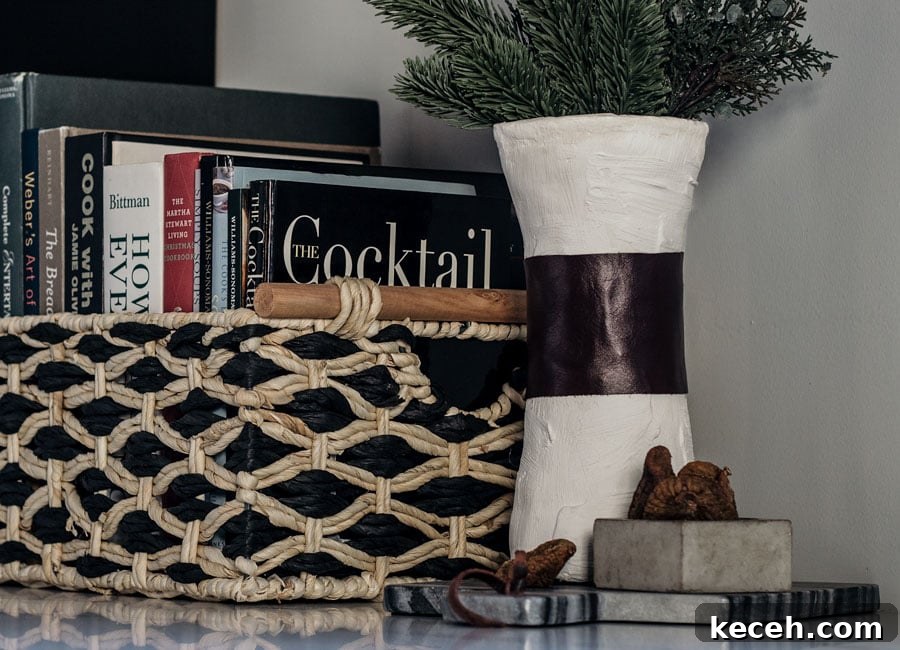
This upcycle turns an ordinary glass vase into a textured, handmade vessel that looks like pottery. The plaster cloth base ensures durability while the plaster topcoats provide the finished texture. Add a leather cuff for a modern, earthy touch.
If you enjoy working with leather and simple home crafts, consider experimenting with other small leather projects to complement your new vase, such as coasters or napkin rings—simple pieces that pair well with a neutral, textured vessel.