
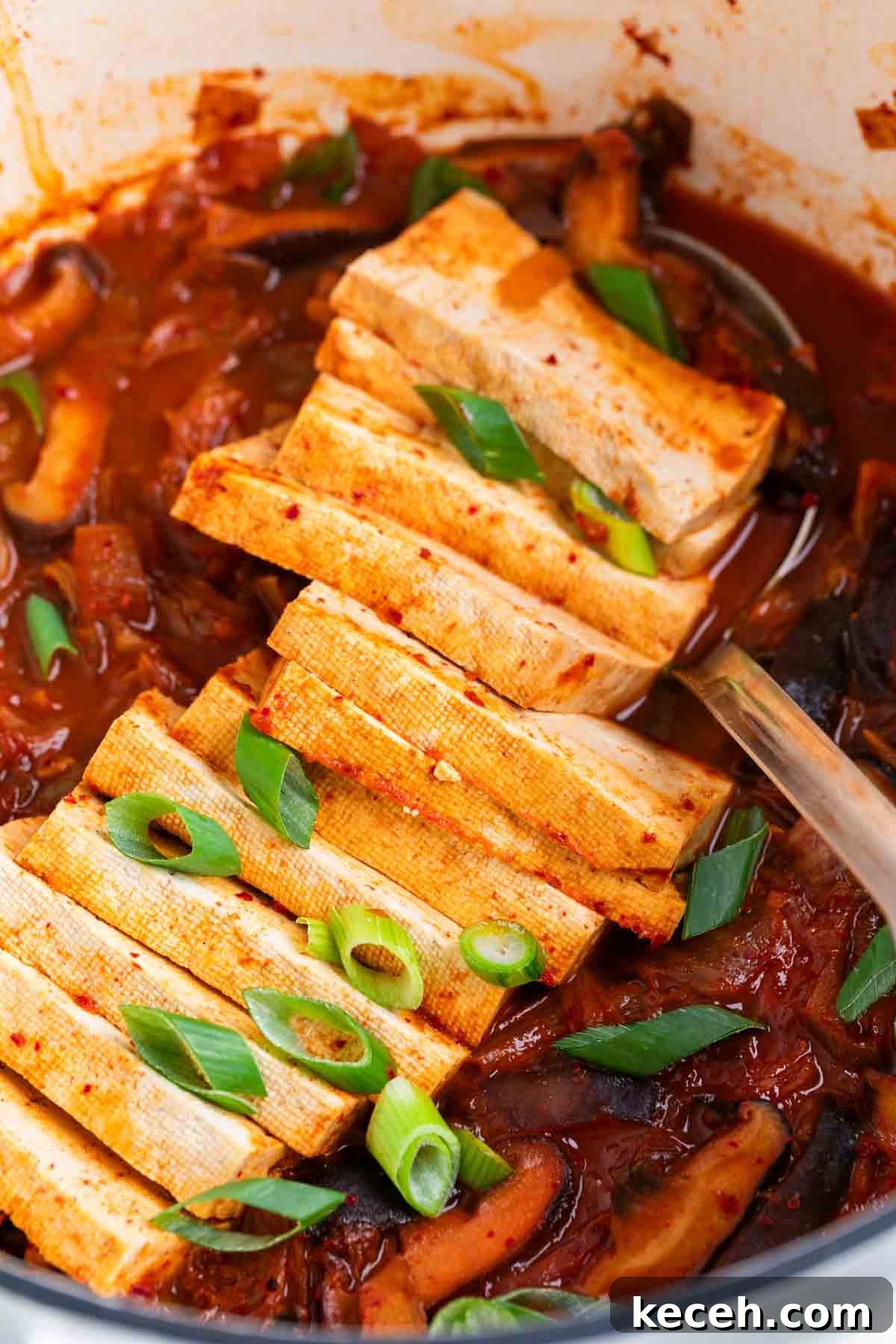
Vegan Kimchi Stew, also called Kimchi Jjigae, is a warming, flavorful Korean stew. This simple 30-minute recipe features kimchi, shiitake mushrooms, tofu, and bold seasonings to deliver a spicy, savory dish you’ll want to make again and again.
Want more Korean-inspired recipes? Try Homemade Vegan Kimchi, Spicy Korean Tofu Soup, Korean BBQ Tofu, or Korean Spicy Tofu for more plant-based Korean flavors you can cook at home.
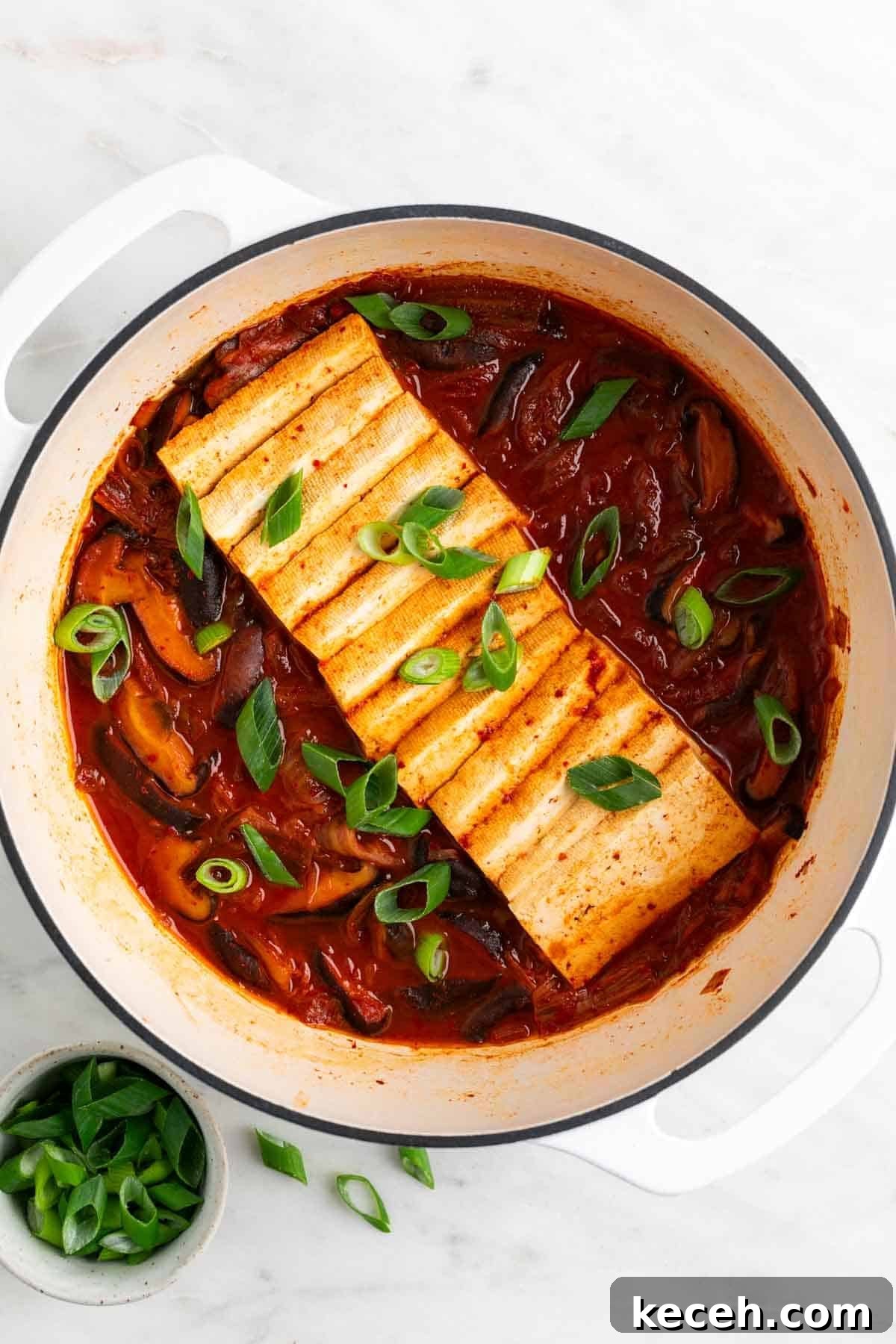
This vegan kimchi stew is an excellent way to use leftover kimchi. The flavors deepen after sitting, so it’s ideal for meal prep or a quick weeknight dinner. It’s a delicious plant-based take on a classic Korean comfort food and works well for anyone who loves kimchi’s spicy, tangy profile.
Serve the stew with steamed rice for a full meal, or enjoy it on its own. Its bold, savory heat makes it satisfying any time of year for lunch or dinner.
Ingredients for vegan kimchi stew
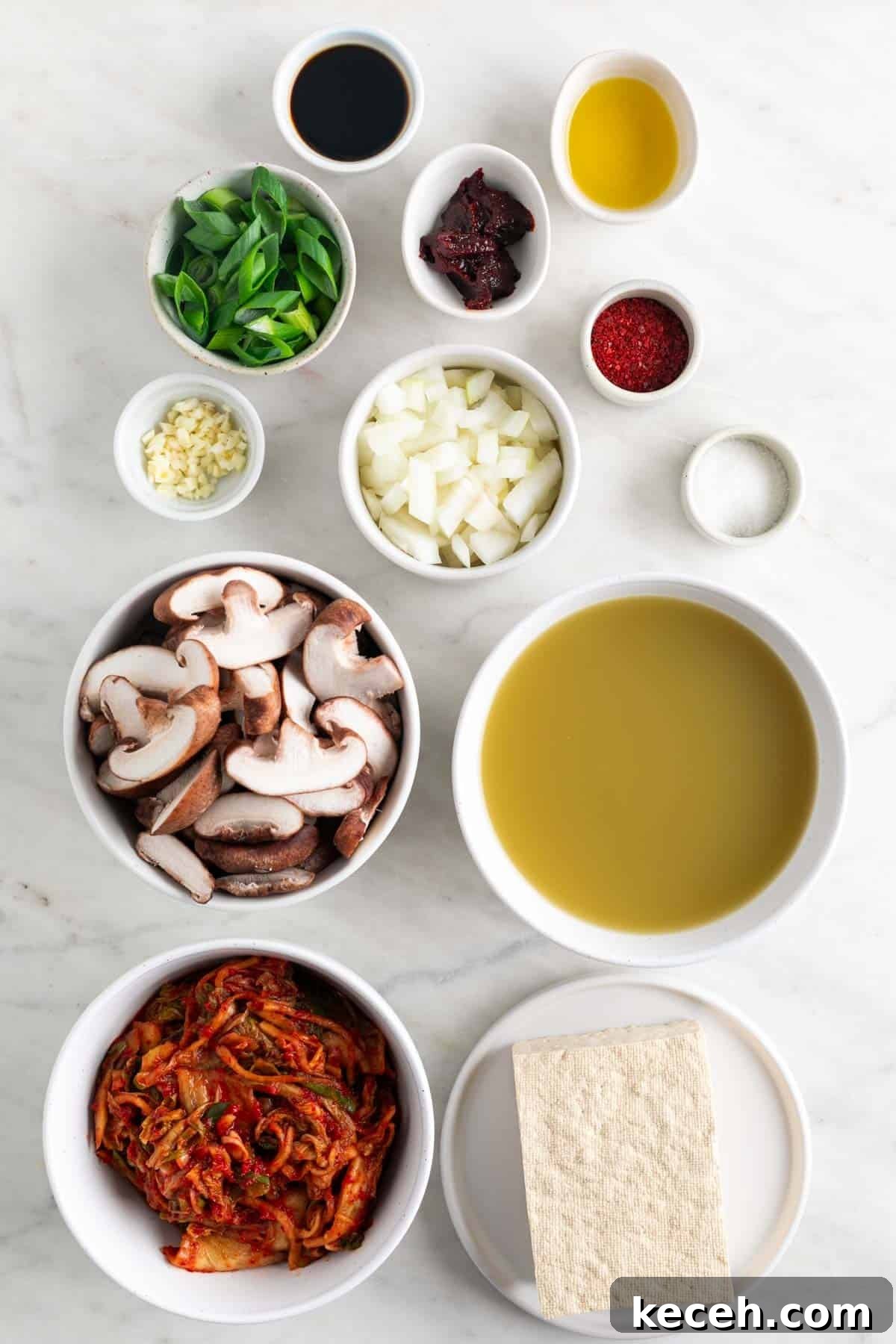
- Oil: Sesame oil for a toasted flavor, or use olive or vegetable oil.
- Onion: Yellow or white onion—yellow caramelizes and adds sweetness.
- Garlic: Minced for depth of flavor.
- Vegan kimchi: Ensure the kimchi is vegan (no fish sauce or shrimp paste). You can buy vegan kimchi or make your own.
- Gochugaru: Korean chili flakes that add mild, smoky heat. Substitute crushed red pepper or hot paprika if needed.
- Gochujang: Fermented chili paste with spice, salt, and sweetness. If unavailable, combine chili flakes, a pinch of sugar, and soy sauce, or use another chili paste with a touch of sweetener.
- Granulated sugar: Optional—helps balance kimchi’s sourness. Maple syrup, agave, or brown sugar work too.
- Soy sauce: Adds savory depth; use low-sodium, tamari for gluten-free, or coconut aminos for a soy-free option.
- Vegetable broth: For a richer flavor; water can be used in a pinch with extra seasoning.
- Shiitake mushrooms: Provides umami; substitute cremini, button, or portobello if needed.
- Firm tofu: Firm or extra-firm holds its shape and soaks up flavor. If using soft tofu, add it at the end to avoid breaking it up.
- Scallions (green onions): Sliced for garnish and fresh crunch.
Find exact measurements in the recipe card below.
How to make vegan kimchi stew

Step 1: Heat the oil in a pot and sauté the chopped onion and minced garlic for 2–3 minutes over medium-high heat until fragrant.
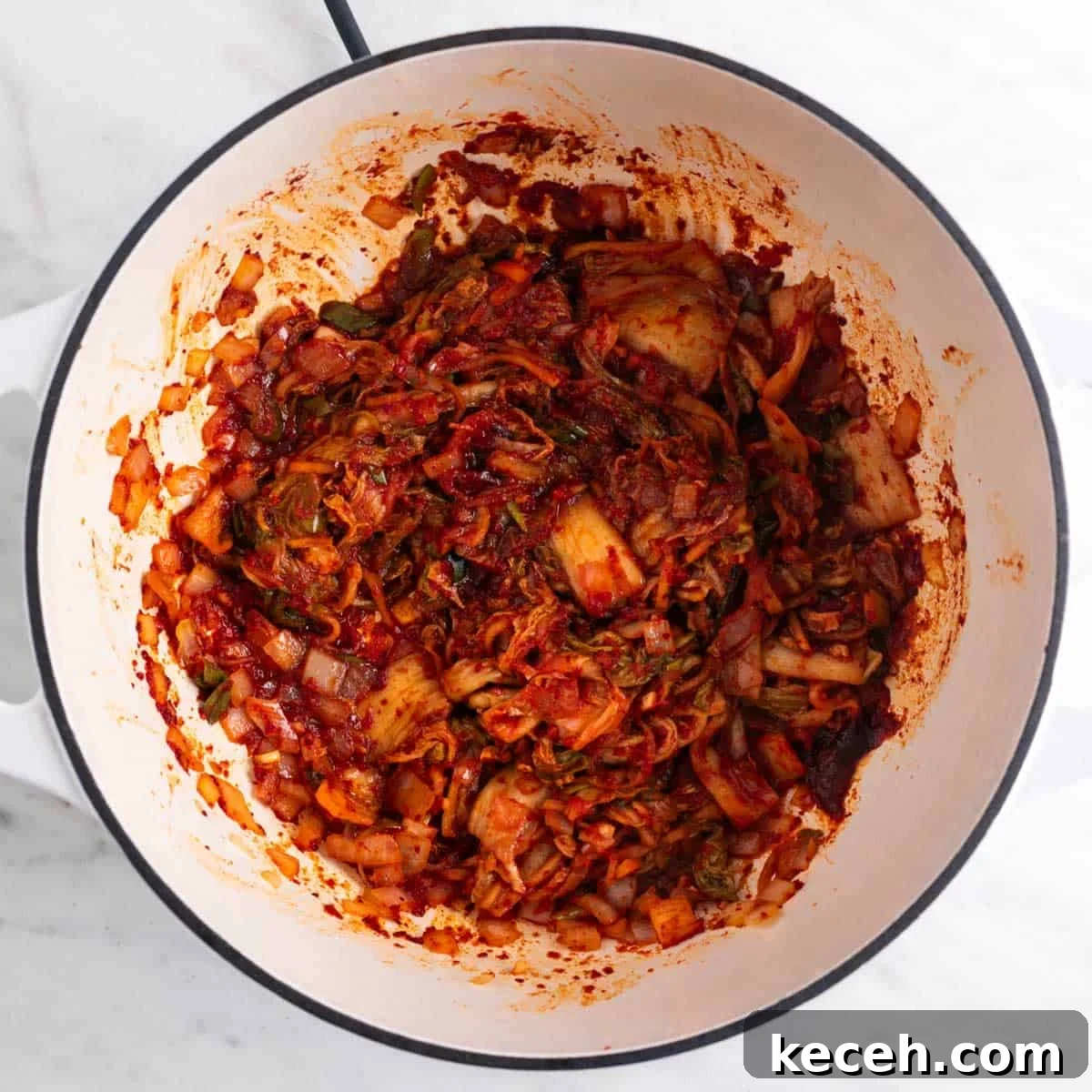
Step 2: Add the chopped kimchi, gochugaru, gochujang, sugar (if using), and soy sauce. Cook for another 2–3 minutes to develop the flavors.

Step 3: Pour in the vegetable broth and add the sliced mushrooms. Bring to a boil, then reduce heat, cover, and simmer for about 10 minutes until the mushrooms are tender.

Step 4: Slice or cube the firm tofu to your preferred shape.

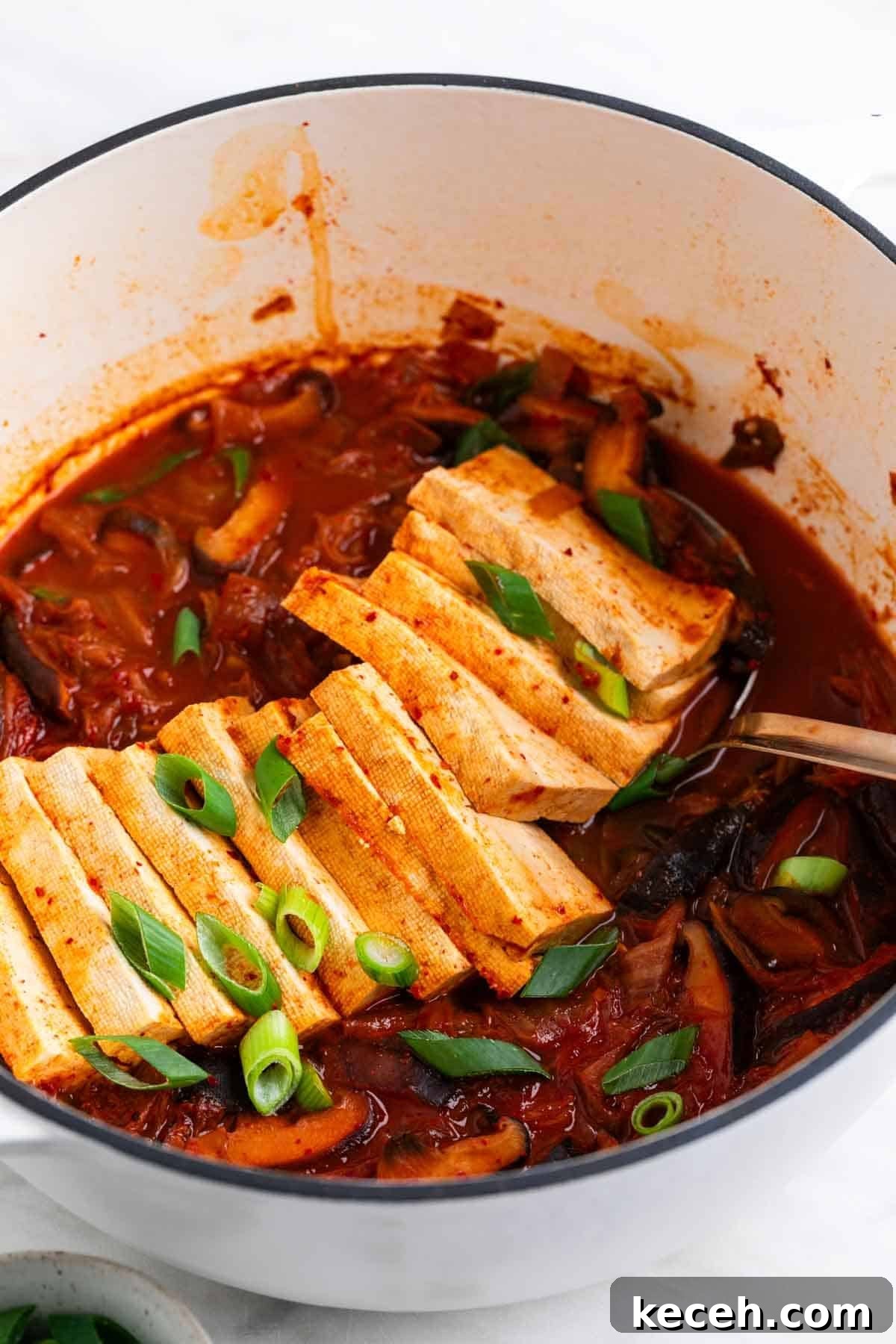
Step 5: Gently add the tofu to the pot and simmer another 5–10 minutes so it absorbs the broth and seasonings.

Step 6: Serve the stew hot and top with sliced scallions for brightness and texture.
Storage instructions
Fridge: Keep the stew in an airtight container for 3–4 days.
Freezer: Freeze in an airtight container for 1–2 months. Cool completely before freezing.
Reheat from fridge: Warm on the stove over medium heat until hot, or microwave in a microwave-safe container.
Reheat from freezer: Thaw overnight in the refrigerator, then reheat on the stove or in the microwave until heated through.
Frequently asked questions
Kimchi is a traditional Korean fermented vegetable dish, commonly made with napa cabbage and Korean radish, seasoned with chili, garlic, ginger, and sometimes fish sauce in non-vegan versions. It’s spicy, sour, and umami-rich, often enjoyed as a side or used in soups and stews. Fermentation provides beneficial bacteria that support digestion.
Pressing tofu removes excess water and can help it absorb more flavor, but it’s optional. For firm or extra-firm tofu many cooks skip pressing. Avoid pressing silken or soft tofu, as it may break apart.
Add vegetables like carrots, zucchini, bell peppers, spinach, kale, sweet potatoes, broccoli, or bean sprouts. Adjust cooking times so veggies cook through without becoming mushy.
Serve with steamed white or brown rice, jasmine rice, or udon/ramen noodles for a heartier meal. Fresh kimchi or pickled vegetables make excellent accompaniments.
Cooking reduces some live probiotics, but it doesn’t eliminate all potential benefits. Even cooked fermented foods can contribute flavor and nutrients, though raw kimchi retains the most active probiotics.
More vegan Asian recipes
- Vegetable Tempura
- Vegan Pad Thai
- Vegan Pho
- Teriyaki Tofu
- Kung Pao Tofu

Vegan Kimchi Stew (Kimchi Jjigae)
Ingredients
- 1 tablespoon oil (sesame oil recommended)
- ½ onion, chopped
- 2 cloves garlic, minced
- 2 cups vegan kimchi, chopped
- 2 teaspoons gochugaru
- 1 tablespoon gochujang
- 2 teaspoons granulated sugar (optional)
- 1 tablespoon soy sauce
- 2 cups vegetable broth
- 8 ounces shiitake mushrooms, stems removed and sliced
- 1 block firm tofu (14–16 oz / 400–450 g)
- 2 scallions, sliced diagonally
Instructions
- Heat the oil and sauté the onion and garlic: Cook 2–3 minutes over medium-high heat.
- Add kimchi and seasonings: Stir in kimchi, gochugaru, gochujang, sugar (if using), and soy sauce; cook 2–3 minutes.
- Add broth and mushrooms: Pour in the broth and mushrooms, bring to a boil, then simmer, covered, for about 10 minutes.
- Slice the tofu: Cut the tofu into slices or cubes.
- Add tofu and cook: Gently add tofu and simmer 5–10 minutes more.
- Serve and garnish: Ladle into bowls and top with sliced scallions.
Notes
- Store in the fridge for 3–4 days in an airtight container.
- Freeze for 1–2 months; cool completely before freezing.
- Reheat on the stove over medium heat or in the microwave until hot.
- If frozen, thaw overnight in the fridge before reheating.
Nutrition
| Calories: 175 kcal
| Carbs: 15 g
| Protein: 12 g
| Fat: 9 g
Leave a comment below and share how it turned out.