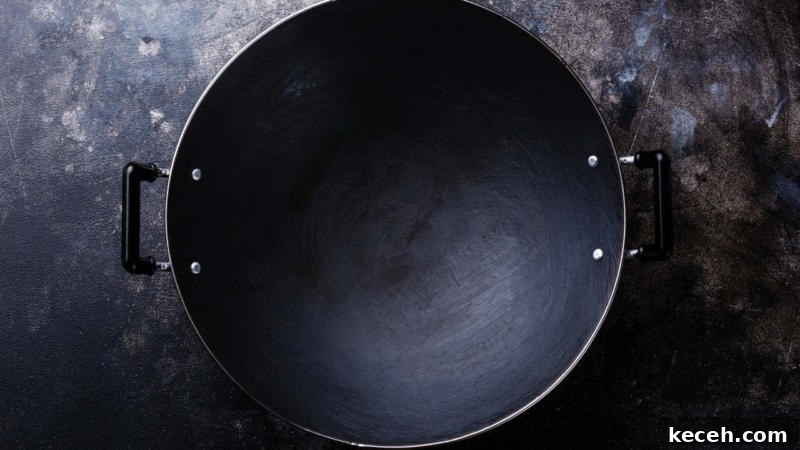
Whenever you cook with your wok, its patina should become progressively smoother and more effective, improving non-stick performance and overall cooking results.
A well-developed patina helps food slide out of the wok easily and makes cleaning simpler because residues are less likely to cling to the surface.
When that patina peels or flakes away, it reduces the wok’s effectiveness and negatively affects your cooking. Below are clear, practical steps to diagnose and fix the problem.
Table of Contents
Toggle
Wok coating coming off
The coating flakes because the oil-created seal between metal and seasoning has been compromised and moisture gets beneath the coating. When that trapped moisture dries it can cause flaking, much like paint peeling from a damp wall. The reliable remedy is to remove the failing layer and reseason the wok correctly.
Seasoning a wok
If the coating keeps coming off, it usually means the wok was not seasoned properly in the first place. Fixing it involves stripping the bad seasoning and rebuilding a durable patina.
First, get rid of the bad seasoning
Start by removing the old, flaking seasoning so you can begin fresh. Combine water with a few heaped tablespoons of baking soda and half a lemon in about a pint of water. Pour the mixture into the wok and maintain a steady simmer for roughly 40 minutes, adding water as needed to keep the level consistent.
Once cooled, most of the old seasoning should scrub away easily under a cold tap. Use a soft natural-bristle brush or sponge rather than a harsh wire scrubber to avoid scratching the metal; gentle repetition will remove residue without damage.
Next, season your wok properly
Setting up your wok for re-seasoning
After stripping the old seasoning, the wok should be essentially clean and ready. If a thin rim near the top still has residue where the solution didn’t reach, you can gently work it with a heavy-duty pad—but avoid gouging the metal. Dry the wok thoroughly, protect the handles with foil, and place it on the stovetop. Clear the surrounding area and keep a heatproof mitt or towel nearby.
Heating your wok in readiness for its first time seasoning
Heat the wok on high. It will gradually darken and start to smoke as any microscopic oil or impurities burn away. Tilt the wok so only one section faces the flame at a time and allow that area to reach a black-blue patina. Repeat slowly around the wok until the whole surface has developed that color. This stage takes time and patience; rushing it will yield uneven results.
Cleaning your wok in readiness for its re-seasoning
Turn off the burner and pour a cup of water into the hot wok to cool it gently, then wash with a mild detergent and a soft pad. Rinse with cold water, towel-dry excess moisture, and return the wok to medium heat to evaporate any remaining water. Small dark spots from manufacturing are normal and won’t affect performance.
Seasoning your wok for the first time with vegetable oil
In short, the seasoning steps are:
- Heat a thin layer of vegetable oil in the wok. When the oil is hot, remove the wok and wipe the oil across the surface using a paper towel held with tongs; as it cools you can finish by hand with caution.
- Discard excess oil, reheat the wok until it smokes, then remove from heat and use a damp paper towel to polish the surface. Dry the wok thoroughly over heat.
- When the wok is still warm, apply a thin coat of vegetable oil and wipe it evenly with a paper towel to build the patina.
Aftercare–how to look after your well-seasoned wok
As you continue to cook the wok will develop a richer, more effective non-stick sheen from successive oil layers. After cooking, simply wipe the interior with a paper towel and a little vegetable oil to remove debris and maintain the finish. Repeat this after each use and the seasoning will remain stable for months.
If flaking returns, repeat the stripping and reseasoning process described above to rebuild a durable patina.
Frequently Asked Questions About Wok Coating Coming Off
What is the best oil for wok seasoning?
Choose oils with a high smoke point so they can withstand the heat used during seasoning. Good options include lard or other animal fats, sunflower oil, grapeseed oil, canola oil, and peanut oil.
Why do I have to season a wok anyway?
Seasoning forms a protective patina on carbon steel or cast iron woks. That patina becomes an organic, non-stick layer that protects the metal from rust and improves flavor and cooking performance as it builds up with use.
Afterword: Wok coating coming off
Avoid washing a seasoned wok with soap whenever possible, and never leave it wet. If you use water, dry the wok thoroughly on the stove over heat. The preferred routine is to clean and maintain the surface with a little vegetable oil and a paper towel; add coarse salt to the oil for gentle abrasion if you need extra scrubbing power.