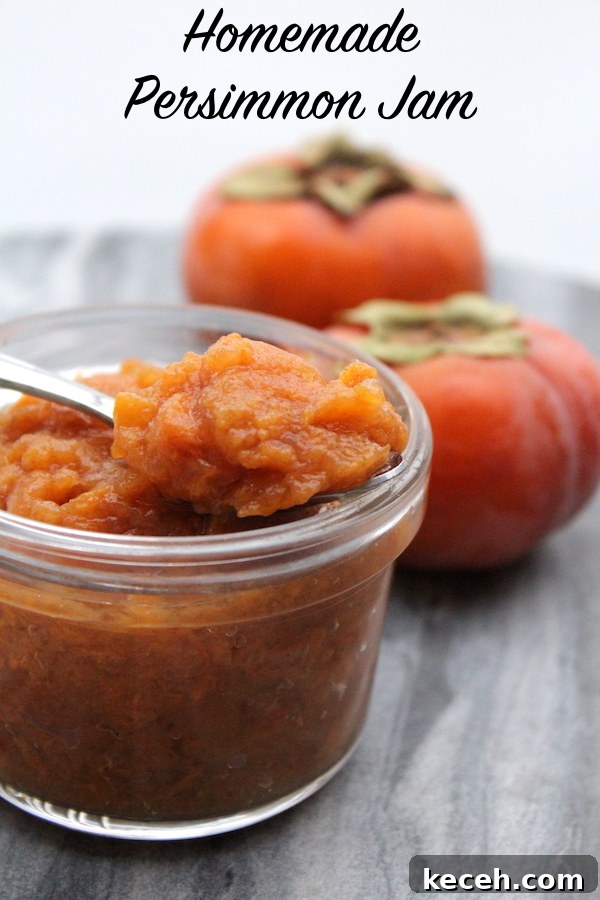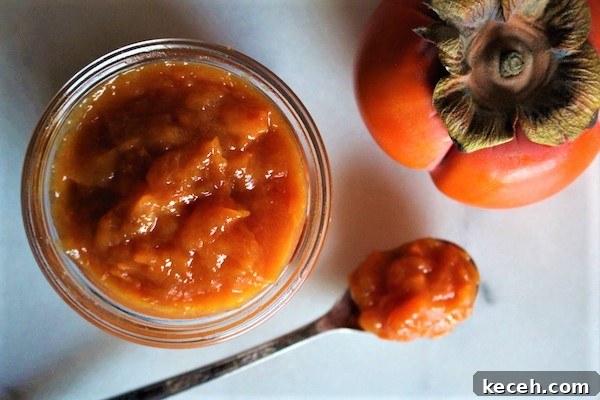
Persimmon jam is simple to make at home and captures the warm, honeyed flavor of persimmons so you can enjoy it year-round. Persimmons are naturally pectin-rich, so this jam comes together easily with just a few ingredients and a little patience at the stove.
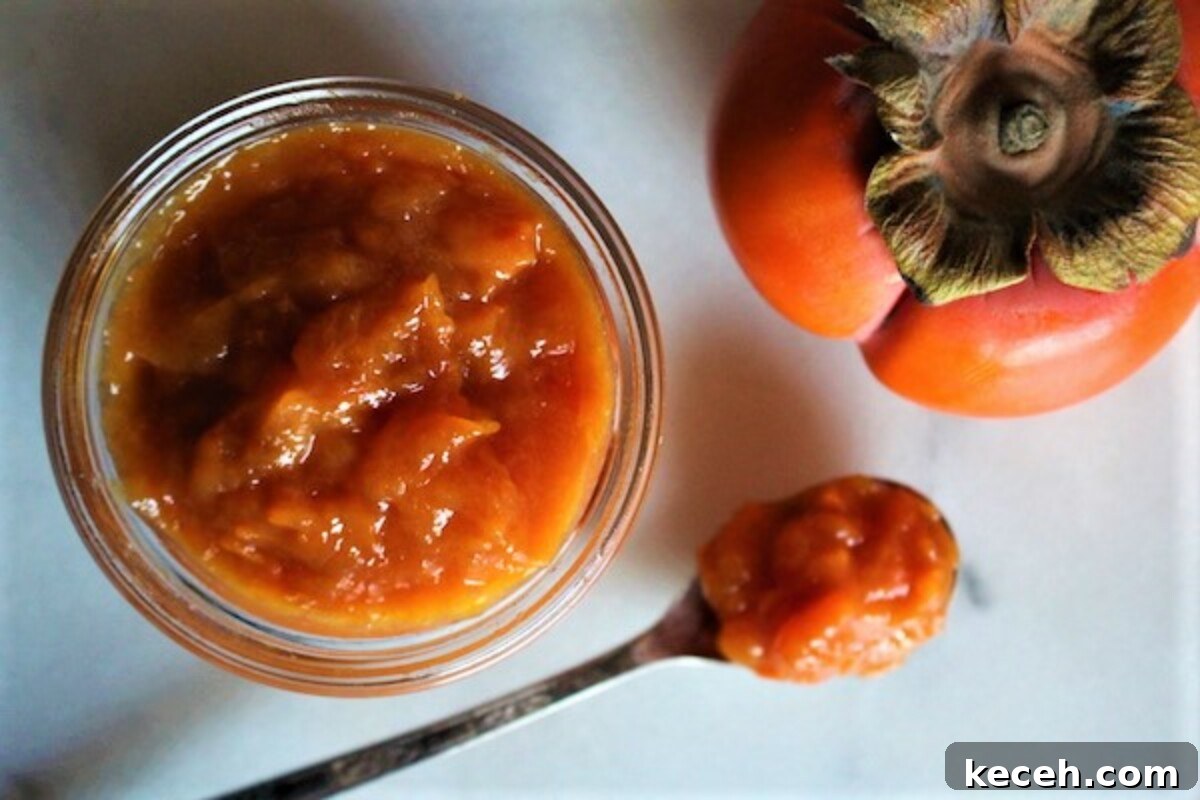
I once brought a jar of my persimmon jam to a birthday gathering where the honoree preferred store-bought items over homemade gifts. He was skeptical until he tried the jam spread thick on a scone — his surprised expression and quick follow-up compliment told me everything I needed to know. Good persimmon jam has a distinctive flavor that often convinces even the most hesitant tasters.
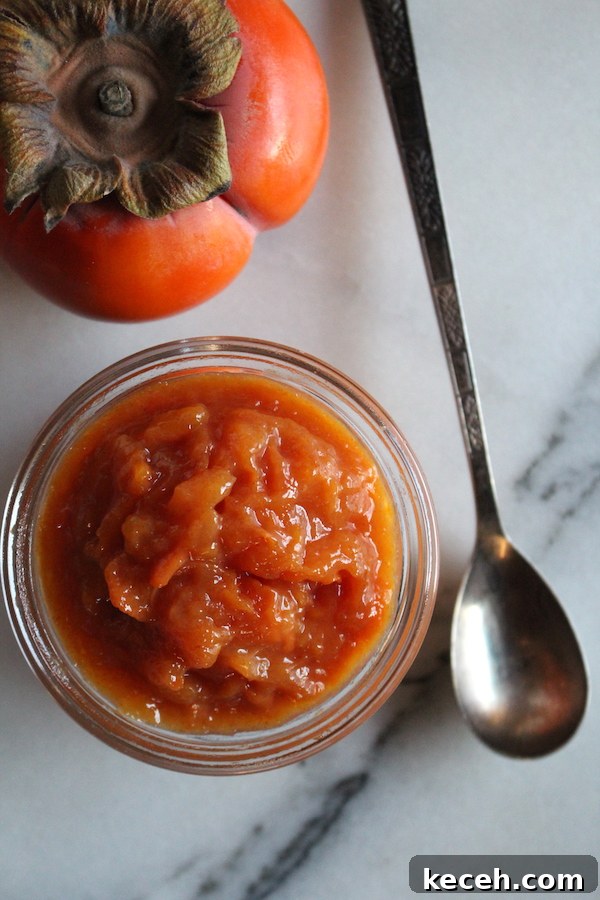
Choosing Fruit for Persimmon Jam
There are two common types of persimmons used in cooking: Fuyu and Hachiya.
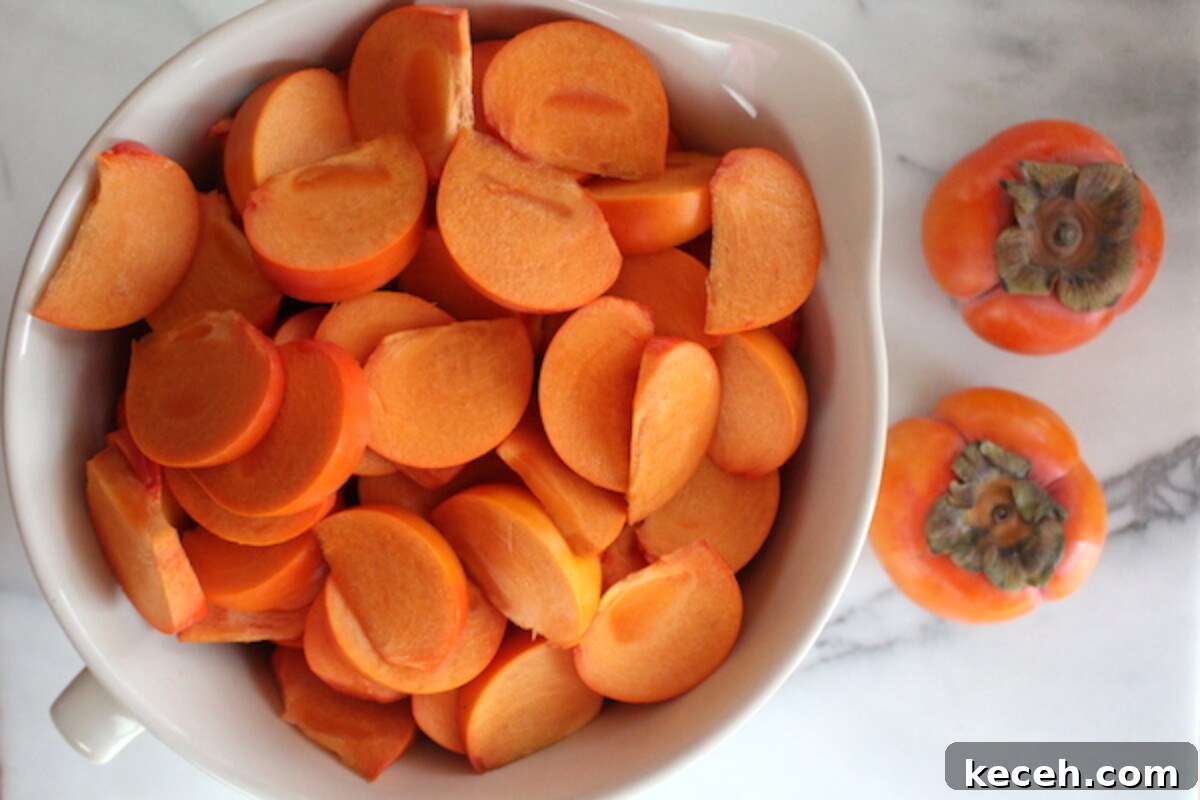
Fuyu persimmons are squat and lobed, with a firm texture. They are ripe when they give slightly to the touch, similar to a ripe pear. These are the variety shown in the photos and the variety I most often use for jam because they’re easy to slice and cook down.
Hachiya persimmons are acorn-shaped and must be fully soft and almost pudding-like inside before eating. Underripe Hachiyas are very astringent and unpleasant, so be sure they’re fully ripe if you choose them for jam.
Fuyu persimmons are often available in grocery stores in the late fall and winter. Prices vary — occasionally you can find them sold inexpensively by the case, while specialty markets may charge a premium. Either way, ripe persimmons make a deeply flavored jam that’s worth the effort.
This recipe yields 4–5 half-pint jars and starts with 4 pounds of fresh Fuyu persimmons — roughly 9–10 large fruits, about 12 cups sliced (10–11 cups if finely diced).
Adding Acidity to Persimmon Jam
For safe water bath canning, fruit preserves must be sufficiently acidic (pH below 4.6). Persimmons sit close to that boundary, typically between pH 4.4 and 4.7, so jam made from persimmons usually requires added acidity. Lemon or lime juice is the simplest choice, but citric acid can also be used.
I find lime juice pairs beautifully with persimmons, brightening their mellow sweetness. If you prefer, use lemon juice or dissolved citric acid. When substituting citric acid, use 1/4 teaspoon of granules for every tablespoon of lemon or lime juice called for.
As a general guideline, add at least 1 tablespoon of lemon or lime juice (or 1/4 teaspoon citric acid) per pound of fresh persimmon. For a brighter, more balanced flavor, I use 2 tablespoons of citrus juice per pound. With 4 pounds of fruit that equals about 1/2 cup of juice; 1/4 cup is acceptable for a milder result.
If you plan to make a freezer jam rather than a canned, shelf-stable product, the acidity requirement is not a safety issue; it’s included here primarily for canning. Still, a little citrus improves flavor and helps the jam set.
Citrus juice also contributes pectin and helps the jam gel.
How to Make Persimmon Jam
Begin by chopping the persimmons into small pieces and removing stems and any seeds. Place the fruit in a heavy-bottomed pot along with the lemon or lime juice. If you’re using citric acid, dissolve it in about 1/2 cup water first.
Cook over medium heat, stirring frequently to prevent sticking. As the fruit heats, it will release its juices; use a potato masher or the back of a wooden spoon to break the pieces down. After roughly 15 minutes the persimmons should be mostly broken down and the mixture will still be fairly loose.
Stir in sugar to taste. I prefer a lower-sugar jam and use about 1 cup of sugar for 4 pounds of fruit, but many recipes call for up to 2 cups. Adjust the sweetness to your preference.
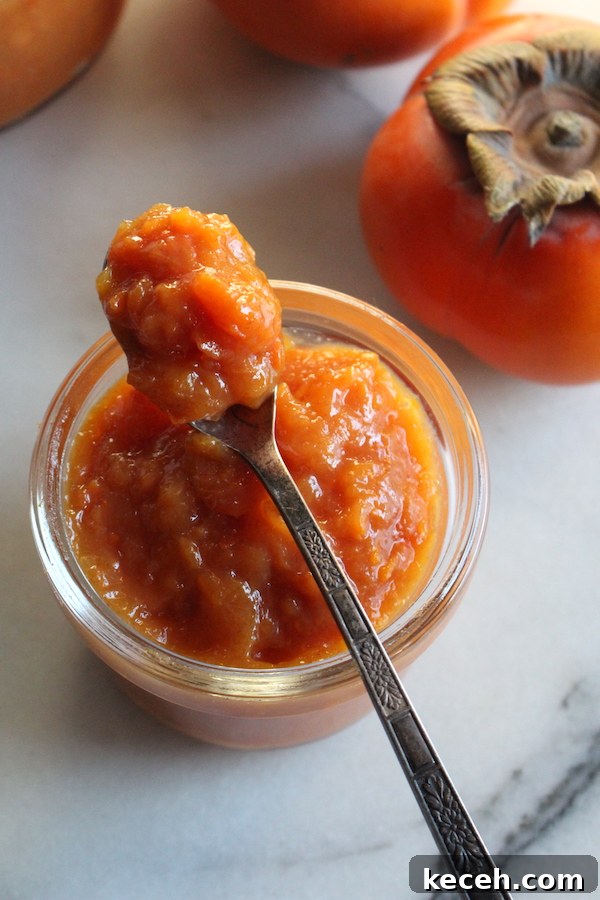
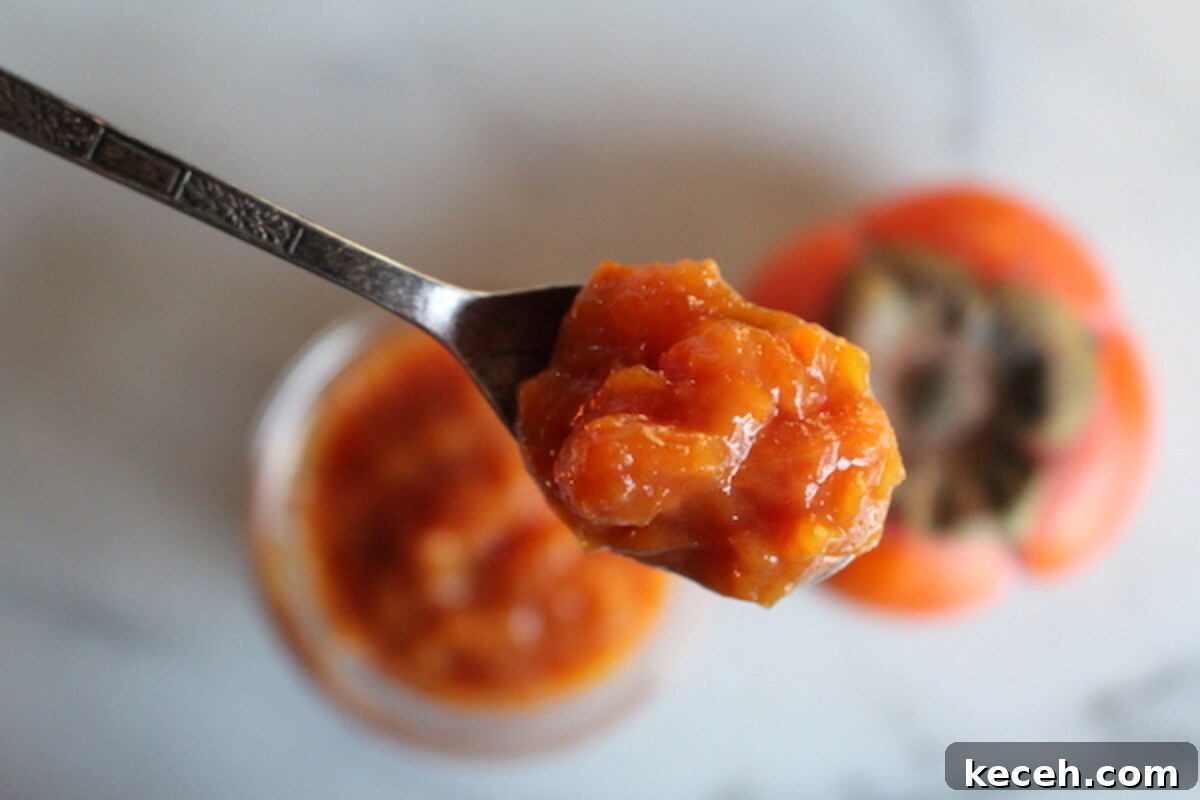
Continue to simmer over medium heat, stirring often, until the mixture thickens to your liking. This can take an additional 20–40 minutes depending on your stove and the fruit. Persimmons contain natural pectin and, combined with the citrus, usually form a firm jam without added commercial pectin. If you used citric acid rather than fresh citrus, the jam may be slightly less thick, which you can correct by cooking a bit longer.
My batch with lime juice typically firms up after about 45 minutes total cooking time, but watch closely and use a chilled plate test if you’re unsure of the set.
Canning Persimmon Jam
You can store persimmon jam in the refrigerator for several weeks or freeze it for up to six months. If you want shelf-stable jars, water bath canning is an easy option for this fruit jam as long as you add sufficient citrus juice.
When the jam reaches the desired thickness, ladle it into hot, prepared half-pint jars leaving 1/4 inch headspace. Make sure you’ve added the recommended lemon or lime juice (or citric acid) to each batch to ensure safe acidity for water bath canning. Process the jars in a boiling water bath for 10 minutes, then turn off the heat and let the jars sit in the water for an additional five minutes before removing them to cool on the counter.
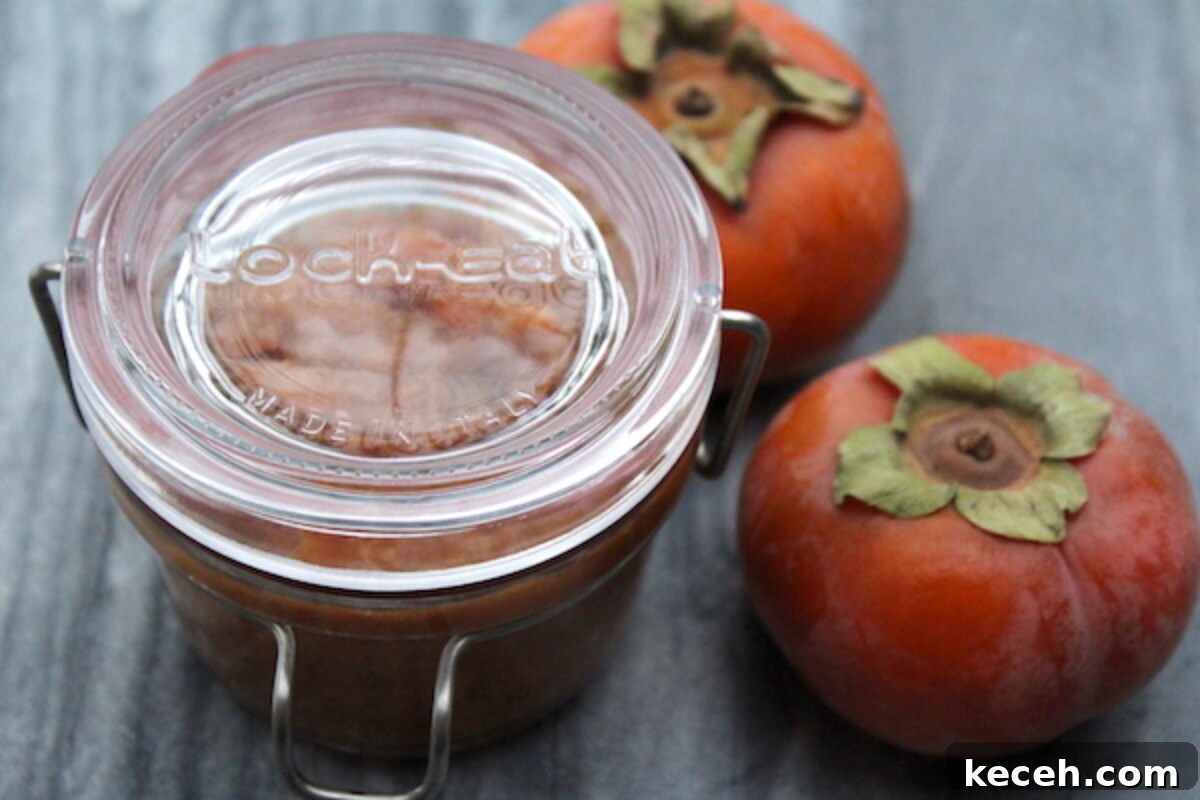
You can also choose reusable Italian-style glass lids that seal for repeated use, though any canning-safe jars and lids will work.
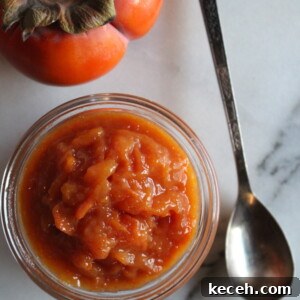
Persimmon Jam
Equipment
- Ball regular mouth canning jars, 8 oz (half-pint)
- Water bath canner or large pot with a rack
Ingredients
- 4 lbs persimmons
- 1/4 to 1/2 cup lime or lemon juice (1/2 cup recommended for brighter flavor)
- 1 to 2 cups sugar, to taste (1 cup gives a lower-sugar jam)
Instructions
- Slice persimmons into small chunks and remove stems and seeds.
- Add persimmons and lemon or lime juice to a saucepan and cook on low until the fruit releases its juices. Mash with a potato masher to speed breakdown.
- Once the fruit has mostly fallen apart, stir in sugar and simmer over medium-low until the jam thickens. Test a small spoonful on a chilled plate to check the set.
- When the jam reaches the desired consistency, ladle into prepared jars leaving 1/4 inch headspace. Process in a boiling water bath canner for 10 minutes, then turn off heat and let jars sit in the water for 5 more minutes before removing to cool.
- Check seals after cooling. Refrigerate any jars that did not seal and use them first.
Notes
Acidity: For safe water bath canning you must add at least 1/4 cup lemon or lime juice for the full recipe; 1/2 cup gives a brighter flavor. Persimmons alone are borderline acidic.
Sugar: Adjust sugar to taste. This recipe uses a lower sugar ratio (1 cup for 4 lbs fruit), but up to 2 cups will give a sweeter, more traditional jam.
This recipe yields 4–5 half-pint jars (8 oz).
More Canning Recipes for Autumn & Winter
If you enjoy making persimmon jam, try other autumn and winter preserves like pear jam, apple butter, or homemade canned cranberry sauce to keep your pantry stocked for the season.