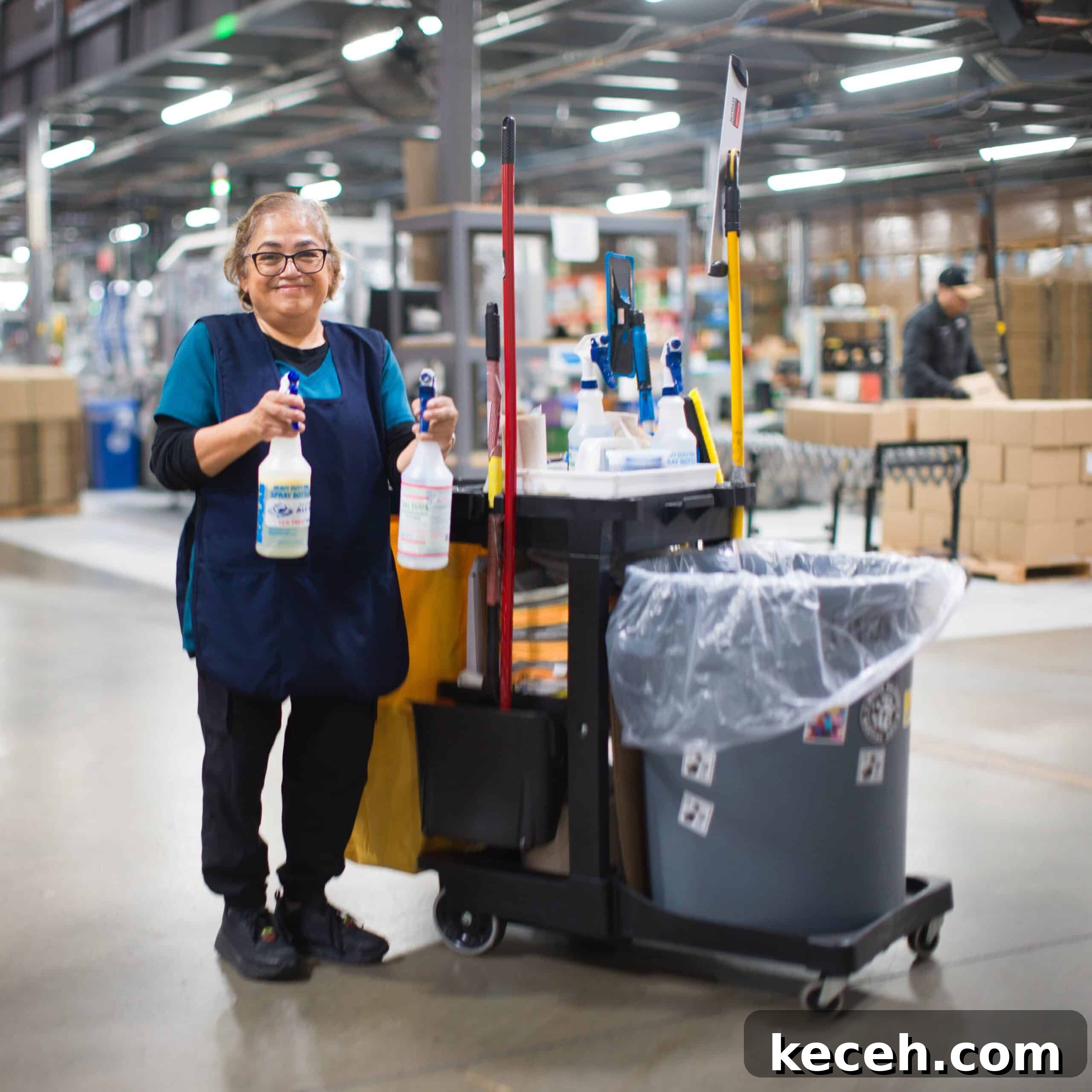
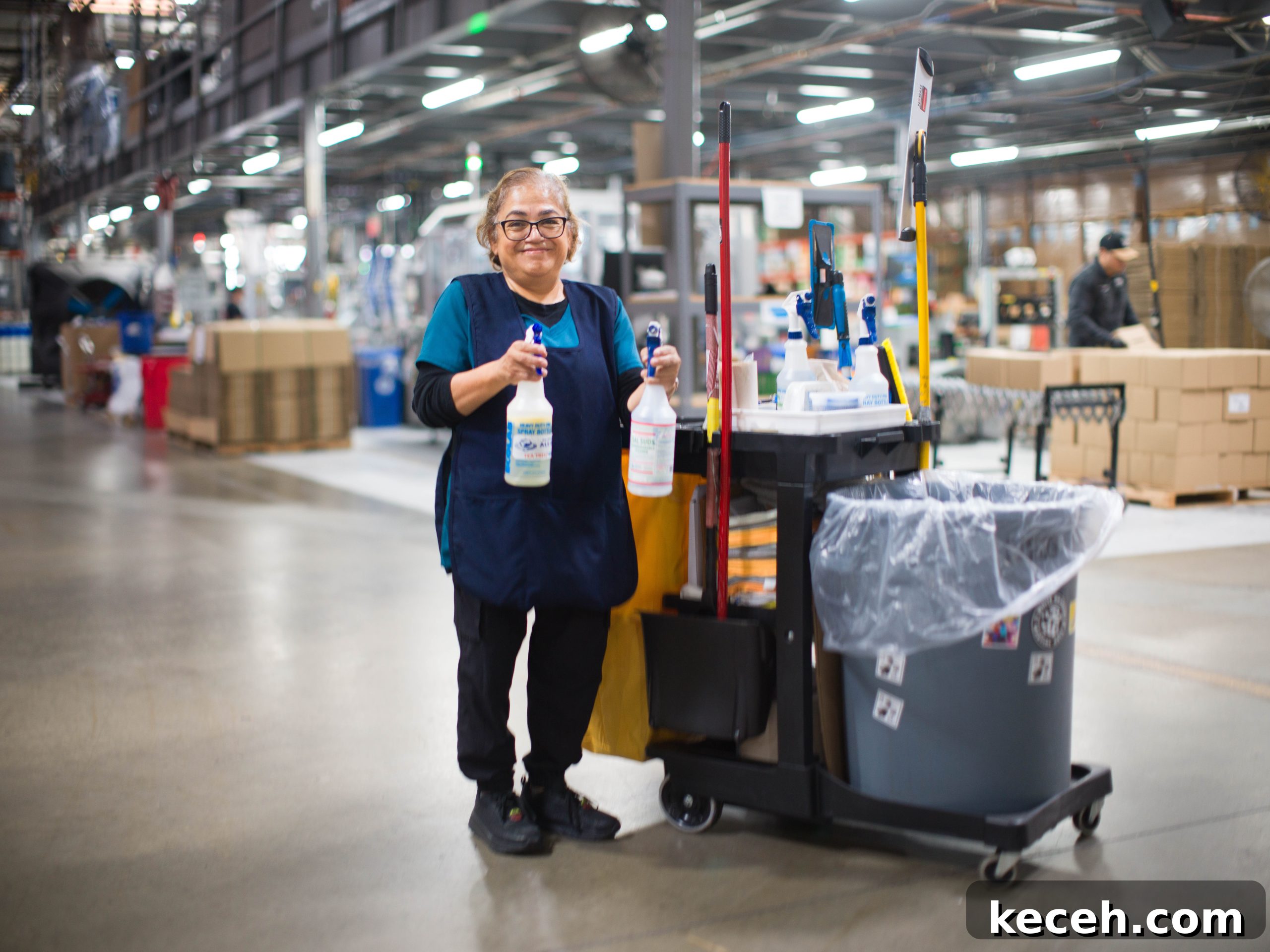
How does a company that makes cleaning products stay clean itself? I spent an afternoon shadowing members of Dr. Bronner’s custodial team to find out. What I learned confirmed that professional facility cleaning shares many techniques with home cleaning, only scaled up, and guided by staff with deep experience and practical creativity.
Although I have cleaned homes and even a school, this was my first hands-on look at keeping an office and manufacturing facility in order. Whether you’re curious about what happens behind the scenes at a factory or you clean a facility yourself, these practices offer useful, real-world tips.
The custodial crew is small—six people—and each member brings skill and personality to their work. Their methods emphasize non-toxic, biodegradable products used at effective dilutions, protecting both staff and occupants while delivering excellent results.
Meet Azucena
Azucena Vargas de Cruz has worked in custodial services for thirty years and has been with Dr. Bronner’s for five. She takes pride in her work and is known across the maintenance team for experimentation and problem-solving. At previous jobs she used harsh chemicals, but since joining Dr. Bronner’s she has embraced low-tox cleaning methods and learned to rely on safer products mixed at proper concentrations.
Azucena learned many of her approaches from videos and hands-on practice. She now knows her recipes by heart and trains others on the team. Staff regularly consult her for solutions to tough cleaning challenges. Her assigned areas include the main building’s breakroom, lounge, six bathrooms, and high-traffic trash collection points.
Her advice for tackling large spaces is practical: create a consistent routine within your area, start somewhere, and work methodically. Production-floor cleaning is handled by the teams who operate those areas; the custodial crew focuses on common spaces and offices.
Personalizing spaces with a signature scent
Azucena adds a personal touch by using unique essential oil blends so coworkers can tell she’s been through an area. Her recent favorite is Sandalwood, which offers an exotic, sweet aroma that signals freshness. She rotates scents regularly; the crew treats guessing the day’s blend as a fun game.
Ingredients for facility cleaning
The team uses many of the same ingredients you’d find in a home cleaning cabinet, just in larger quantities. Their core list includes:
- Sal Suds biodegradable cleaner for general-purpose cleaning
- Tea Tree Pure-Castile Magic Soap for additional all-purpose cleaning
- White distilled vinegar for deodorizing and cleaning glass and mirrors
- Baking soda for mild abrasion and deodorizing
- Essential oils for scent and aromatherapy
- 90% isopropyl alcohol for disinfecting high-touch surfaces
- An EPA Safer Choice disinfectant for biological contamination when required
- Toothpaste, used as a mild abrasive in a multi-surface scrub
Sal Suds is the primary cleaning agent used across most surfaces in the facility.
Reusable tools for office cleaning
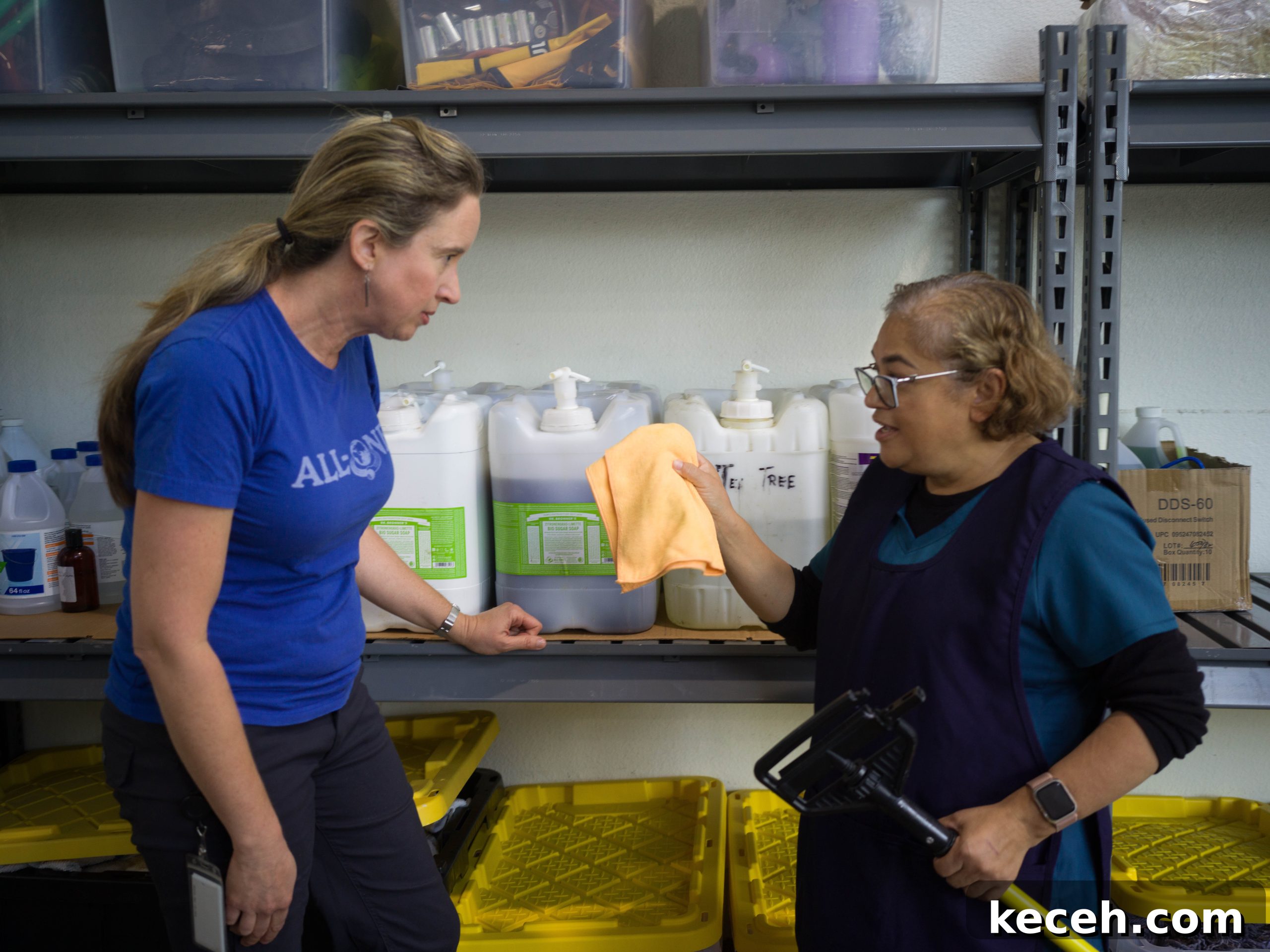
The crew uses durable, washable tools similar to those used at home: string mops, flat pads for drying floors, smaller flat pads for windows, plenty of microfiber cloths, and various brushes for corners and toilets. Azucena prefers working from a bucket—dunking and wringing cloths—though she also uses spray bottles when convenient.
Preparing the solutions for office cleaning
Cleaning spray with Sal Suds
- 5 oz (150 mL) Sal Suds
- 25 oz (740 mL) water
- Tea tree essential oil to scent and boost cleaning
Glass cleaning spray
- 2 oz (60 mL) of 30% cleaning vinegar
- 28 oz (830 mL) water
These dilutions produce effective, mild solutions for glass and general cleaning. The glass spray doubles as a deodorizer in restrooms when used sparingly and applied to the floor with a cloth.
Multi-surface scrub – with toothpaste!
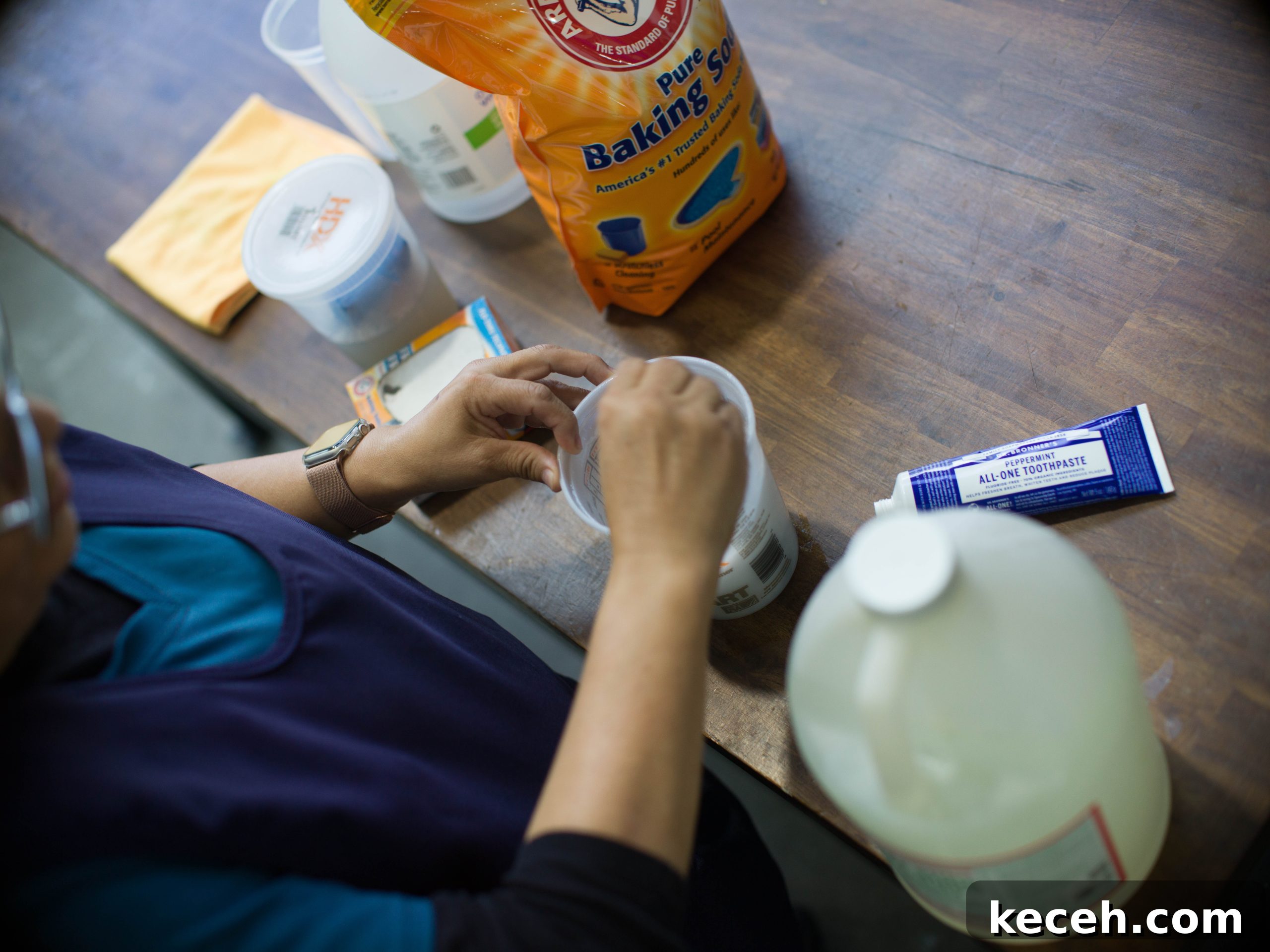
Azucena’s favorite is a mild abrasive scrub using small amounts of toothpaste. Inspired by dissolving bar soap for cleaning solutions, she tested toothpaste and found it adds useful scouring power for stubborn spots.
- 1 tsp (5 mL) toothpaste
- ½ tsp (2.5 mL) baking soda
- 2 oz (60 mL) Sal Suds
- 5 oz (150 mL) water
- 1–2 tsp (5–10 mL) vinegar added just before use
Mix the first four ingredients thoroughly; add the vinegar immediately before applying. Keep it in a bucket for dunking cloths or transfer to a spray bottle. Azucena uses this on sinks, mirrors, ceramic, stainless steel, and stubborn floor spots. It often replaces heavier scrubbing tools.
Bathrooms
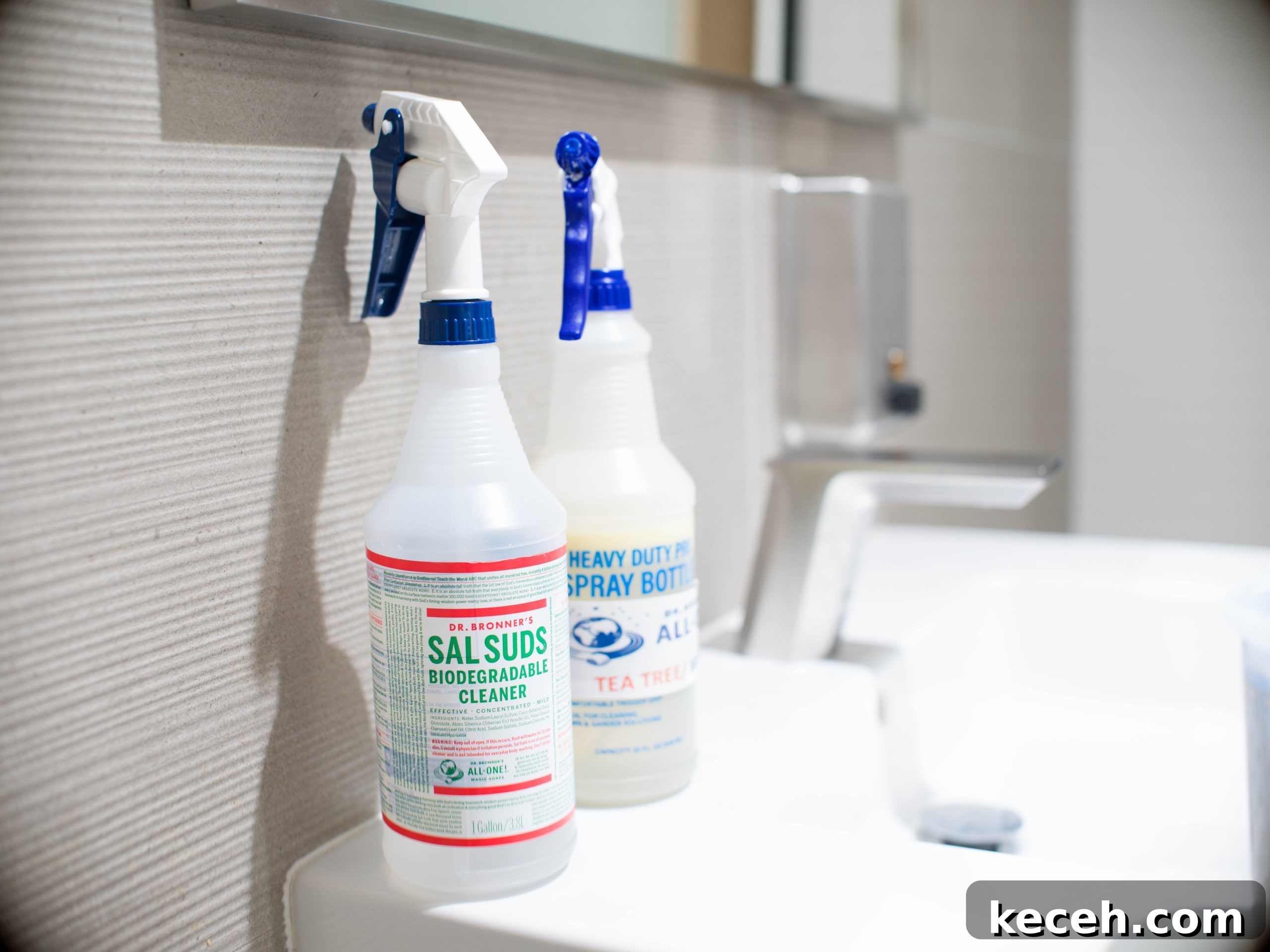
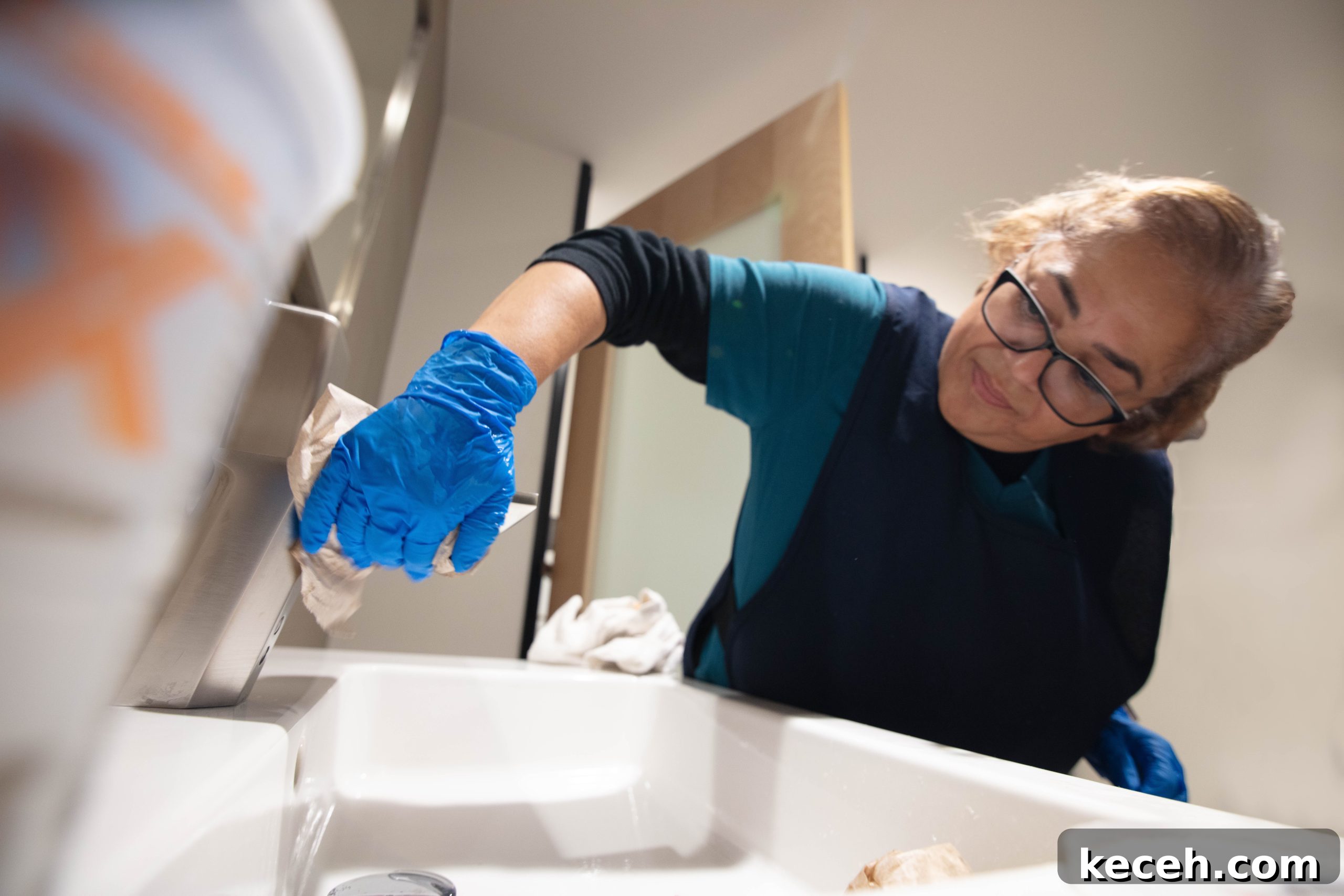
Sinks & toilets: The Sal Suds cleaning spray handles routine cleaning; the Toothpaste Scrub is used for soap scum and grime.
Tile and granite walls: She spot-cleans with the Toothpaste solution for the best shine.
Mirrors: Azucena sprays the glass solution onto a microfiber cloth and wipes the mirror for a streak-free finish.
Deodorizing: The glass spray diluted for floors works well to reduce odors in bathrooms.
Laundry
Most factory laundry involves rags and mopheads. For whites they use Sal Suds and baking soda, then add vinegar in the rinse cycle. Mop heads and rags are washed with a measured amount of Sal Suds, baking soda, and a rinse of vinegar dispensed via the fabric-softener compartment.
Kitchens & break rooms
Counters & stovetops: Cleaned with Sal Suds solutions, either sprayed or applied from a bucket and wiped.
Coffee pots: Descaled and refreshed by running vinegar through, then rinsing with clean water.
Stainless appliances: Wiped with Sal Suds solution, always following the grain for a neat finish.
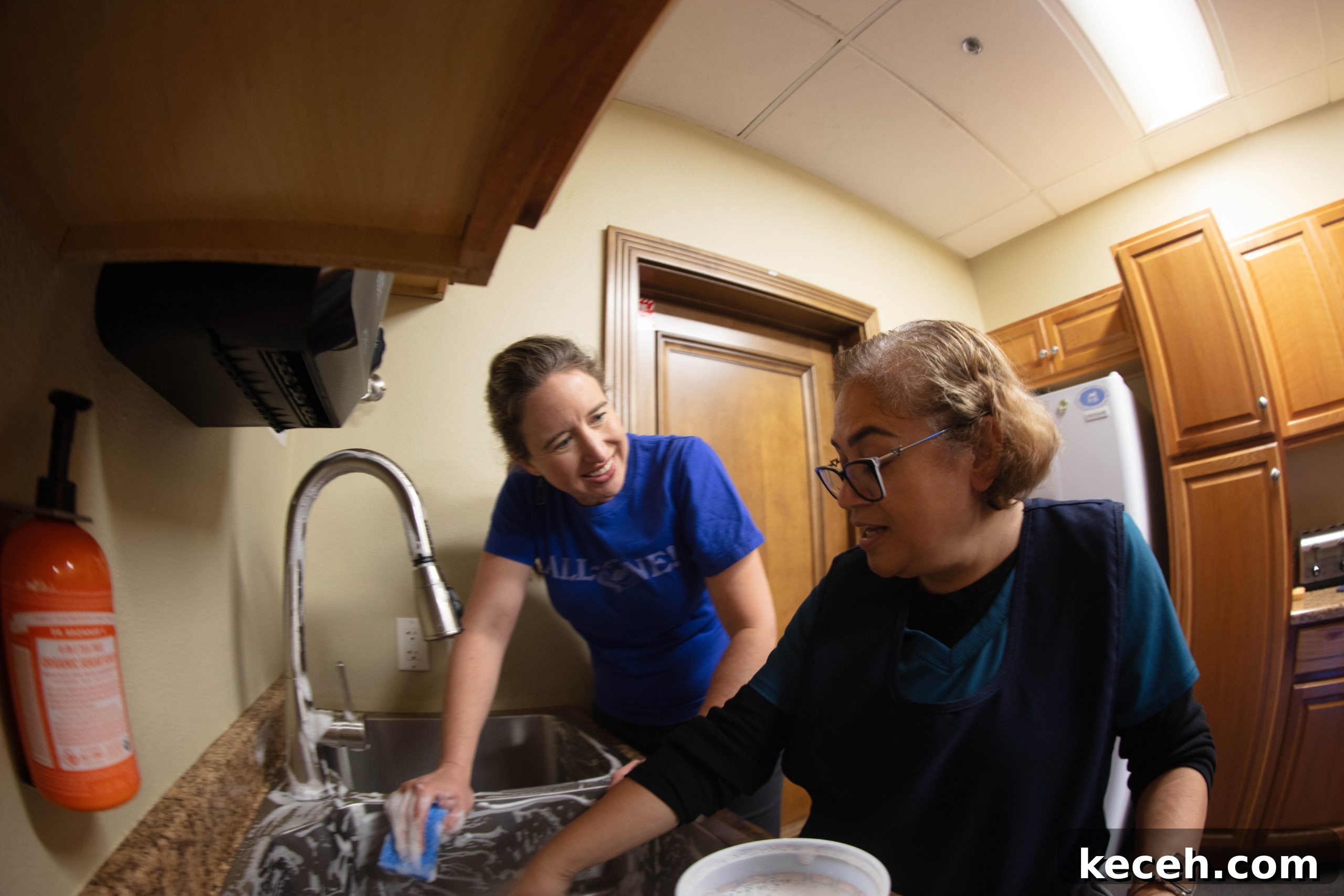
Executive break room: Hard water spots and mineral deposits that appeared on a sink were removed with the Toothpaste Scrub, which also tackled grime and odors under the sink flange; a vinegar-and-baking-soda mix refreshed the garbage disposal.
Floors
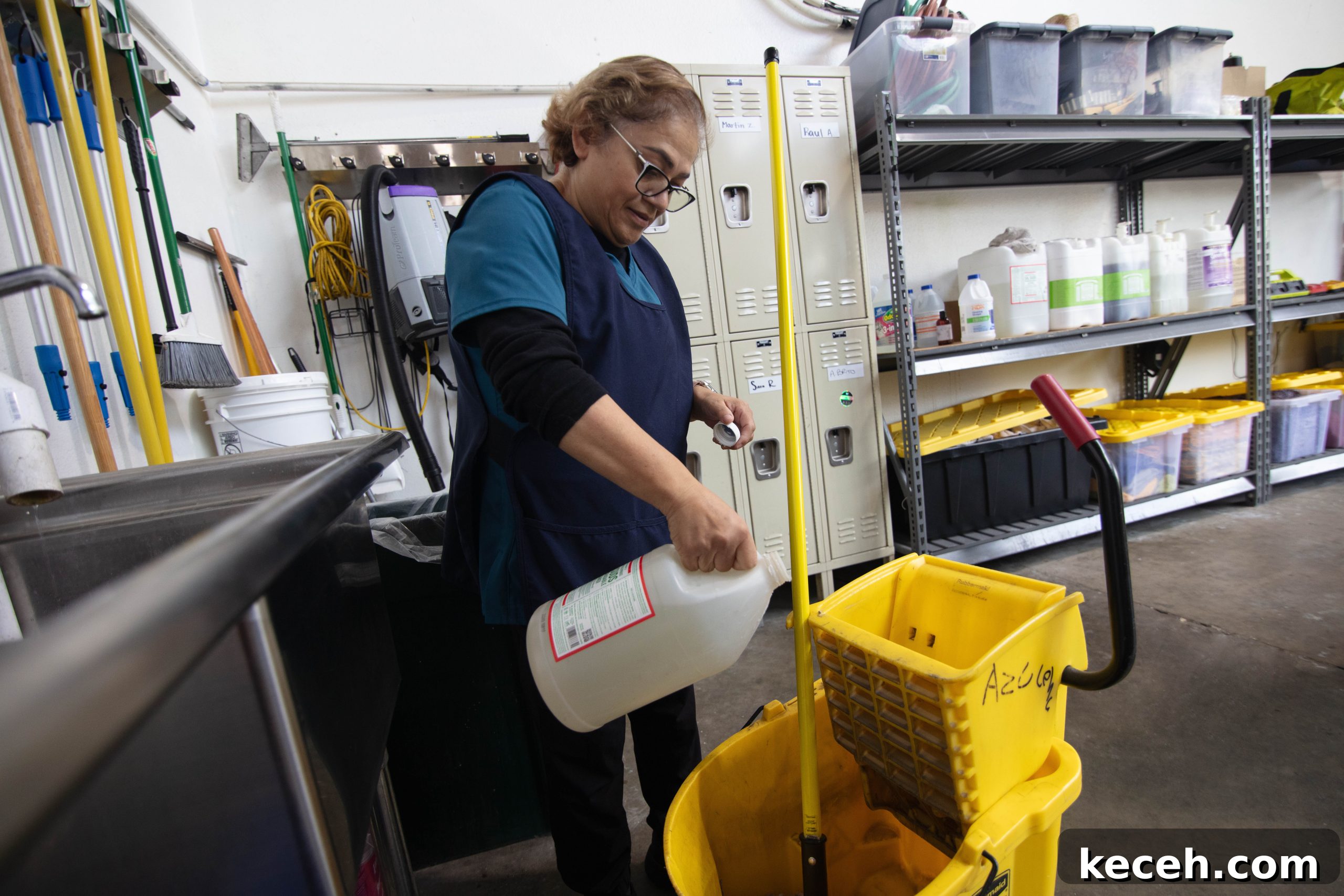
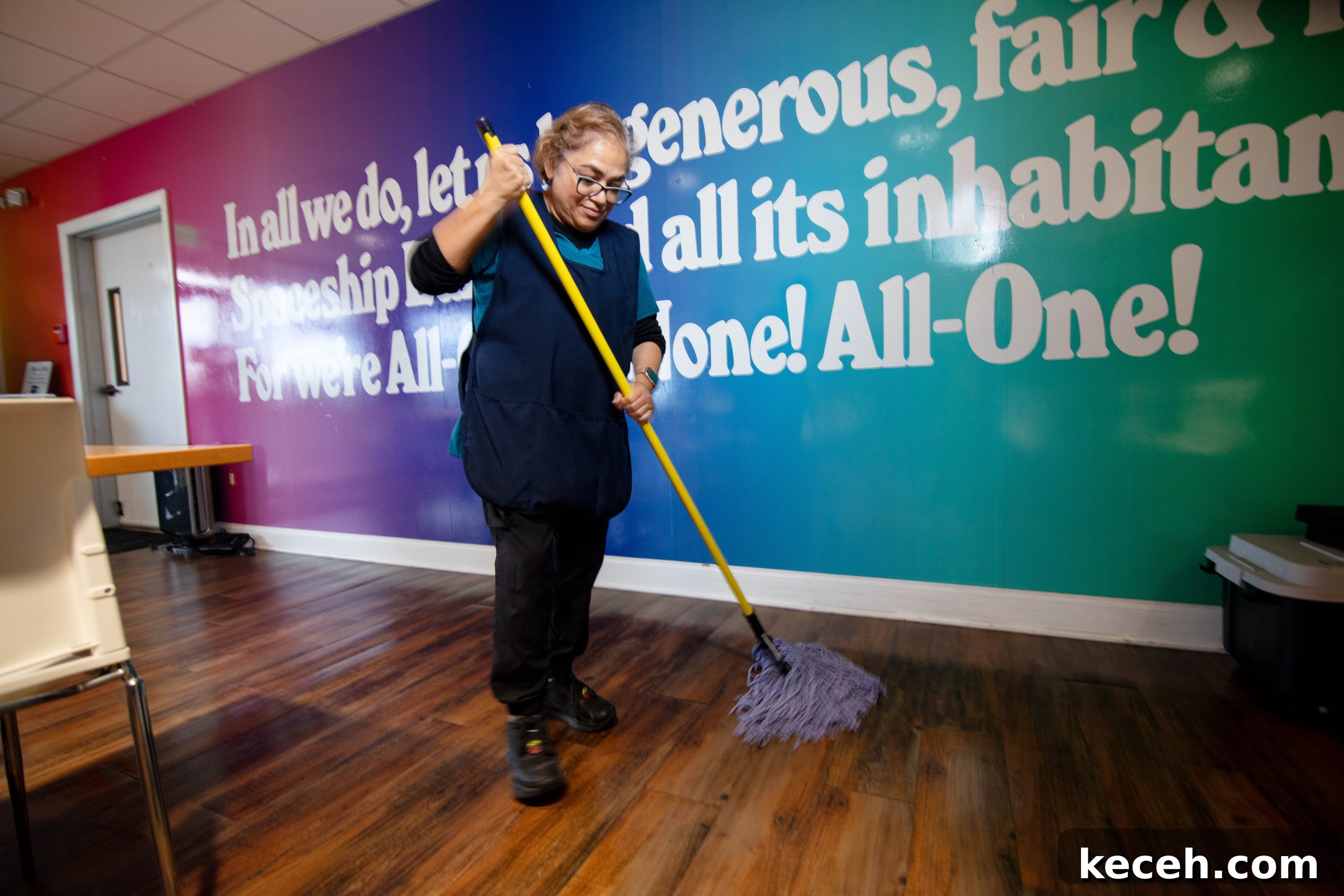
Tile, wood, and laminate floors are mopped with a string mop rinsed and wrung in a Sal Suds solution; essential oils are sometimes added for scent. Floors are dried immediately with a flat pad to ensure safe, ready use. Carpet cleaning with a machine uses only a drop or two of Sal Suds mixed with water.
Offices
Wood and laminate desks: Azucena uses diluted castile soap in a Sandalwood-Jasmine blend to lift grime and enhance color and shine, then buffs dry with a microfiber cloth.
Computers: She cleans screens with a barely damp microfiber cloth moistened with alcohol and uses alcohol on keyboards, applying it to the cloth first rather than spraying directly.
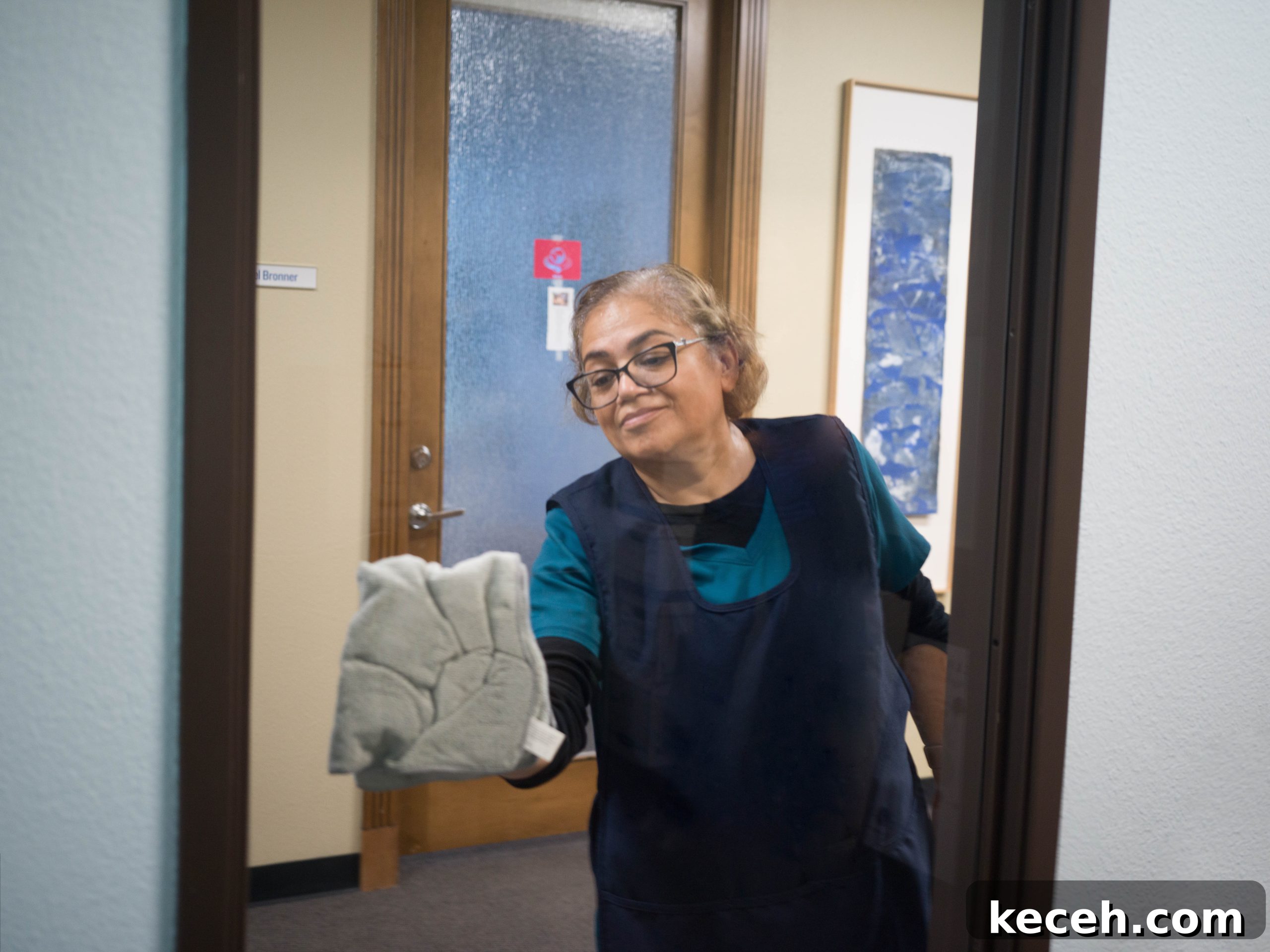
Windows: Cleaned like mirrors—spray the cloth, then wipe the glass for a streak-free finish.
Walls: Spot-treated with the Sal Suds cleaning spray for marks and scuffs.
Stainless door plates: Polished with the Toothpaste solution, then given a final wipe with the glass spray for a bright finish.
Disinfection
For disinfection of high-touch surfaces—doorknobs, light switches, toilet flush handles—the team uses 90% isopropyl alcohol. On a rotating schedule they also clean vents, table undersides, and chair bases to capture grime that might be missed during routine wipe-downs, using Sal Suds or a dunk-and-scrub method as needed.
Cleaning healthy, cleaning well
Dr. Bronner’s headquarters is busy and everything gets heavy use, but the custodial crew’s straightforward methods deliver consistent, high-quality results without relying on harsh chemicals. Using biodegradable, low-toxicity cleaners protects the health of the cleaning staff and the people who use the spaces, while avoiding lingering fumes. The team’s thoughtful dilutions and practical tool choices make effective, sustainable cleaning achievable at scale.

I’m grateful to Azucena for sharing her time and expertise, to Janitorial Lead Jose Barrera for coordinating the day, to Adolfo Brito who works second shift, and to Ernesto Borges for the photographs. Their collaboration shows how practical, safe cleaning practices keep a busy facility healthy and welcoming.
Further Reading:
- Mopping with Dr. Bronner’s Castile Magic Soap or Sal Suds
- The Low Cost of Green Cleaning
- My Cleaning Cabinet
- Green Clean Guide
* Sal Suds cleaner shows >60% biodegradation after 28 days per ISO 14593.