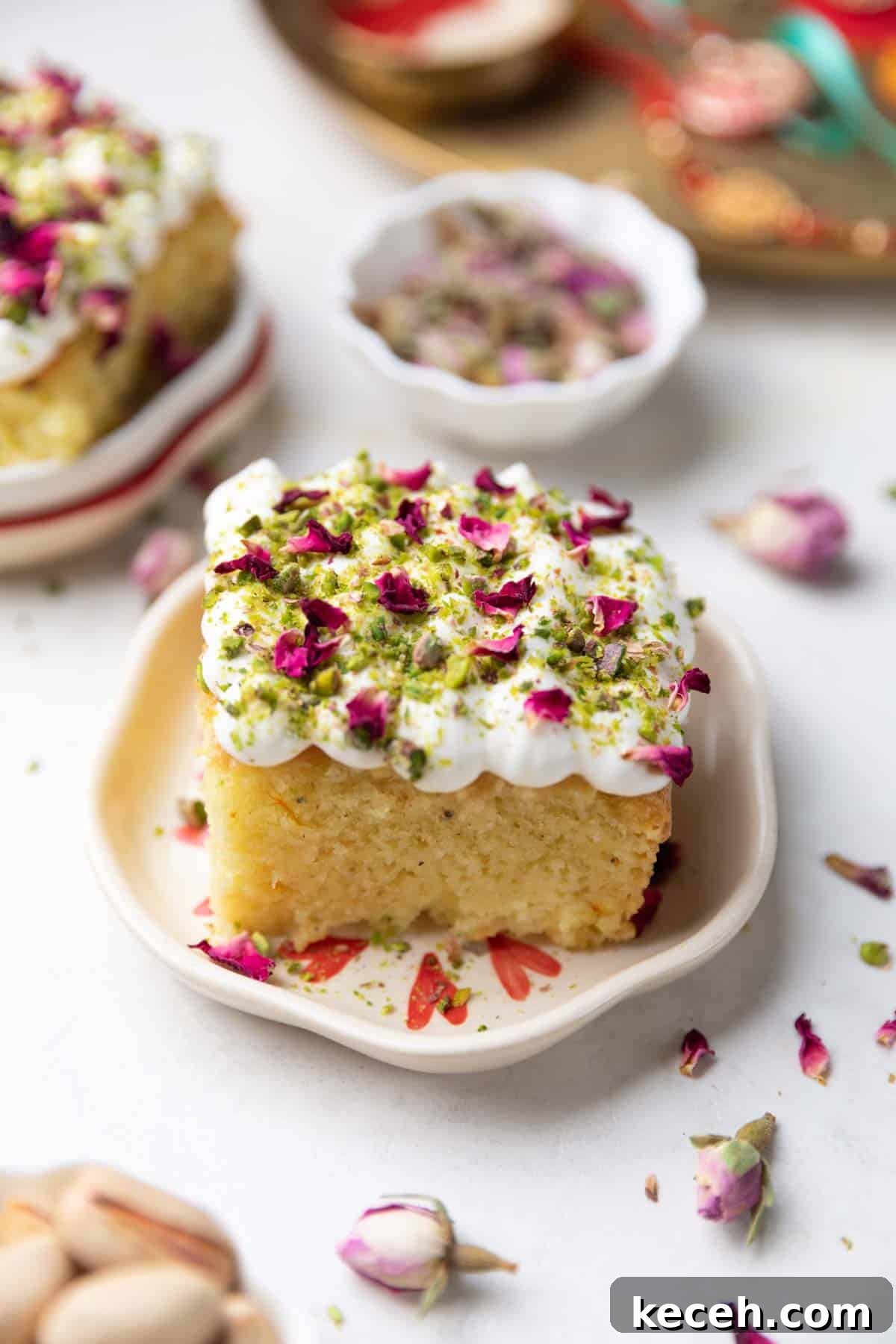
Presenting a fusion dessert – the rasmalai cake that is so good you’ll be amazed at how spot on the flavour is!
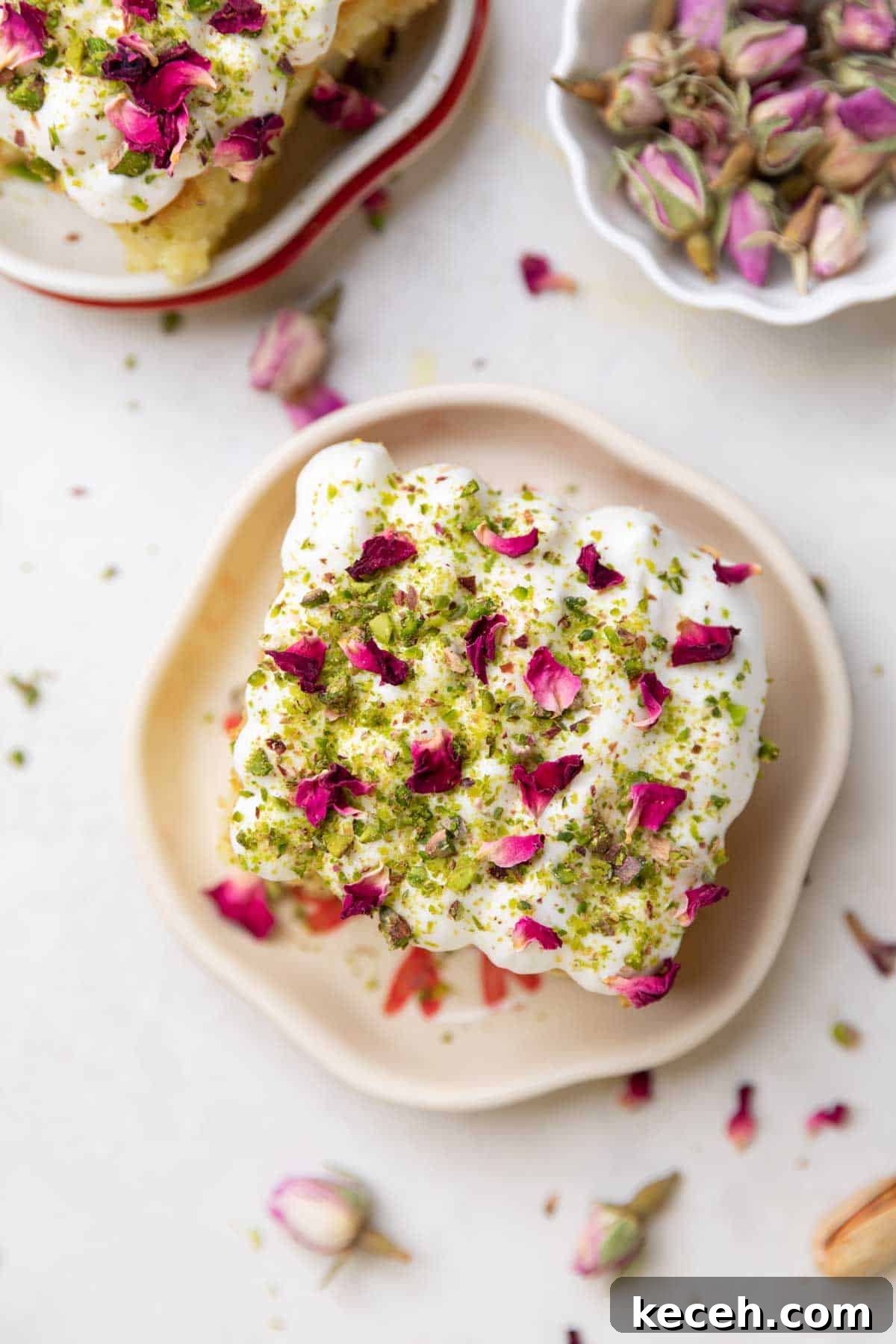
If you want a fresh dessert idea for Rakhi or any celebration, this rasmalai cake is a winner. It brings together the silky, soaked texture of a tres leches-style sponge with the classic Indian mithai flavours of rasmalai. The result is a moist, fragrant cake that tastes unmistakably like rasmalai.
I wasn’t always a fan of fusion recipes, but this one converted me. Everyone who tried it immediately recognized the rasmalai notes, and I only share recipes I genuinely love.
Jump To section: Rasmalai Cake
- What you Need for Rasmalai Cake
- Richa’s Top Tips To Make The Best Rasmalai Cake
- Frequently Asked Questions
What you Need for Rasmalai Cake
This recipe uses simple pantry ingredients and avoids butter to keep the sponge extra moist. A neutral-flavoured vegetable oil (sunflower, canola or rice bran) replaces butter to give a soft, tender crumb. The characteristic rasmalai flavour comes from rose water, cardamom and saffron. After baking, the warm sponge is pierced and soaked with a mixture of milk and condensed milk so the cake soaks up flavour and becomes luxuriously moist.
Richa’s Top Tips To Make The Best Rasmalai Cake
- Use high-quality saffron, cardamom and rose water. These aromatic ingredients define the cake’s flavour, and a small amount goes a long way.
- Avoid overmixing the batter. Overmixing deflates the air bubbles and can make the sponge dense instead of light and airy.
- Choose a neutral oil like sunflower, canola or rice bran. Avoid coconut oil, which can solidify when chilled and make the cake dense.
- You can adapt this to be vegan by substituting plant-based milk and condensed milk alternatives, though the texture and flavour may vary.
- Store the cake in an airtight container in the refrigerator for up to four days.
- Chill the cake for 3–4 hours before serving. Chilling helps the flavours meld and improves the cake’s structure when sliced.
Frequently Asked Questions
The cake batter is made from milk, flour, sugar and oil, flavoured with cardamom, rose water and saffron. After baking, holes are poked in the warm sponge and a milk‑condensed milk mixture is poured over it so the cake absorbs the rasmalai flavours.
The recipe is vegetarian and can be adapted to vegan by using plant-based milk and a vegan condensed milk alternative. Results may differ slightly in texture and flavour.
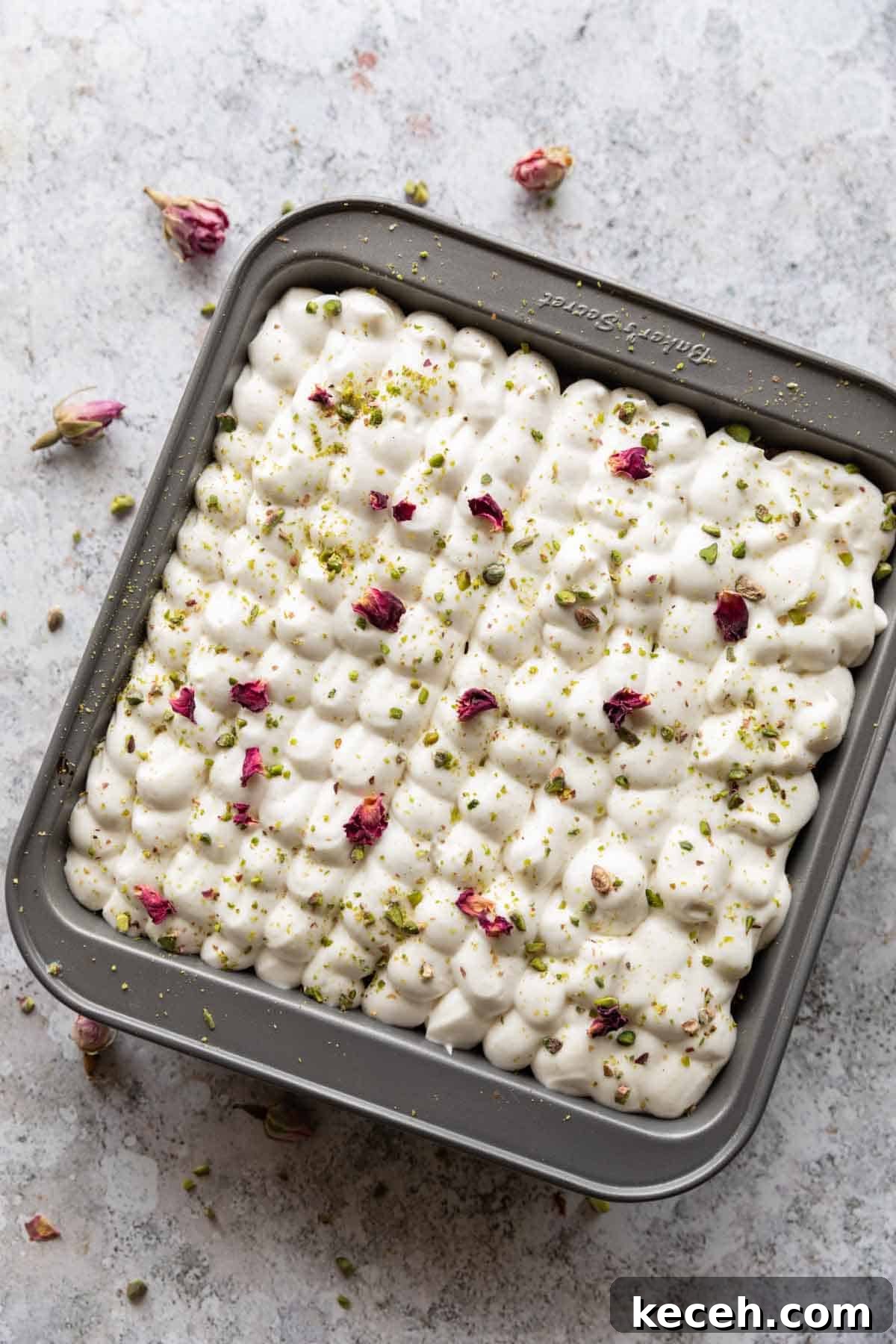
Finish the cake with whipped cream, chilled rabri, chopped pistachios and a few rose petals for an elegant touch. This cake disappears fast—if you make it, leave a comment to share how it turned out!
Rasmalai Cake
Ingredients
For the cake:
- 1 cup warm milk
- 8-10 saffron strands
- 2 tsp vinegar
- 1 tbsp rose water
- 1/2 cup cooking oil (neutral-flavoured like canola, rice bran or sunflower)
- 3/4 cup sugar
- 1 1/2 cup all purpose flour (maida)
- 1 tsp baking powder
- 1 tsp baking soda
- 1/2 tsp cardamom powder
For soaking the cake:
- 1/2 cup warm milk
- 5-6 saffron strands
- 1/4 cup condensed milk
Instructions
-
Preheat the oven to 180°C (350°F). Grease and flour an 8 x 8 inch square baking pan.
-
Pour 1/2 cup warm milk into a bowl, add 8–10 saffron strands and let them soak for 1–2 minutes. Stir in the vinegar and let it sit for another minute.
-
Add rose water, oil and sugar to the saffron-milk mixture and whisk until combined.
-
Fold in the all-purpose flour, baking powder, baking soda and cardamom powder. Mix until just combined, then pour the batter into the prepared pan. Bake at 180°C for about 30 minutes or until a skewer inserted into the centre comes out clean.
-
Remove the cake from the oven and poke holes across the warm cake with a fork or skewer.
-
Whisk together 1 cup warm milk, 5–6 saffron strands and 1/4 cup condensed milk. Pour this mixture over the warm cake so it soaks in and the sponge becomes very moist.
-
Refrigerate the cake for at least two hours, ideally 3–4 hours, before topping with whipped cream or rabri. Serve cold.
Nutrition
Carbohydrates: 39g,
Protein: 4g,
Fat: 15g
Like this recipe? Rate and comment below!