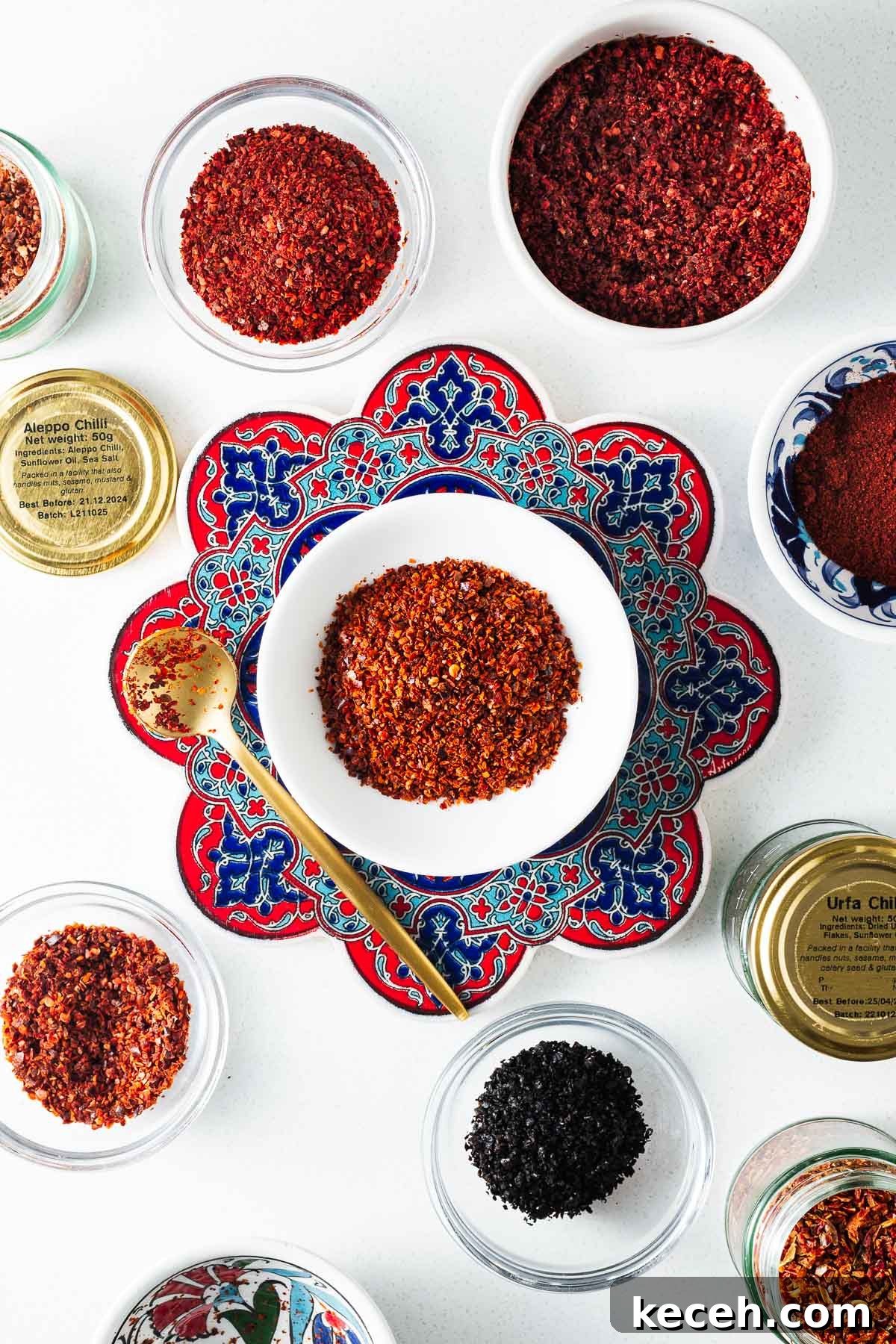
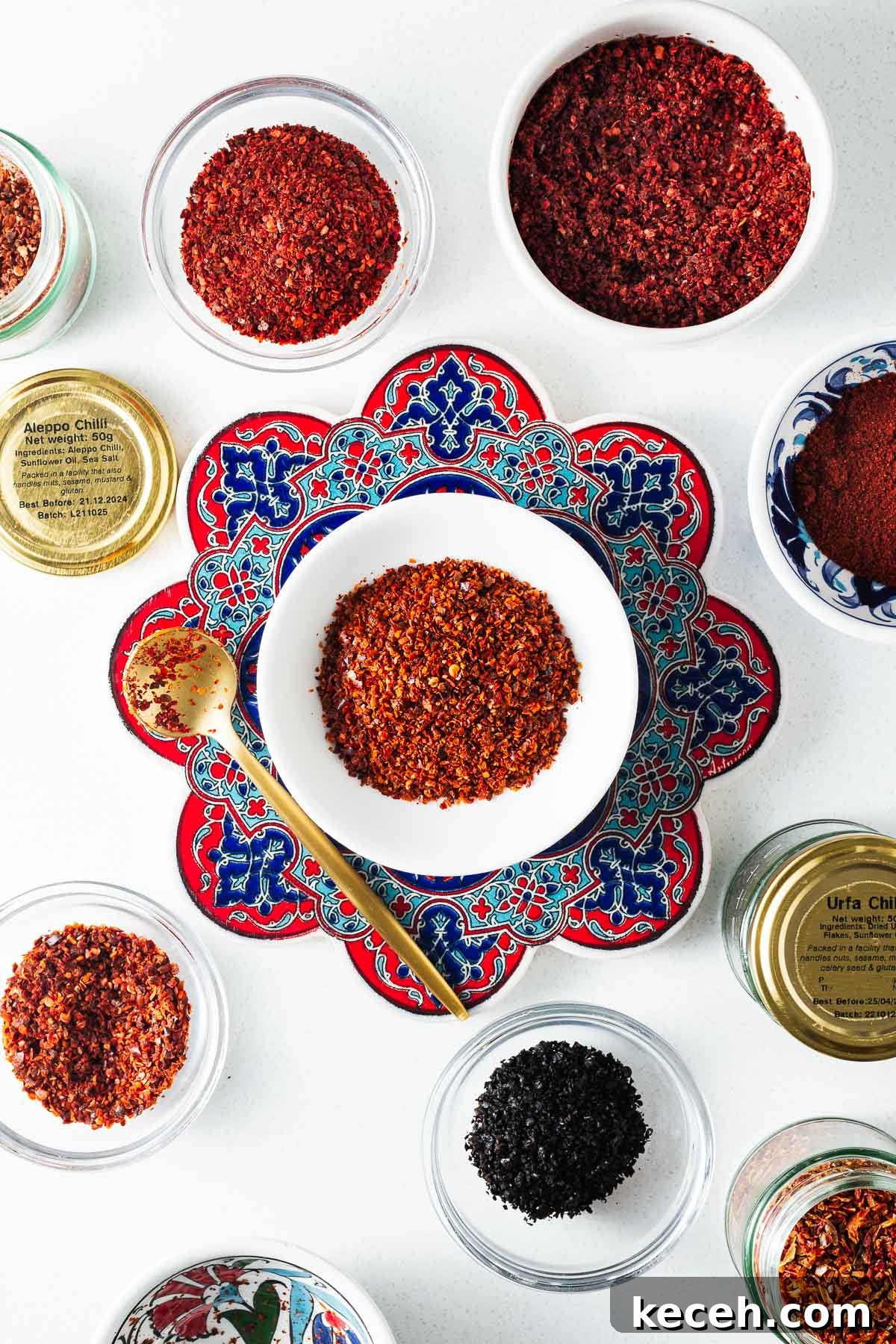
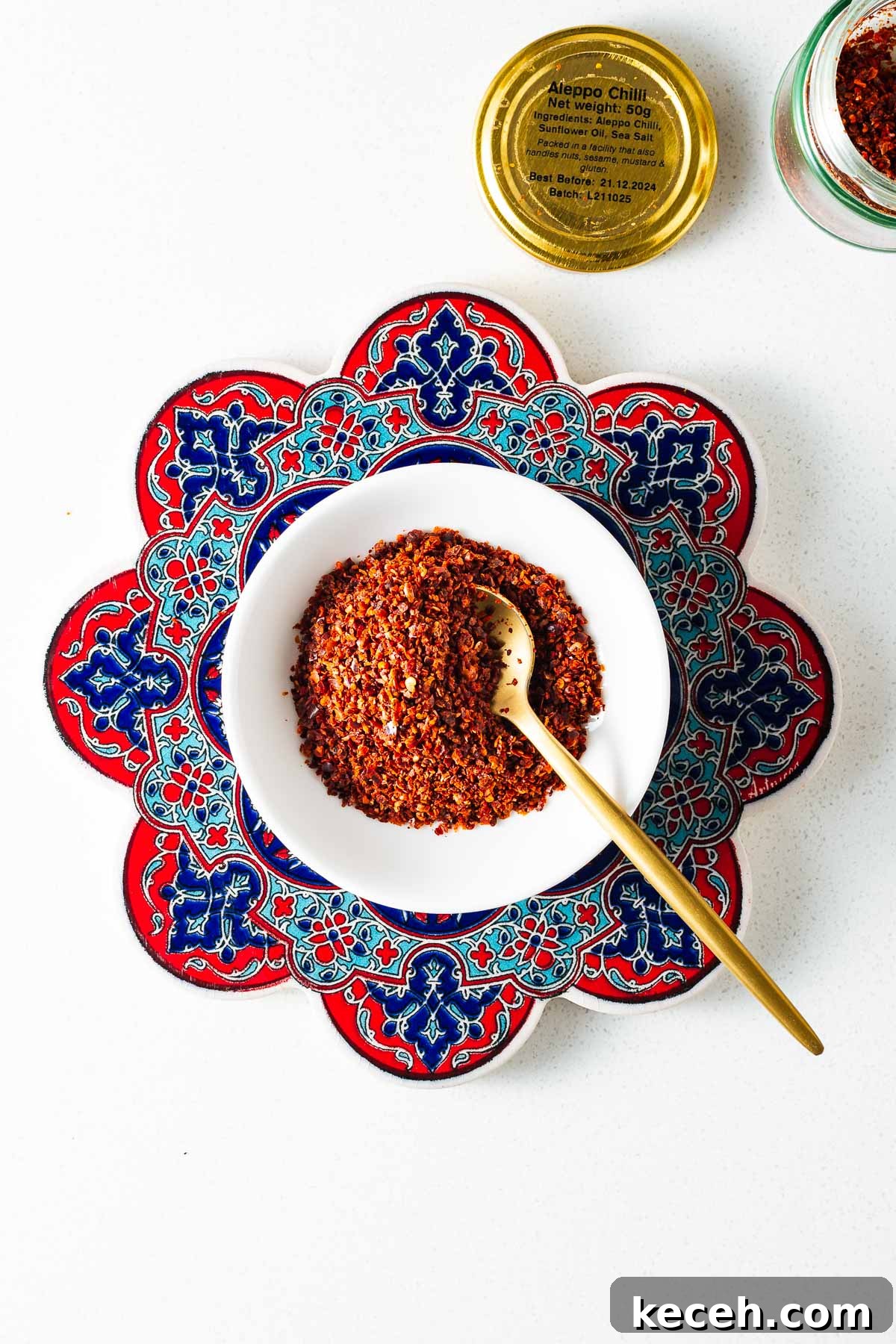
If you own Middle Eastern cookbooks, you’ve likely seen Aleppo pepper listed among the ingredients. These sun-dried pepper flakes offer moderate heat with a sweet, fruity character, an earthy, lightly smoky finish and a hint of savouriness.
Unfortunately, Aleppo pepper can be hard to find in some places.
Once you understand the different types of Turkish chilli flakes (pul biber) and the flavour profile of Aleppo pepper flakes, you’ll often be able to substitute something suitable from your pantry. Or jump to the recipe to make a homemade Aleppo-style pepper blend.
In this post
- What is Aleppo pepper?
- What makes Aleppo pepper special?
- Pul biber vs Aleppo pepper
- The best Aleppo pepper substitutes
- How to use Aleppo pepper
- Frequently asked questions
- Easy Aleppo pepper substitute recipe
What is Aleppo pepper?
The Aleppo pepper, or Halaby pepper, is a variety of Capsicum annuum named for the Syrian city of Aleppo. Because of disruption in Syria, much of the commercial production of these dried pepper flakes now happens in Turkey.
When recipes call for Aleppo pepper, they usually mean the dried, crushed form. The flakes are a deep red and offer moderate heat, typically around 10,000 Scoville Heat Units (hotter than most jalapeños but milder than cayenne).
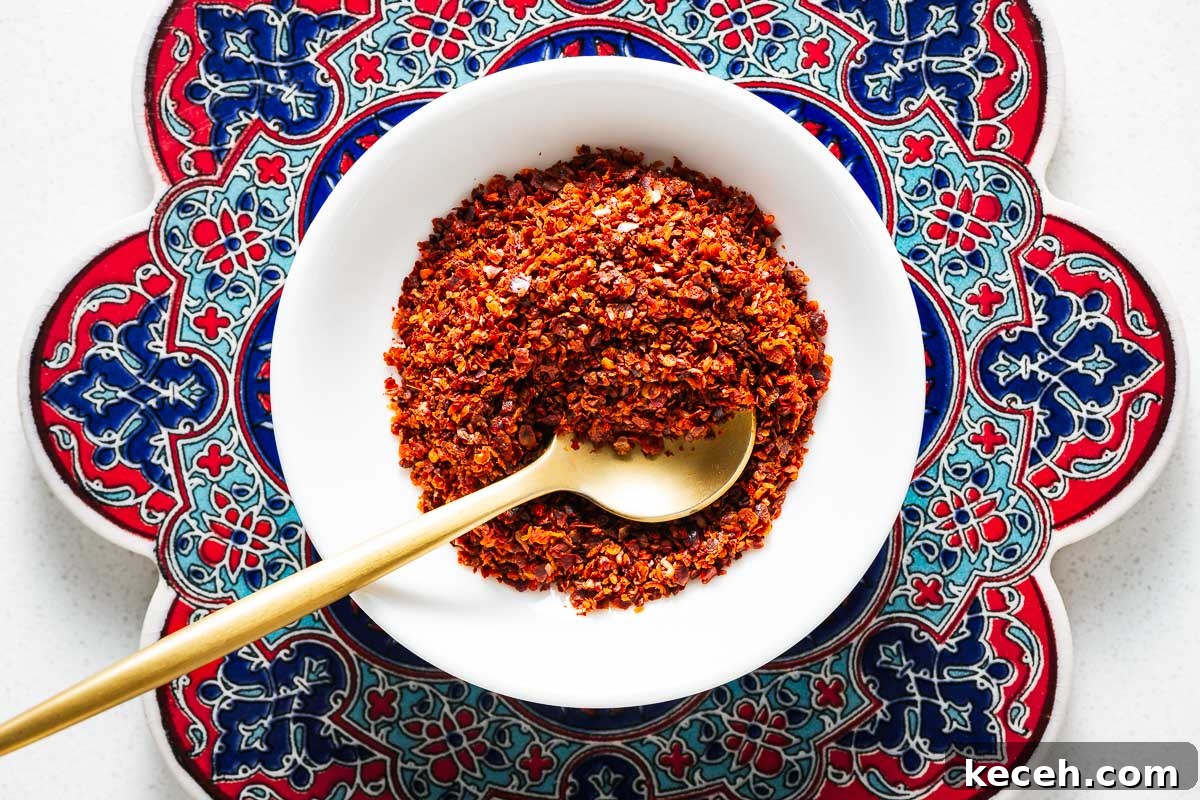
Aleppo pepper’s flavour is more nuanced than many dried chiles: fruity up front, with earthy, slightly smoky notes and a pleasant savouriness. Its coarse, seedless red flakes are attractive as a finishing sprinkle and common across Turkish, Middle Eastern and Mediterranean cuisines—appearing in hummus, salads, kebabs and falafel.
What makes Aleppo pepper special?
Two things set Aleppo pepper flakes apart: the flavour of the ripe pepper and the way the flakes are prepared.
To make the flakes, ripe burgundy peppers are semi-dried in the sun, deseeded, and then crushed so only the flesh becomes coarse flakes. That process produces a flavour reminiscent of sun-dried tomatoes with gentle heat.
Before packaging, flakes are often coated in oil and lightly salted. This step enriches colour, enhances fruity and savoury notes, and softens the texture—making the flakes irresistible to sprinkle over many dishes.
Pul biber vs Aleppo pepper
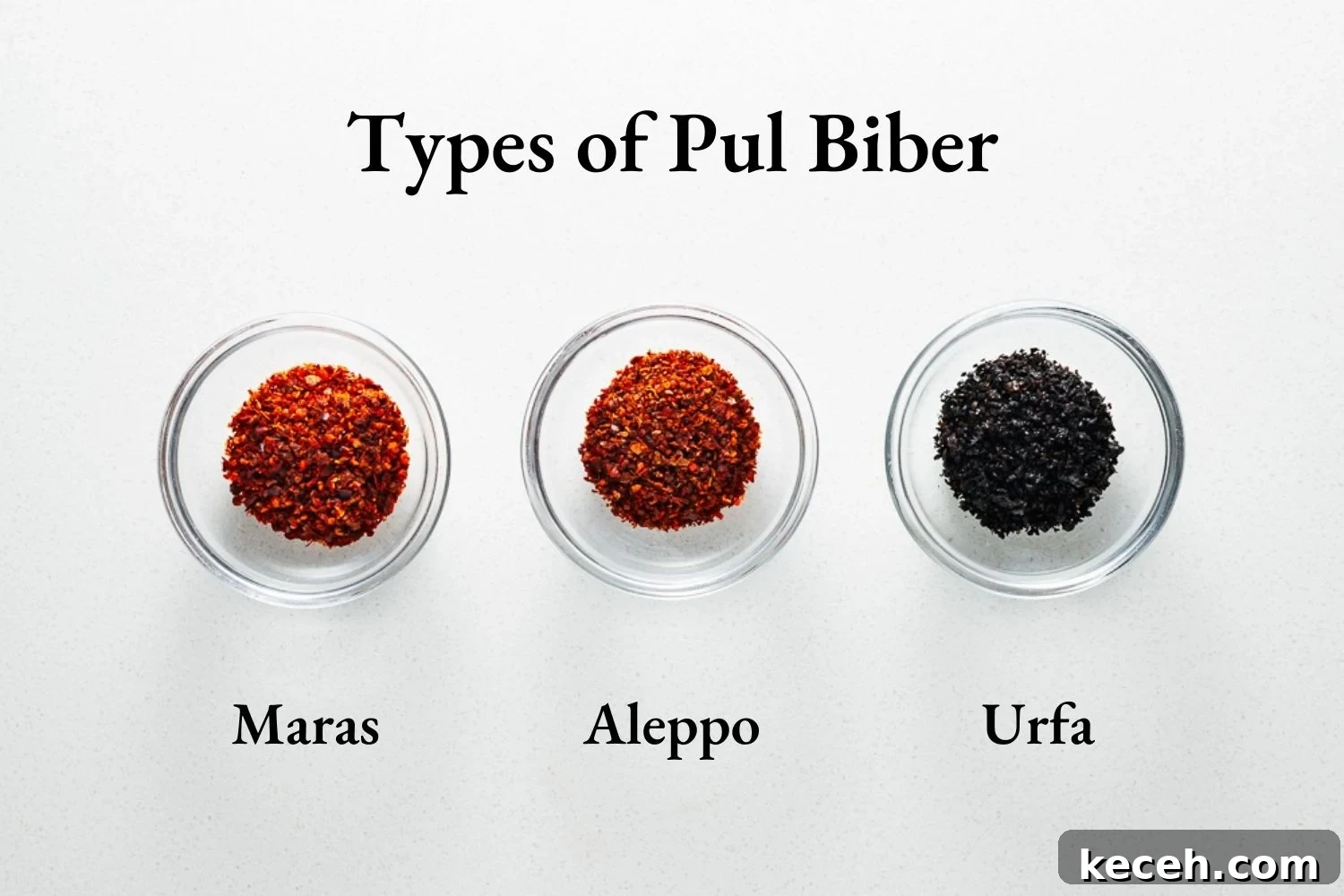
Pul biber means Turkish red pepper flakes (pul = flake, biber = pepper). The peppers are sun-dried, deseeded and crushed into coarse flakes, and producers often mix them with oil and salt.
People sometimes use pul biber and Aleppo pepper interchangeably, but Aleppo is only one type of pul biber. Other popular Turkish varieties include Urfa biber and Maras biber (ma-rasch).
The best substitutes for Aleppo pepper
When choosing a substitute, look for these Aleppo characteristics:
- Moderate heat (around 10,000 SHU)
- Fruity, earthy and slightly smoky flavour
- Coarse, seedless flakes
- Often finished with oil and a little salt
Here are good alternatives that capture some or most of those qualities:
- Homemade Aleppo pepper substitute
- Turkish Marash biber
- Antebi peppers
- Korean gochugaru
- Ancho chile powder
- Chile de árbol
- Paprika
- Chipotle powder
- Cayenne pepper
- Crushed red pepper flakes
- Spice blends
- Hot sauce
1. Homemade Aleppo pepper substitute
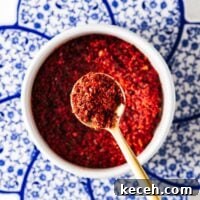
Aleppo flakes are coarse, seedless and deep red with a fruity, earthy, moderately spicy profile and a touch of savouriness. You can recreate that profile easily at home.
Key ingredients for an Aleppo-style blend:
- Korean gochugaru flakes (or another coarse, seedless chilli flake) as the base
- Smoked paprika for a hint of smokiness
- A pinch of ground cumin for earthiness
- A small pinch of salt to add savoury depth
- Sunflower oil or another neutral oil to soften the flakes and help salt adhere
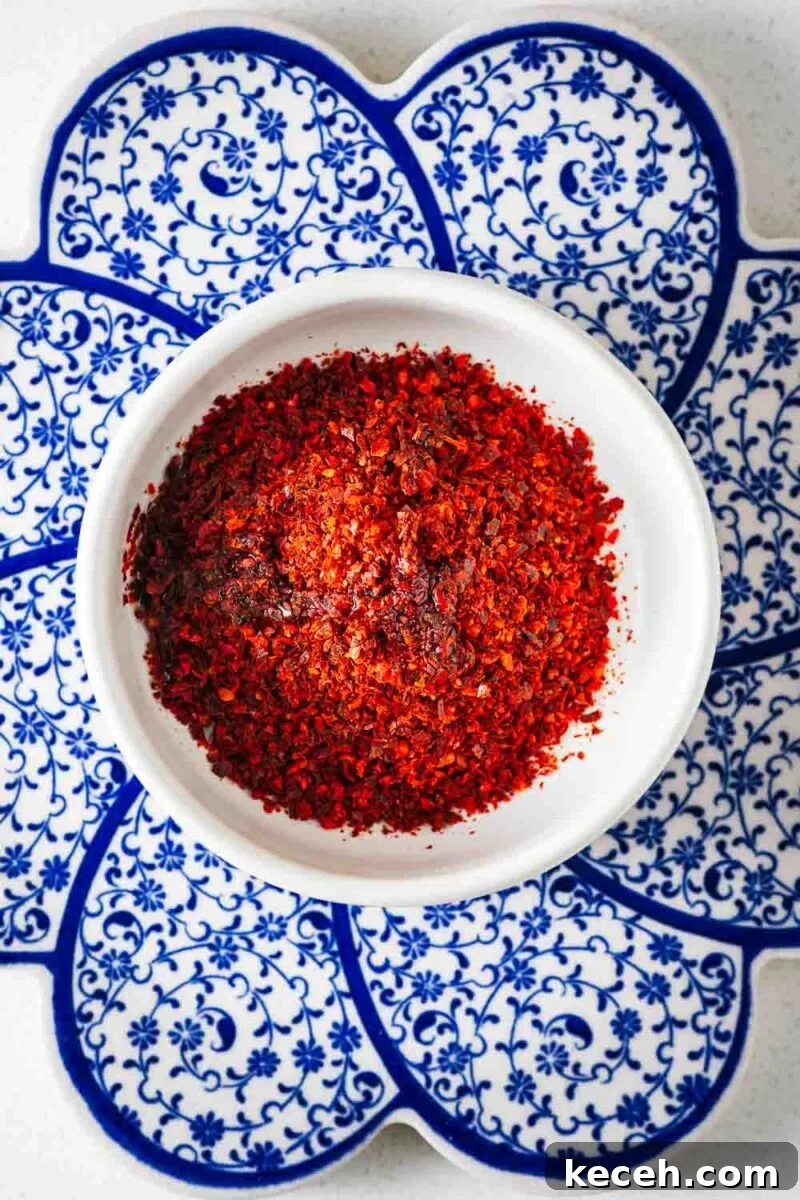
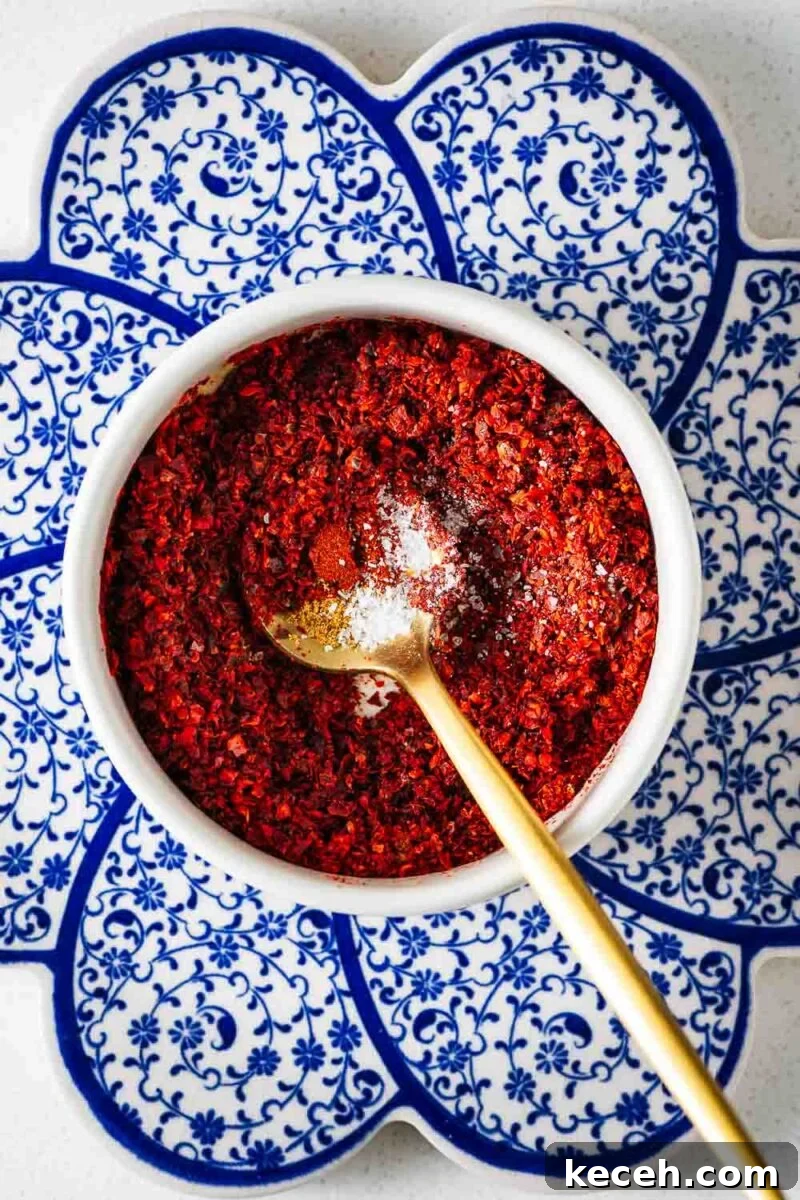
Basic method: combine the chilli flakes with oil, then add smoked paprika, a pinch of cumin and salt to taste. You can swap the base flakes or tweak spices—if your flakes are mild, add a pinch of cayenne; if they’re very smoky, omit the smoked paprika. Dried guajillo chillies also work well if you make your own flakes.
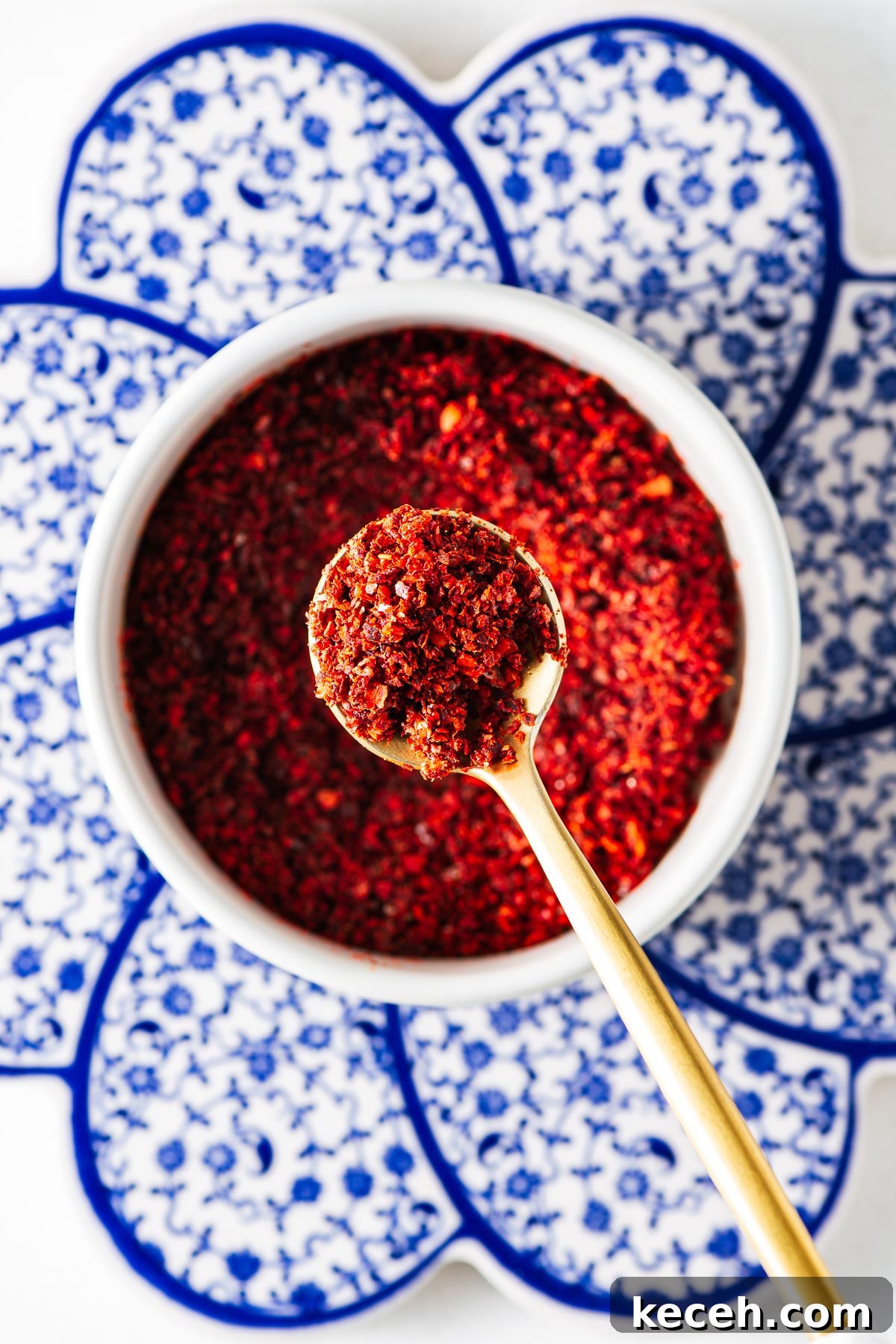
2. Turkish Marash pepper: The best shop-bought alternative
Marash pepper (maras biber) is a Turkish variety made into sun-dried, seedless flakes. It’s slightly milder (4,000–8,000 SHU) and a touch smokier than Aleppo, but in most dishes it’s an excellent direct substitute. Look for maras pul biber at Turkish grocers and use it 1:1 for Aleppo flakes.
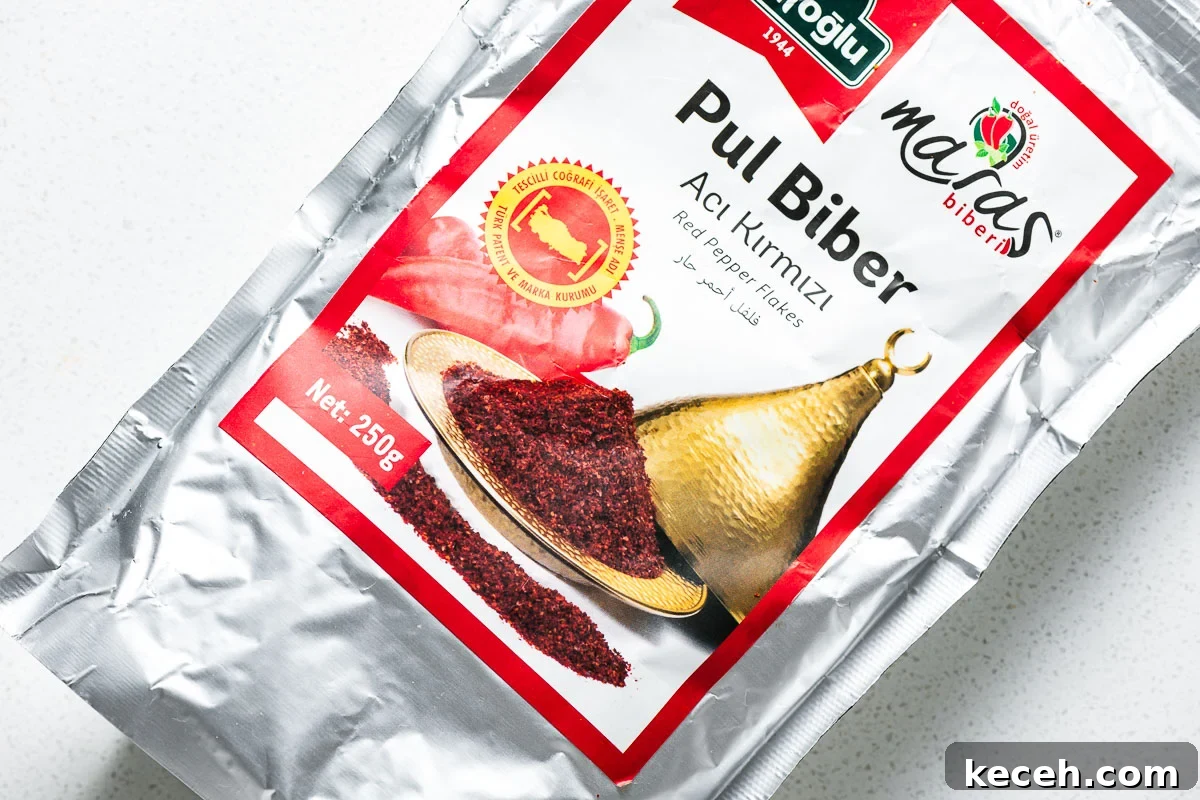
3. Antebi peppers
Antebi biber is another Turkish pul biber known for a milder, fruitier profile. It’s a pleasant alternative where available, though it can be as hard to source as Aleppo itself. Use it as a 1:1 substitute when you can find it.
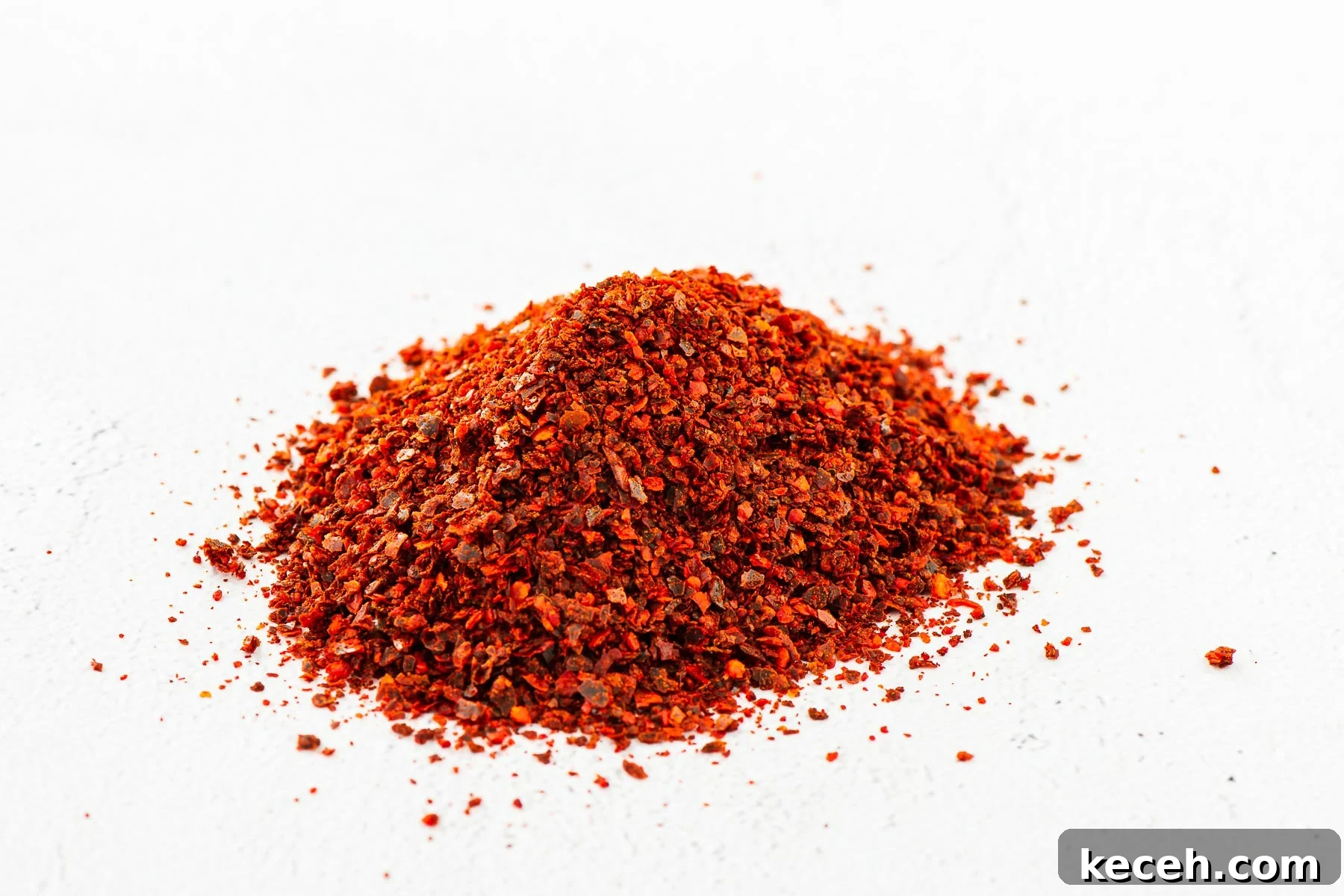
4. Korean gochugaru
Korean gochugaru is an excellent substitute because its coarse, seedless texture closely matches Aleppo flakes. The flavour is sweet and slightly smoky; heat varies by type. Spicier varieties like those made from Cheongyang peppers (~10,000 SHU) will match Aleppo’s heat—otherwise add a pinch of cayenne. Sun-dried taeyangcho gochugaru is particularly similar.
5. Ancho chile powder
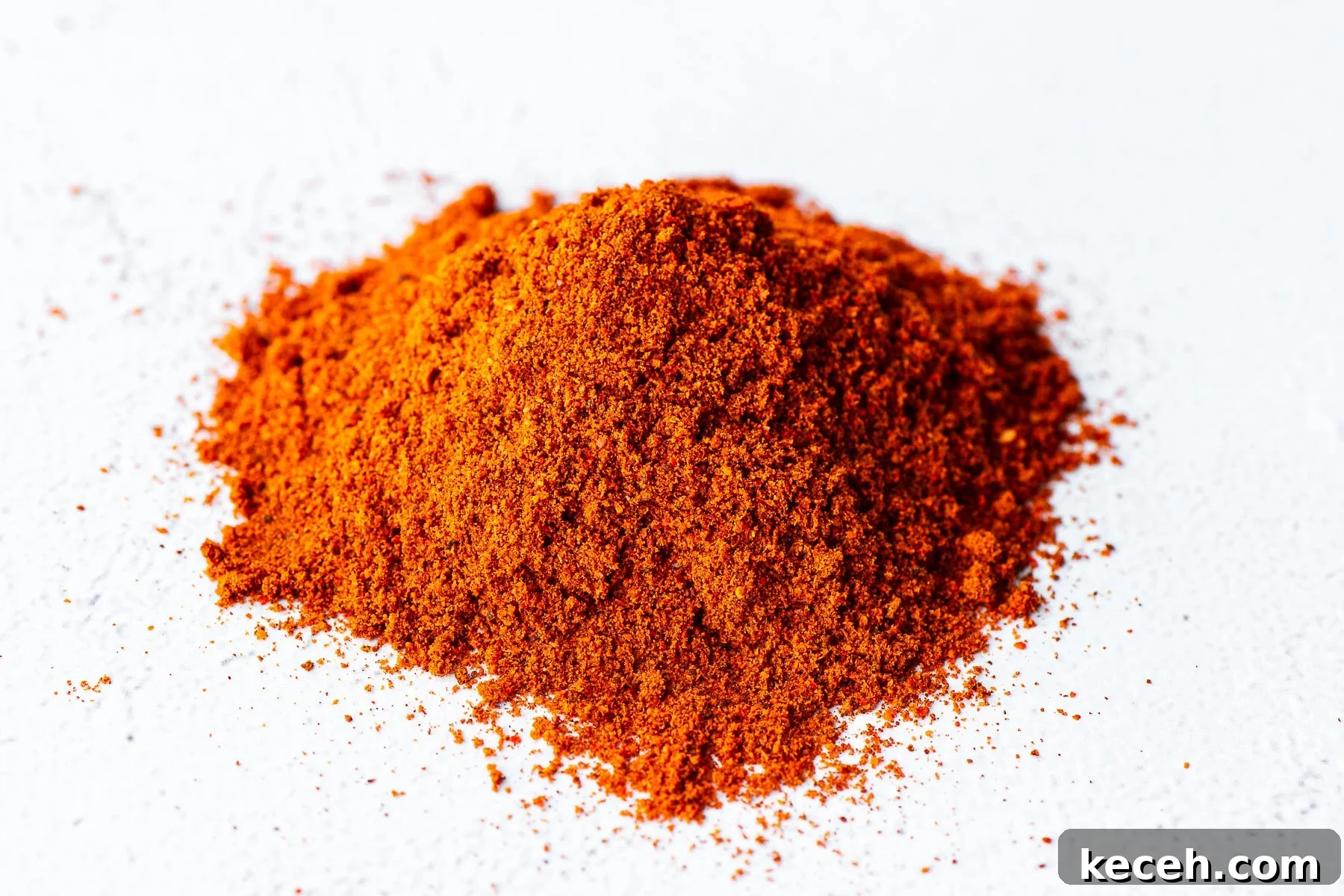
Ancho chile powder, made from dried poblano peppers, is mild and smoky-sweet (about 1,000–1,500 SHU). It’s a good lower-heat substitute; add a little cayenne if you want more kick. You can make it from deseeded dried ancho peppers for a coarser texture.
6. Chile de árbol
Chile de árbol is much hotter (15,000–30,000 SHU) but offers earthy, smoky flavour. If using as a substitute, deseed and grind the flesh to a coarse powder and use sparingly—about half a teaspoon of chile de árbol powder for every teaspoon of Aleppo called for.
7. Paprika
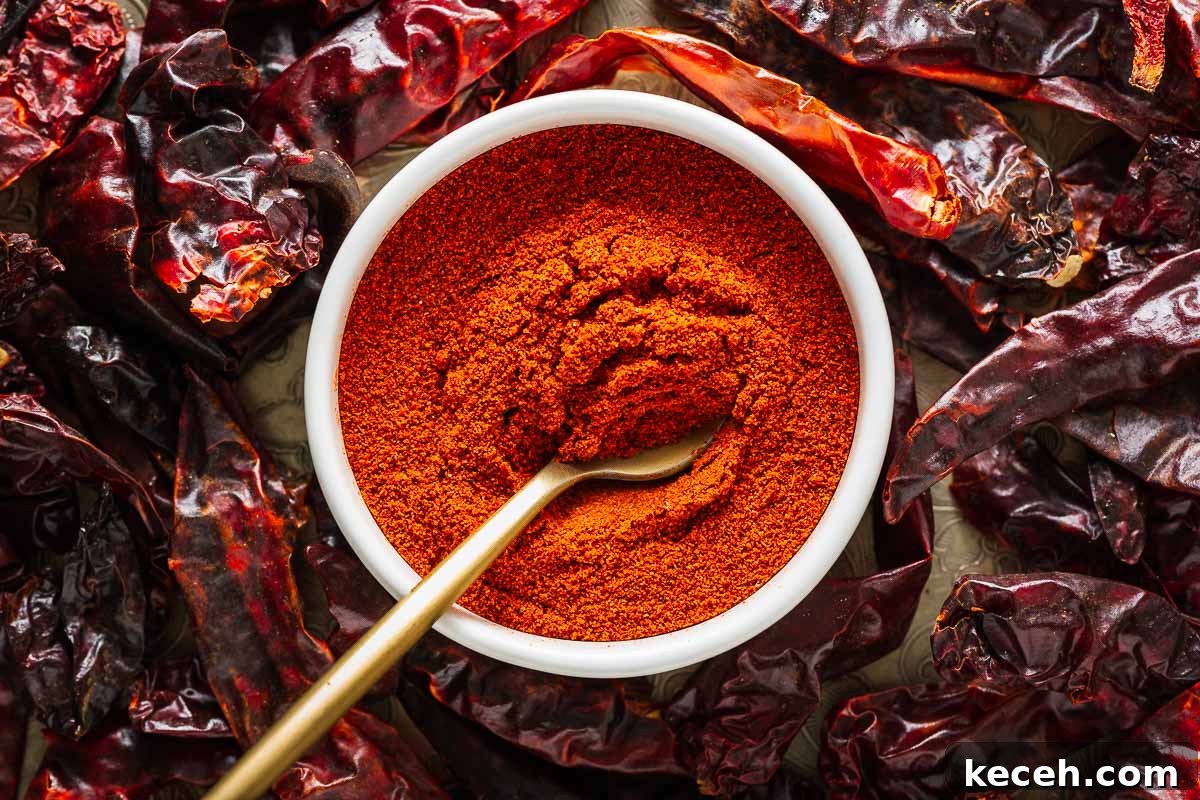
Paprika ranges from mild and sweet to intensely smoked. While regular paprika lacks Aleppo’s heat and coarse texture, Spanish or Hungarian variants and smoked paprika can add colour and red-pepper flavour to hummus, dips and marinades. If the paprika is mild, boost heat with a pinch of cayenne.
8. Chipotle powder
Chipotle powder—dried smoked jalapeño—has moderate heat (2,500–8,000 SHU) and a strong smoky flavour. Use it 1:1 for an extra-smoky twist, adjusting to taste in sauces, marinades and stews.
9. Cayenne pepper
Cayenne is significantly hotter (30,000–50,000 SHU). Its flavour is sweet and slightly fruity beneath the heat, but it can overpower a dish. Start with a quarter teaspoon of cayenne for each teaspoon of Aleppo called for, then adjust carefully.
10. Crushed red pepper flakes
Commercial crushed red pepper often includes seeds and can be much hotter than Aleppo (commonly 32,000–48,000 SHU). They lack pul biber’s complex flavour and seedless texture, so use seedless flakes or powder where possible. If crushed red pepper is your only option, start with half the amount and adjust to taste.
11. Spice blends
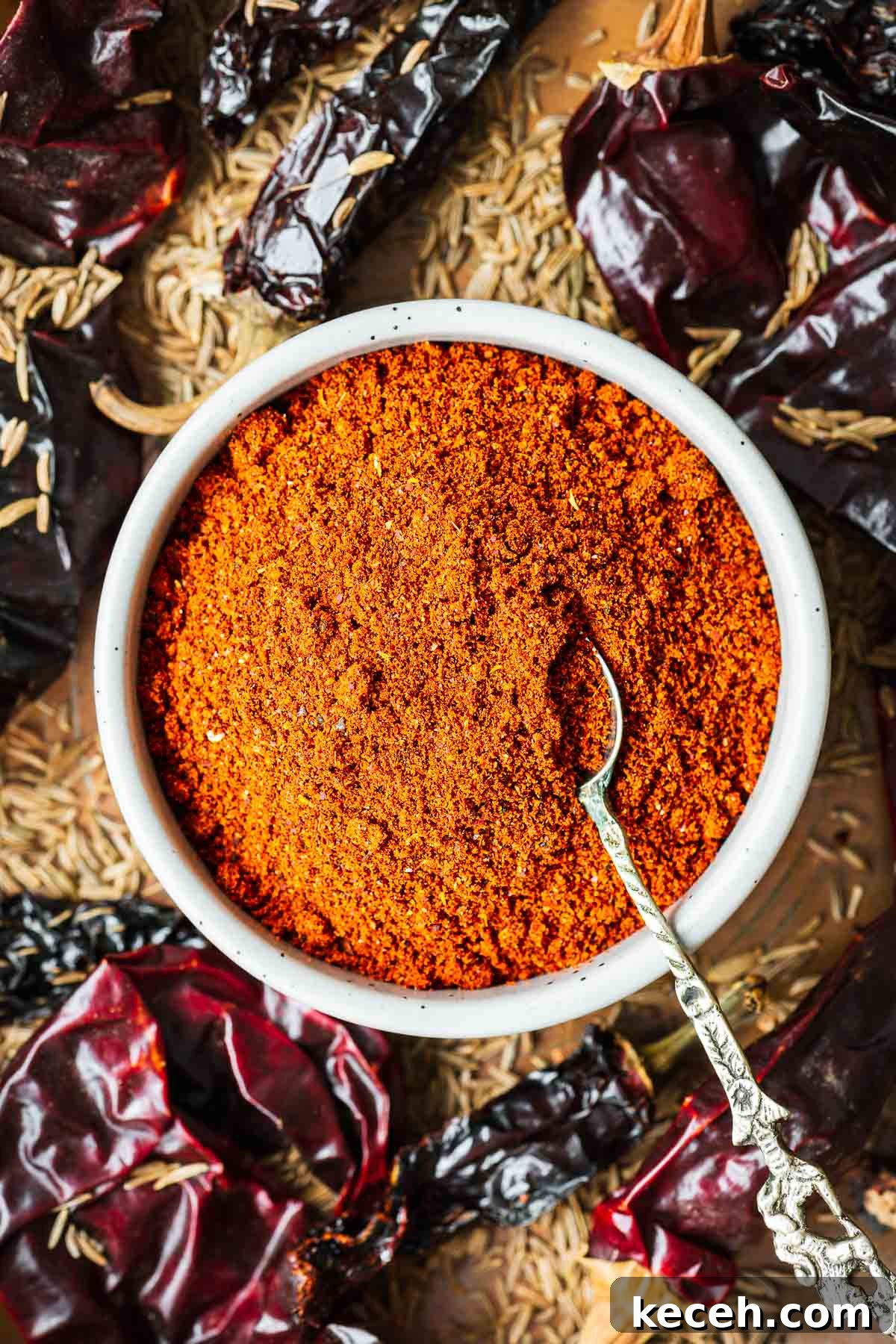
If you want a similar depth without an exact match, try spice blends. Peri-peri offers smoky, sweet heat; harissa powder brings rich, smoky, North African spice that works well in Middle Eastern and Mediterranean dishes.
12. Hot sauce
When nothing else is available, a good hot sauce or a spoonful of rose harissa paste can provide immediate Middle Eastern flavour in soups, stews and dips. Avoid hot sauces in recipes where added moisture would change texture—such as falafel mixtures—unless you adjust other liquids.
How to use Aleppo pepper
Aleppo pepper flakes are versatile and work as a finishing spice or a cooking ingredient. Here are practical uses and inspiration:
- Sprinkle on roasted vegetables: The gentle heat and fruity-smoky notes brighten roasted or grilled vegetables.
- Season grilled meats: Use flakes in rubs or marinades for chicken, beef or lamb; combine with olive oil, garlic and herbs.
- Add to soups and stews: Stir in during cooking to deepen broth flavours without overpowering heat.
- Top egg or avocado toast: A pinch adds a lively, savory finish to breakfast toasts.
- Mix into dressings: Incorporate Aleppo or a substitute into vinaigrettes and hummus-based dressings for balanced heat.
- Use in Middle Eastern dishes: Add to hummus, baba ganoush, muhammara or spice blends like shawarma and harissa for authentic flavour.
Recipes with Aleppo pepper flakes
- Crispy Middle Eastern falafel
- Baked falafel with canned chickpeas
- Roasted cauliflower with tahini sauce
- Tomato and cucumber tahini salad
- Harissa roasted cauliflower
- Muhammara (Lebanese red pepper and walnut dip)
Frequently asked questions
Smoked paprika is a reasonable substitute: it brings sweet red-pepper flavour and smokiness but is milder and finer in texture. Add a pinch of cayenne for heat and a little salt for savouriness if needed.
Yes. Aleppo pepper provides coarser, seedless flakes with a focused red-pepper flavour, earthiness and moderate heat that can work well where chilli powder is called for—though chilli powder is typically a spice blend, not a single pepper.
Aleppo flakes taste fruity and sweet with earthy, slightly smoky undertones and a touch of savouriness, at a mild to moderate heat level.
No. Aleppo pepper is much milder than cayenne. Aleppo is about 10,000 SHU; cayenne usually ranges from 30,000 to 50,000 SHU.
Generally yes. Aleppo peppers average around 10,000 SHU, while jalapeños typically range from 2,500 to 8,000 SHU.
Easy Aleppo Pepper Substitute
Print
Pin
Ingredients
- 2 tablespoons gochugaru , or another seedless pepper flake
- ½ teaspoon sunflower oil , or another neutral oil
- ¼ teaspoon smoked paprika
- pinch ground cumin
- pinch sea salt
Instructions
-
Place the chilli flakes in a small bowl and add the sunflower oil. Stir to coat the flakes, then mix in smoked paprika, a pinch of ground cumin and sea salt. Taste and adjust if needed.
-
The blend is ready to use immediately or can be stored in a sealed container for up to one month.
Notes
- You can swap the base chilli flake or omit smoked paprika if your flakes are already smoky. Add a pinch of cayenne if you need more heat.
- See the full post for other substitutes such as Maras biber, ancho powder or chipotle.
Try some recipes with Aleppo pepper
- Crispy Middle Eastern falafel
- Baked falafel with canned chickpeas
- Roasted cauliflower with tahini sauce
- Tomato and cucumber tahini salad
- Harissa roasted cauliflower
- Muhammara (Lebanese red pepper and walnut dip)