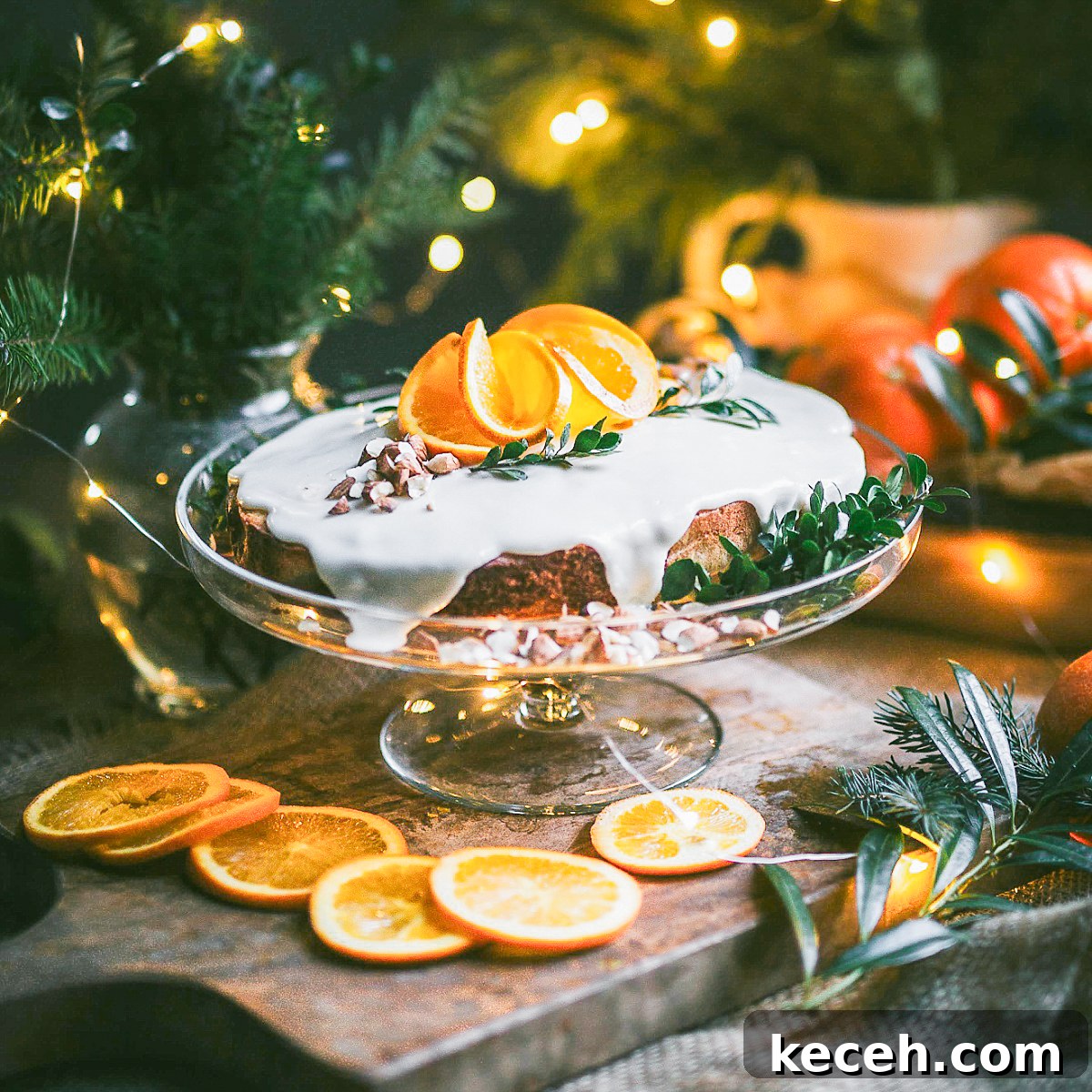
Welcome to The Storied Recipe Podcast, a podcast about food, culture, and love.
This Vasilopita (Greek New Year’s cake) recipe is from podcast guest Eleni Vonissakou. Listen to her episode while you make the cake for context and stories that accompany the recipe.
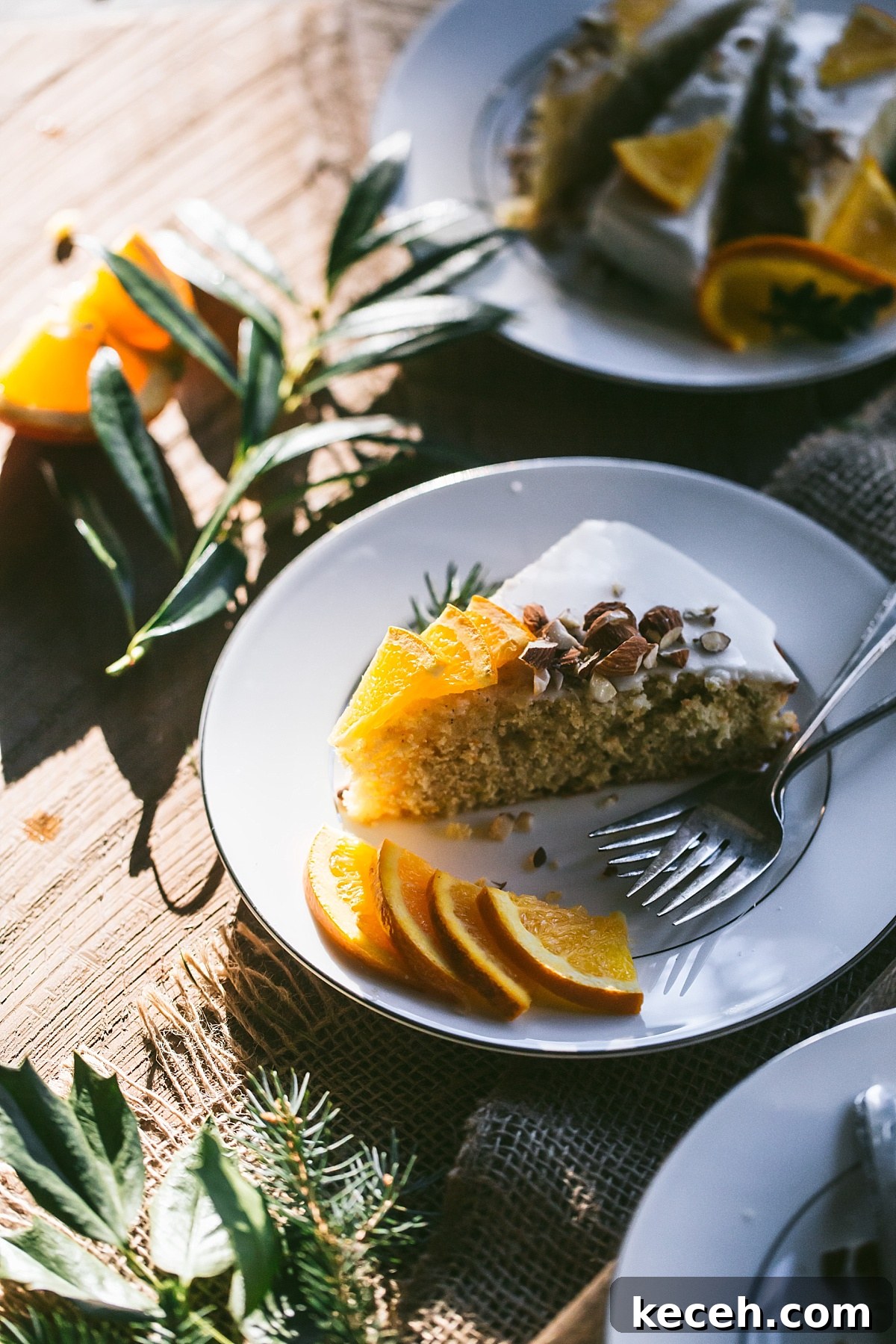
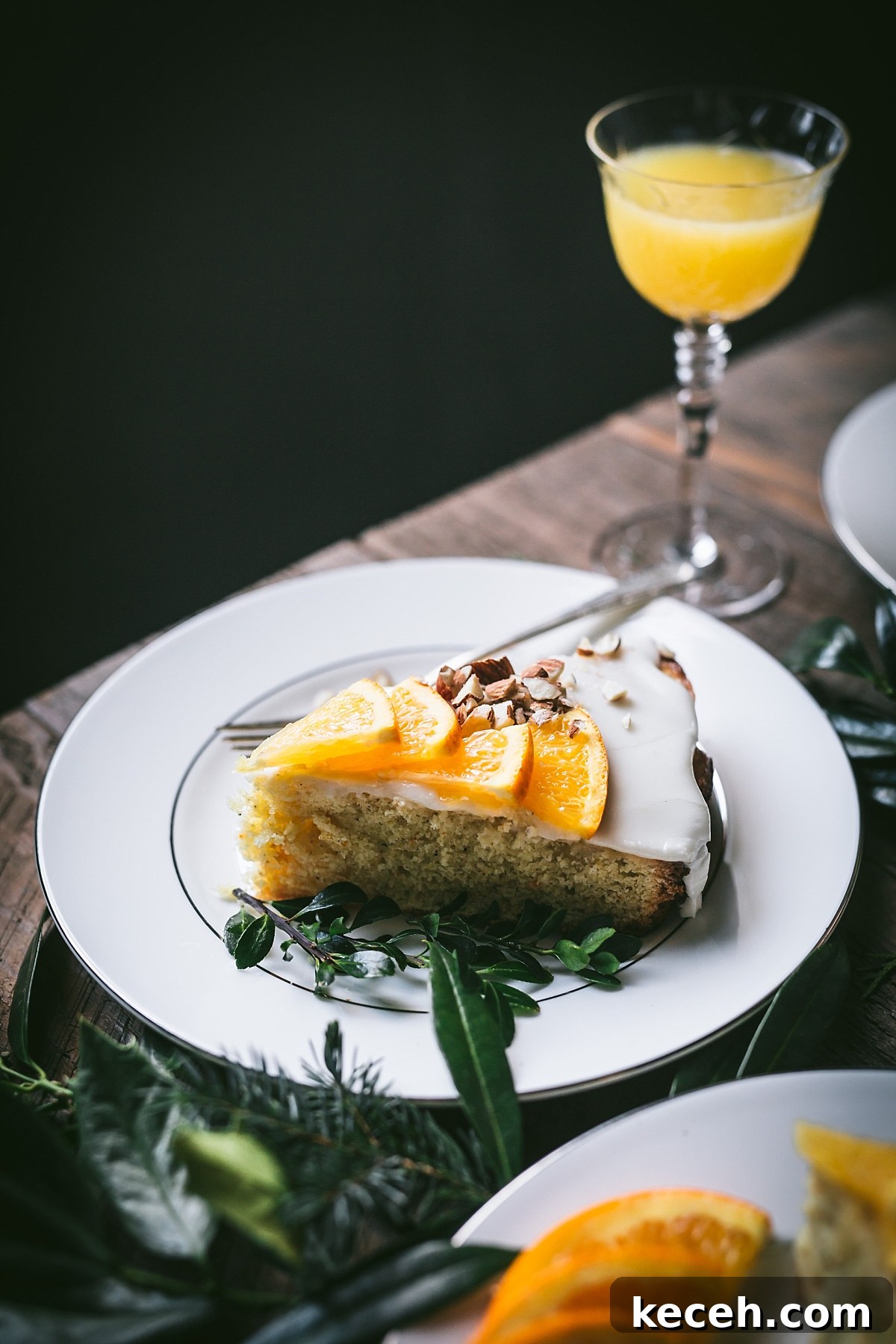
Eleni is the author of The Greek Slow Cooker Cookbook. In Greece, it’s traditional to hide a coin inside a Vasilopita for New Year’s; whoever finds the coin is said to receive good luck for the year. Beyond the tradition, this cake is delicious—firm and dense yet moist, bright with orange zest and warmed by cardamom and ginger. It was so good I nearly asked for it as my birthday cake.
True to Eleni’s cookbook, this cake can be made in a slow cooker. The slow cooker is a gentle, forgiving method that produces an even, tender texture. If you’re skeptical, try it once—you might be surprised by how well it turns out.
P.S. If you like citrus and almond cakes, you might also enjoy other recipes in the series such as Clifton House Tunisian Orange and Almond Flour Cake or Golden Sfouf (egg-free Lebanese turmeric cake).
Eleni’s Memories of Making Vasilopita

It may be true that Easter is the most important holiday for Greek people, but Christmas and New Year are celebrated in equally good spirits. For the winter holidays, it’s the sweets that take center stage, with Vasilopita being the star of the show.
– Eleni Vonissakou

Ingredients & Substitutions
- All-purpose flour — may be swapped for a one-for-one gluten-free flour.
- Blanched almond meal — almonds ground without skins, finer than almond meal with skins.
- Baking powder
- Powdered ginger
- Cardamom
- Butter — softened or at room temperature.
- Sugar — white sugar for a clean sweetness; brown sugar will add a caramel note.
- Eggs
- Orange zest
- Orange juice
Sugar Glaze
- Powdered (icing) sugar
- Lemon juice (or orange juice for a citrus-forward glaze)

Instructions
- Whisk together the dry ingredients: flour, blanched almond meal, baking powder, powdered ginger, cardamom, and salt.
- In a separate bowl or in a stand mixer, beat the softened butter and sugar until light and fluffy (about 8–10 minutes).
- Add the eggs one at a time, mixing well after each addition. Stir in the orange zest.
- Alternate adding the dry mixture and the orange juice: beat in one-third of the flour mixture, then half the orange juice; repeat until combined. Mix only until no flour streaks remain.
- Prepare the slow cooker: line the bottom with a parchment sling and spray lightly to prevent sticking.
- Transfer the batter to the slow cooker. Lay a paper towel or clean dish towel over the insert under the lid to absorb condensation—do not let it touch the batter—then secure the lid.
- Cook on high for 1½–2 hours, or until the top is set and a toothpick inserted in the center comes out clean or with a few dry crumbs.
- Allow the cake to cool a little, then lift it from the slow cooker using the parchment sling and transfer to a cake stand. Cool completely.
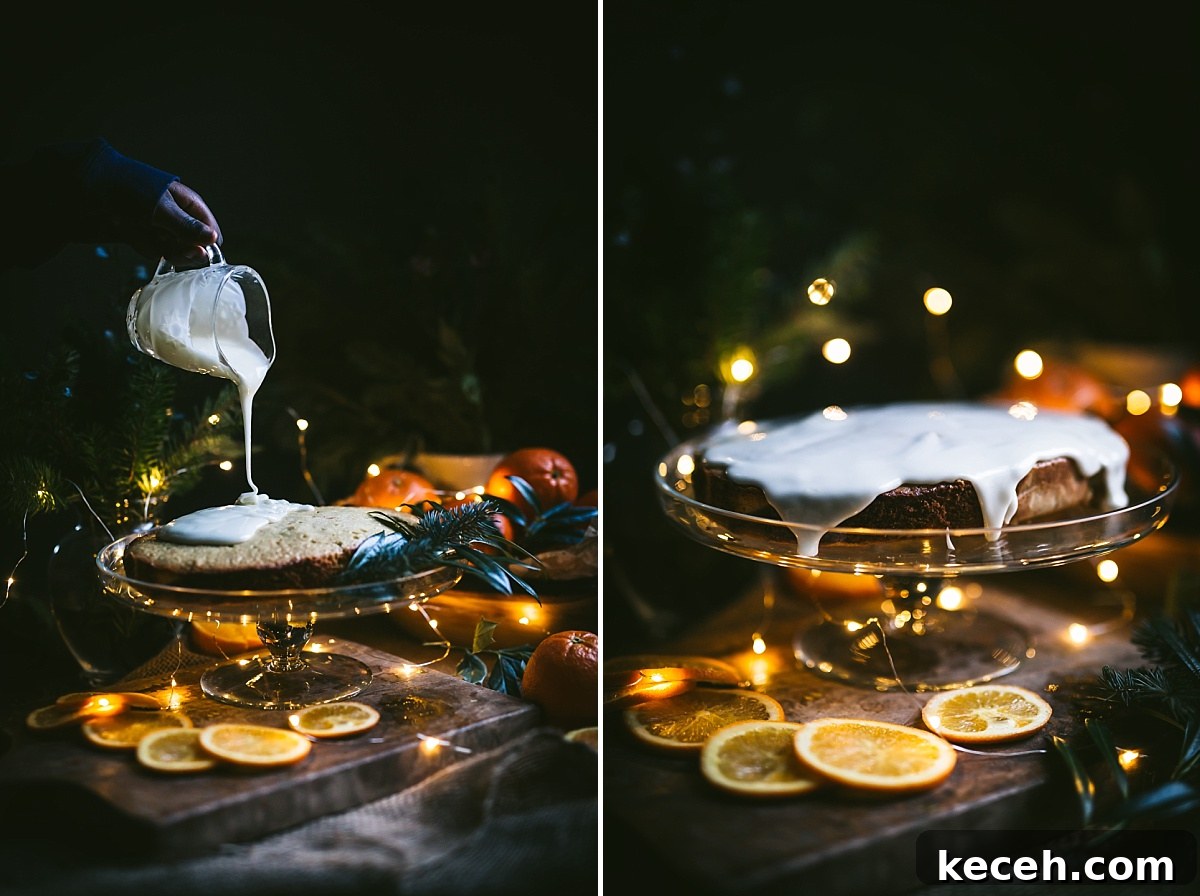
- Whisk powdered sugar with 2 tablespoons (about 30 ml) of orange juice; add more liquid a few drops at a time until the glaze is pourable but slow-moving.
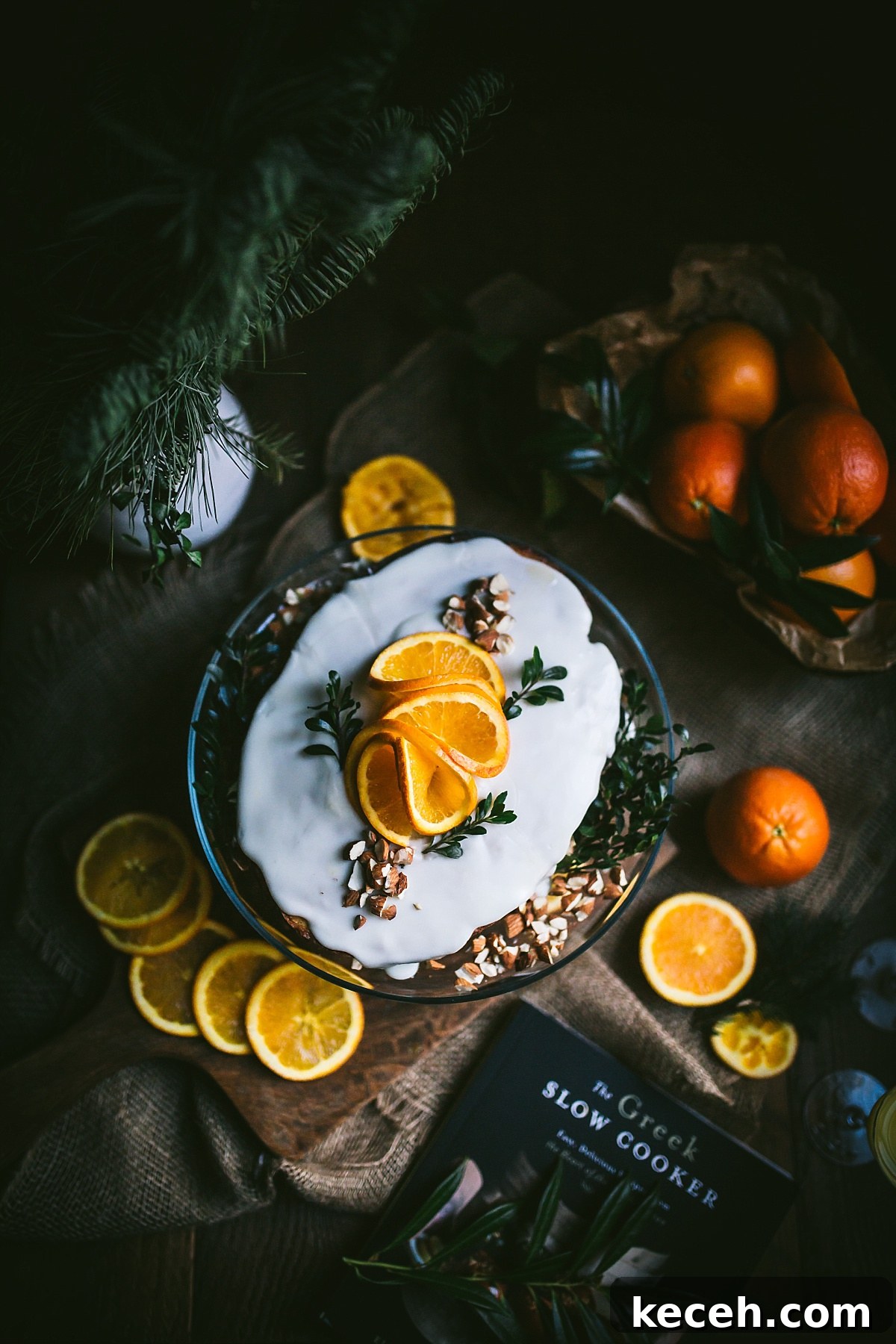
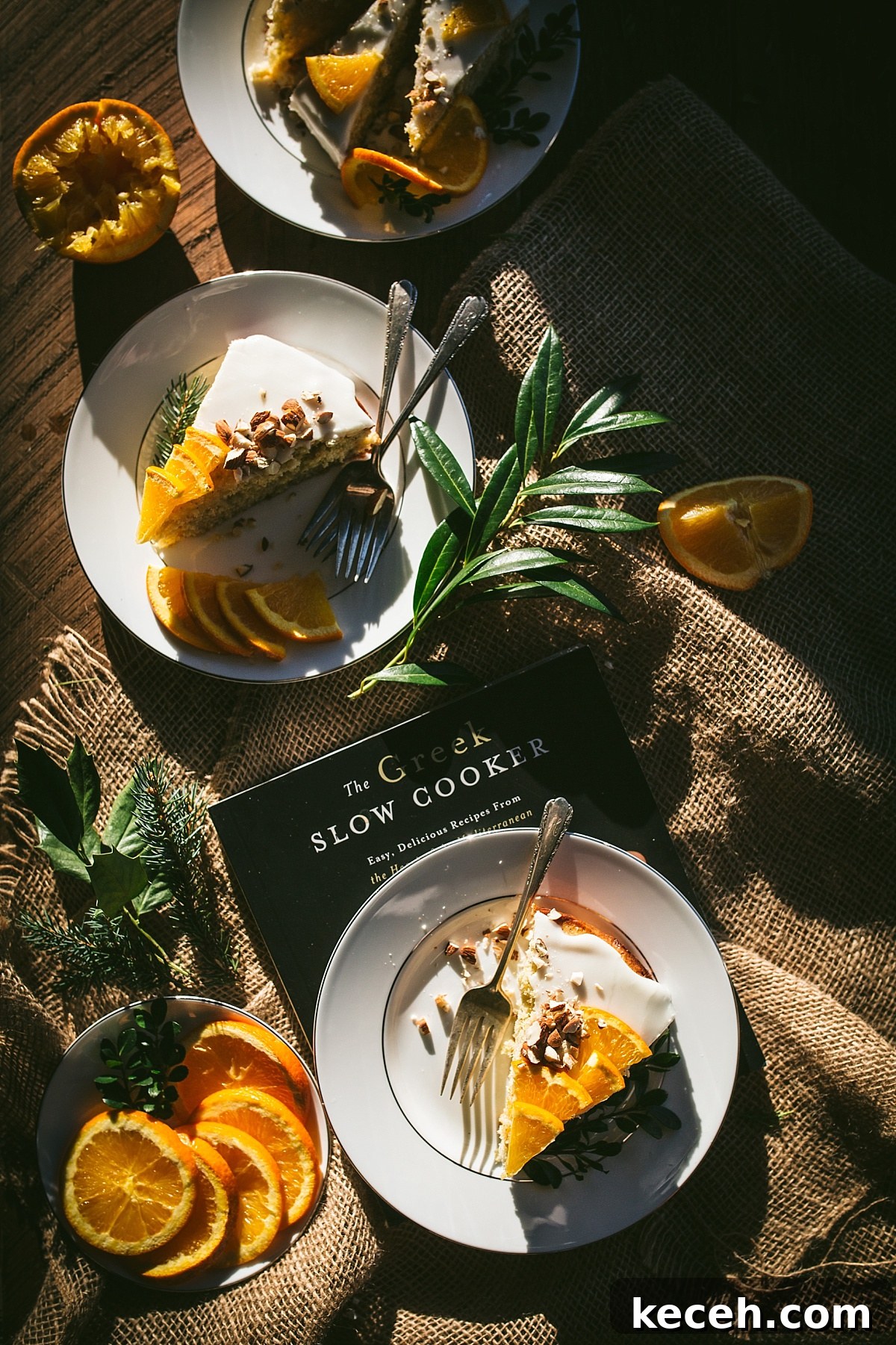
- Pour the glaze over the cooled cake and let it set. Finish with orange slices, almond pieces, or fresh herbs if desired.
A Traditional Greek Cake Celebrating Saint Basil
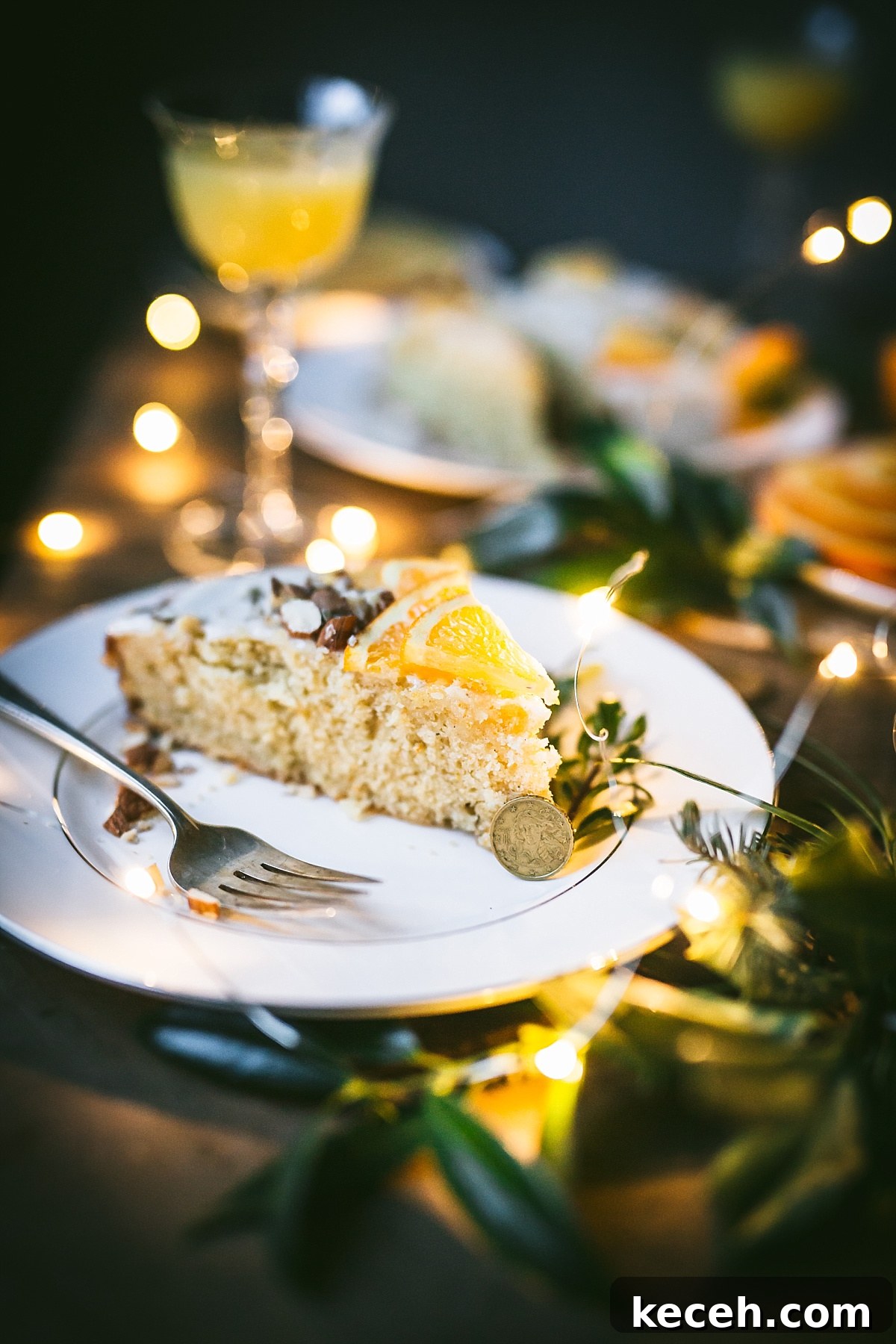
Vasilopita (from Vasilios = Basil and pita = cake or bread) is traditionally made on New Year’s Day to honor Saint Basil. A coin hidden inside the cake brings luck to the person who finds it. The custom recalls stories of St. Basil returning the community’s wealth fairly—one origin tale describes him hiding valuables in loaves to distribute them back to families after a siege.
Today families cut the cake—often making the sign of the cross—and distribute slices starting with the eldest. The ritual is part celebration, part blessing, and part fun, especially when someone discovers the lucky coin.
Vasilopita Tsoureki (Sweet Bread)
A more traditional version is Vasilopita tsoureki, a sweet braided bread that also hides coins. The head of household often cuts the bread three times in the sign of the cross for blessings and then serves slices from eldest to youngest. Both cake and bread versions celebrate the same tradition and the hope of a fortunate year.
Equipment
- Stand mixer (or handheld mixer)
- Crockpot or slow cooker with removable insert
- Large and medium mixing bowls
- Cake stand or serving plate
More Recipes
-
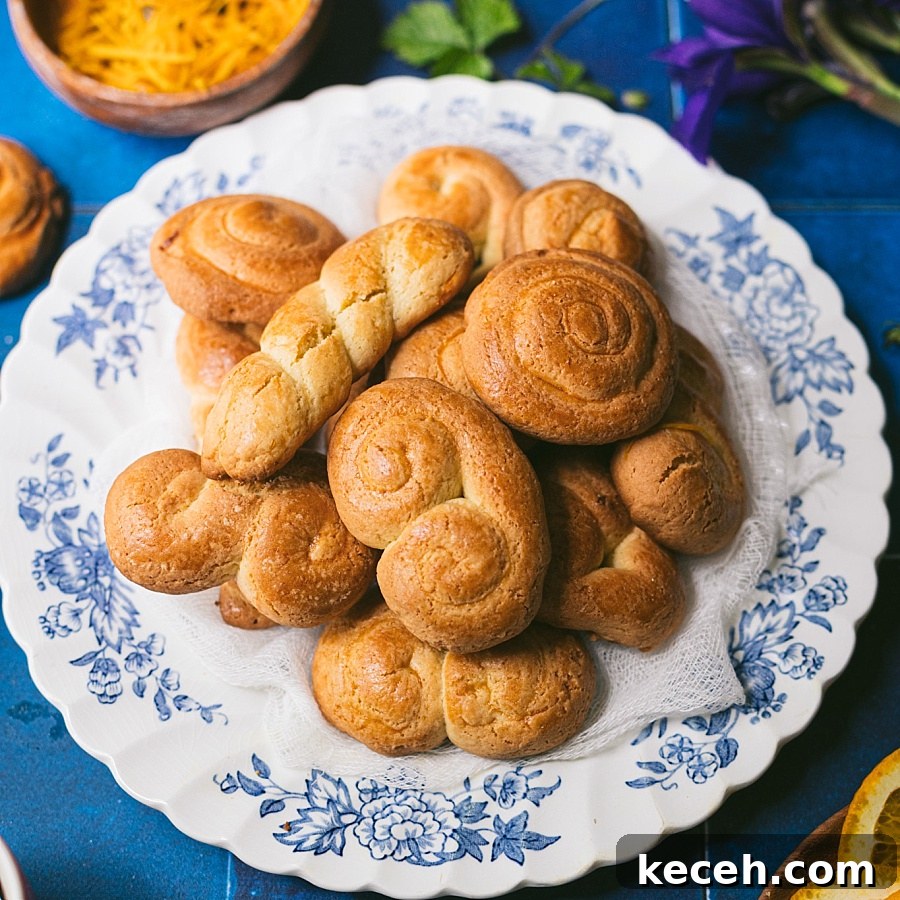
Koulourakia: Traditional Greek Orange and Butter Cookies
-
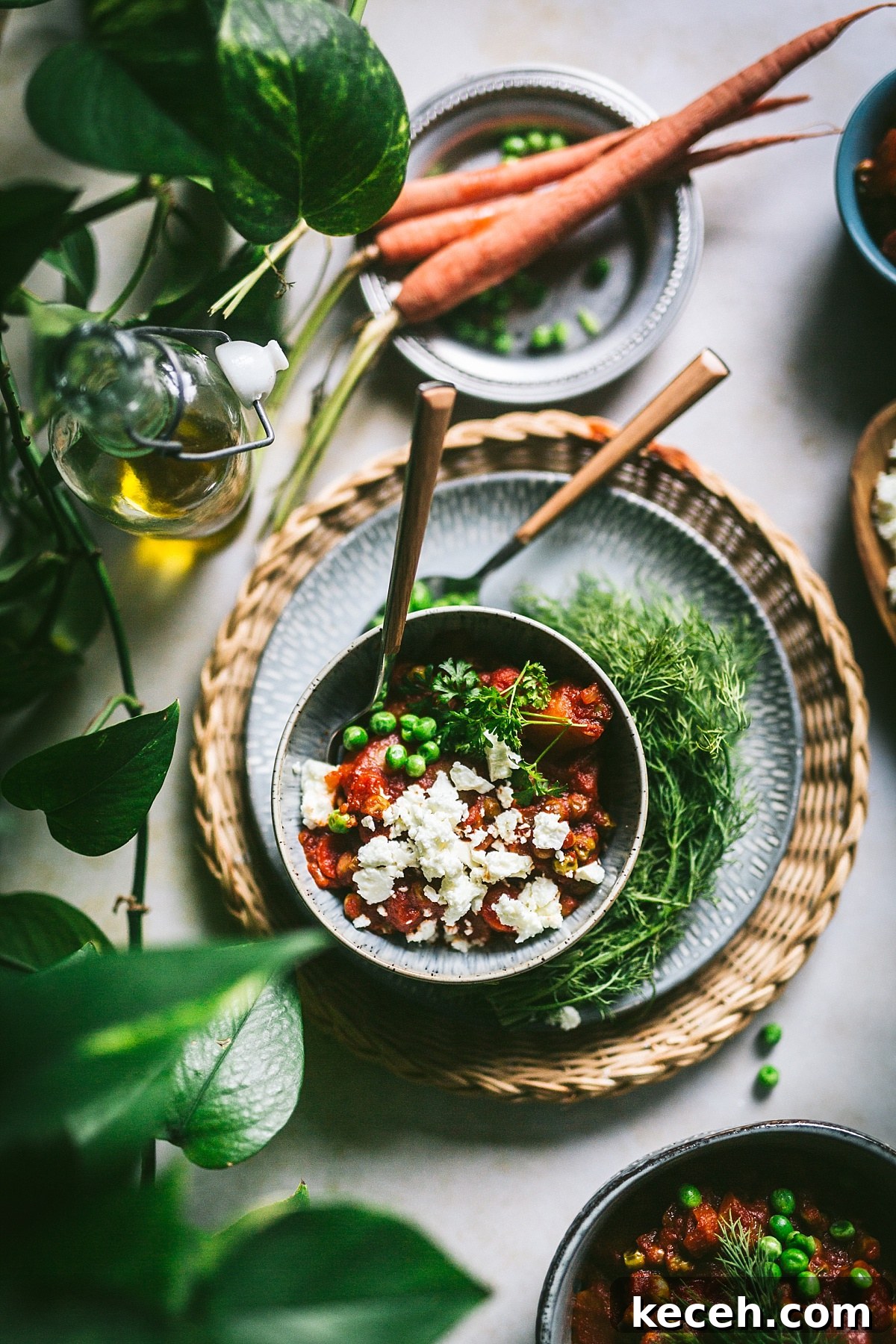
Greek Stewed Peas
-
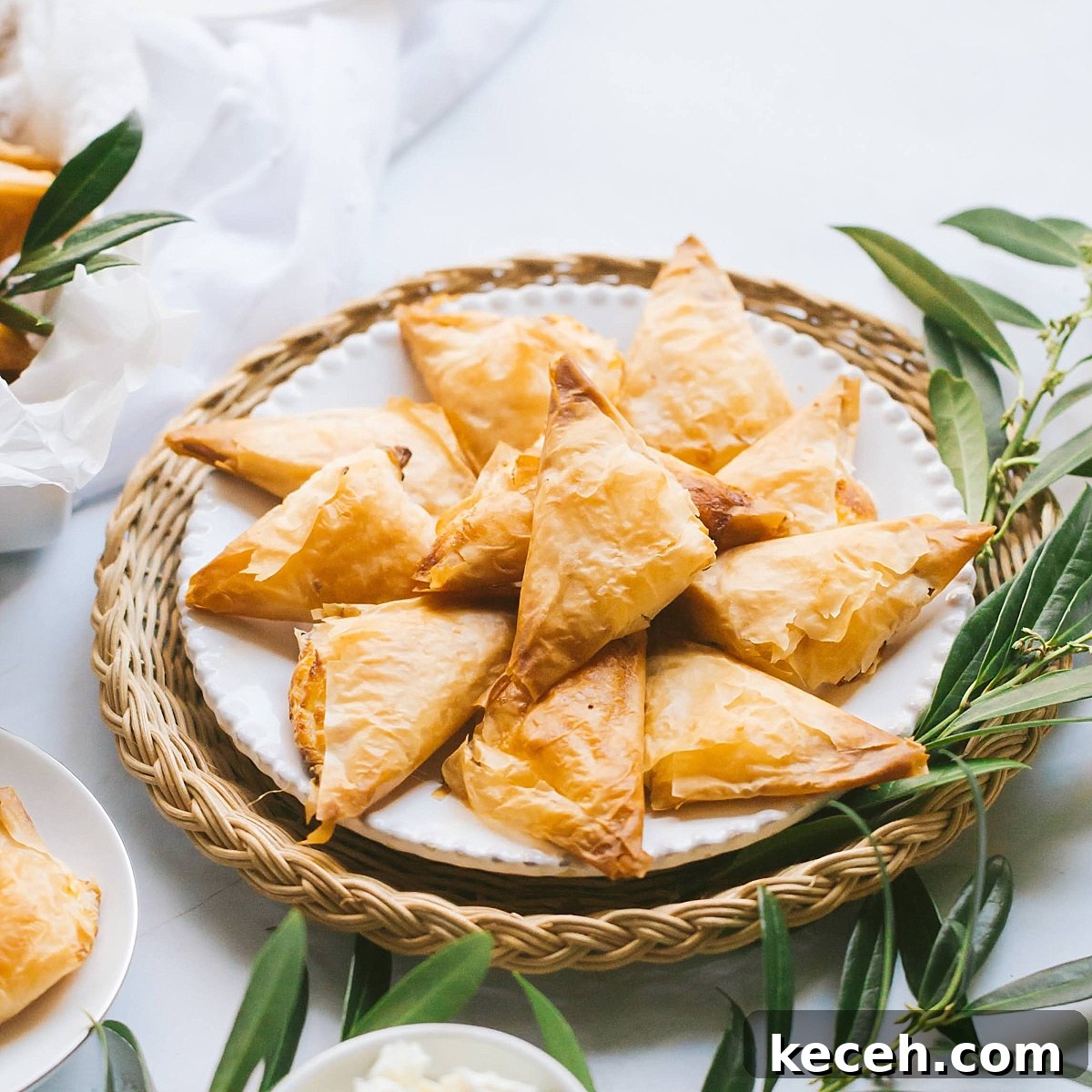
Tiropita: Easy Greek Cheese Pie Triangles
Recipe Summary
Total time: about 1 hour 50 minutes. Yield: about 8 servings. Prep time: 20 minutes. Cook time: 1 hour 30 minutes. Category: Christmas, Dessert. Cuisine: Greek, Mediterranean.
Description
Vasilopita is an orange-scented New Year’s cake traditionally served in Greek households with a hidden coin for good luck.
Notes
- For the classic round shape, use a slow cooker with a circular bottom or bake in a similarly sized round pan in the oven.
- If making in the slow cooker, use a parchment sling and cover the insert with a towel under the lid to catch condensation without touching the batter.