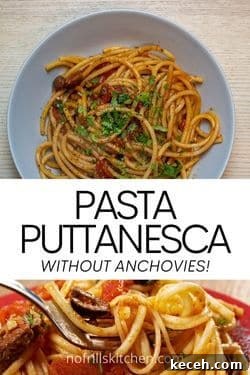
If you want a quick, flavorful pasta sauce that’s ready in the same time it takes to cook your pasta, this vegan puttanesca without anchovies is an excellent choice.
Originating in Campania, southern Italy, puttanesca is traditionally made with anchovies, garlic, capers and black olives in a tomato base. This version swaps anchovies for miso paste, delivering the same salty, umami depth while keeping the dish entirely plant-based.
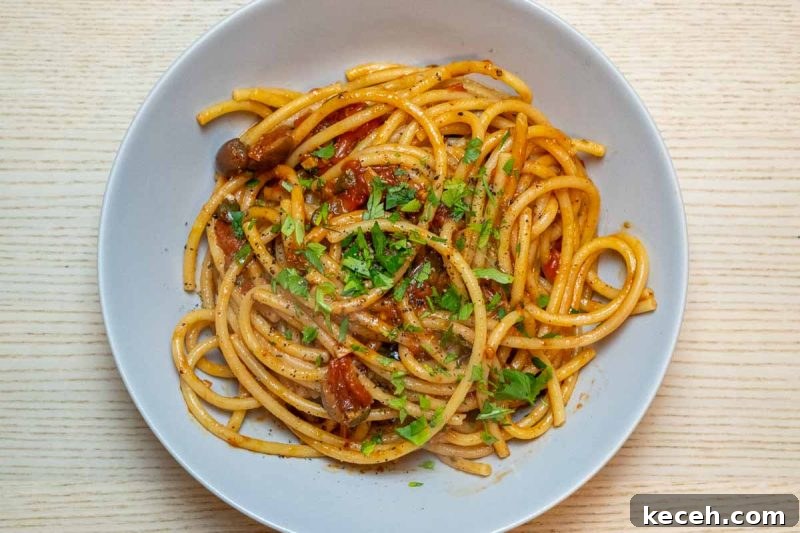
How to Make Puttanesca Sauce Without Anchovies
This sauce comes together very quickly, so it helps to have your ingredients prepped before you start. Preparation is minimal and should take about five minutes.
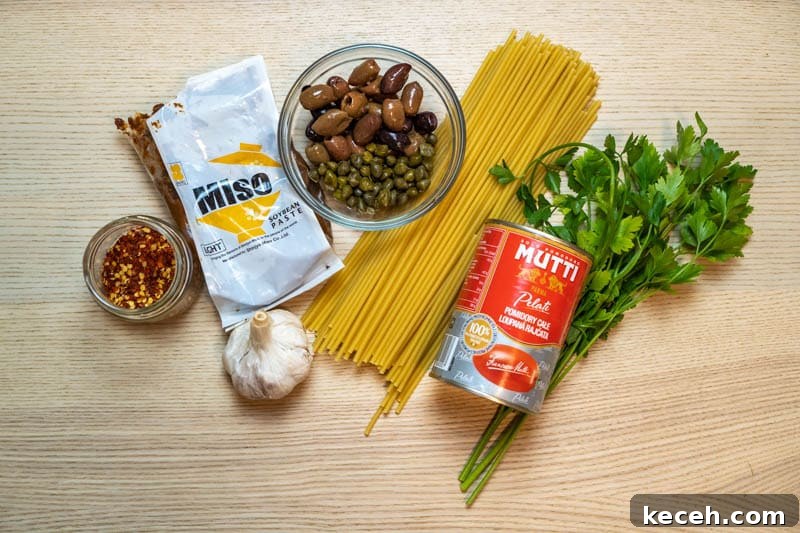
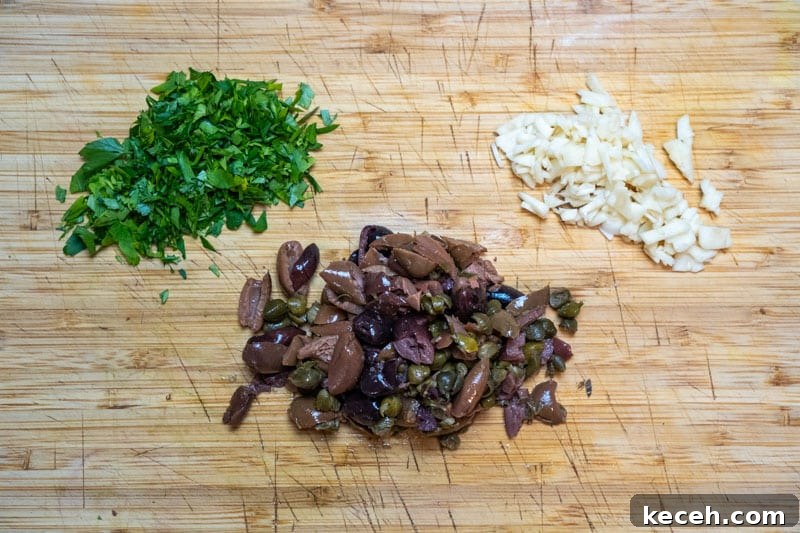
Roughly chop 6–8 garlic cloves rather than grating or pressing them — larger pieces brown more slowly and are less likely to burn. Rinse 3 tablespoons of capers to remove excess brine, then roughly chop them. Chop about 100 g (¾ cup) of pitted black olives; kalamata olives work especially well for their rich flavor.
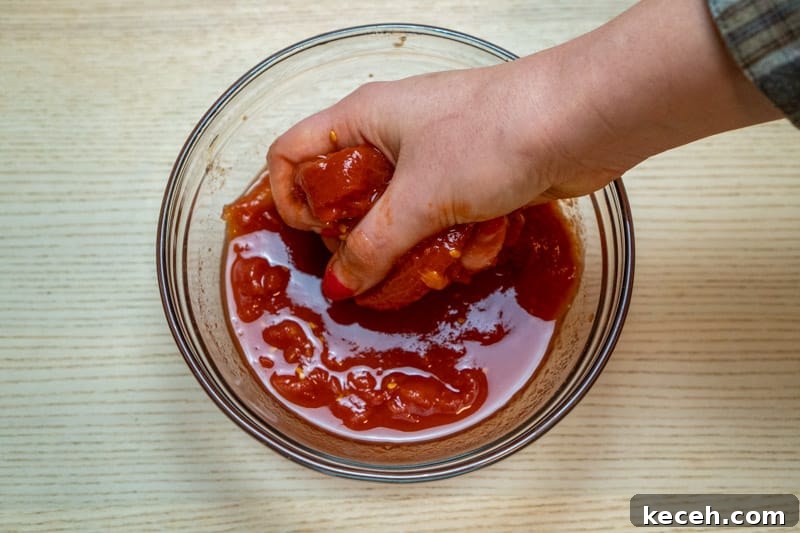
In a small bowl, crush two 400 g (14 oz) cans of whole peeled tomatoes by hand for a fresher texture than pre-crushed tomatoes. Finish your prep with 2 tablespoons of chopped flat-leaf parsley.
Bring a large pot of heavily salted water to a rolling boil and cook 500 g (1 lb) of spaghetti for about two minutes less than the package time, since the pasta will finish cooking in the sauce. Any pasta shape works — bucatini or rigatoni are great alternatives.
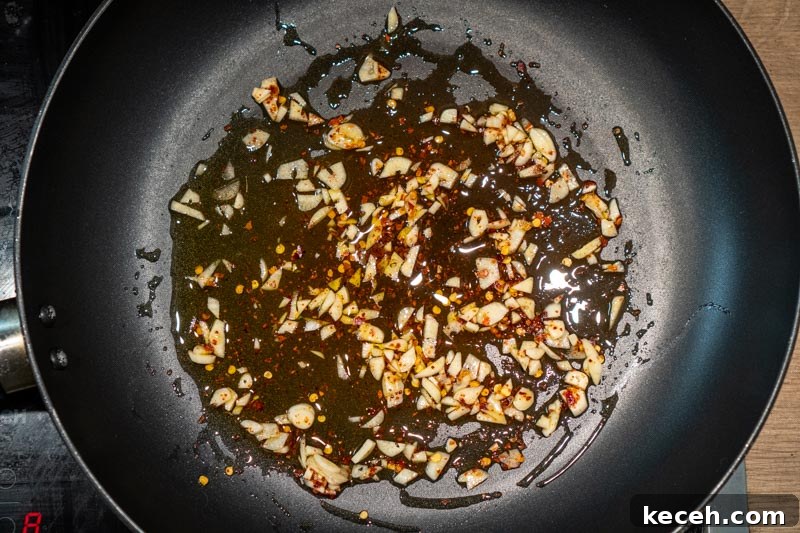
While the pasta cooks, heat 2 tablespoons (30 ml) of olive oil in a large skillet over medium heat. Add the chopped garlic and ½ teaspoon of chili flakes and cook until the garlic is lightly golden, about 3–4 minutes.
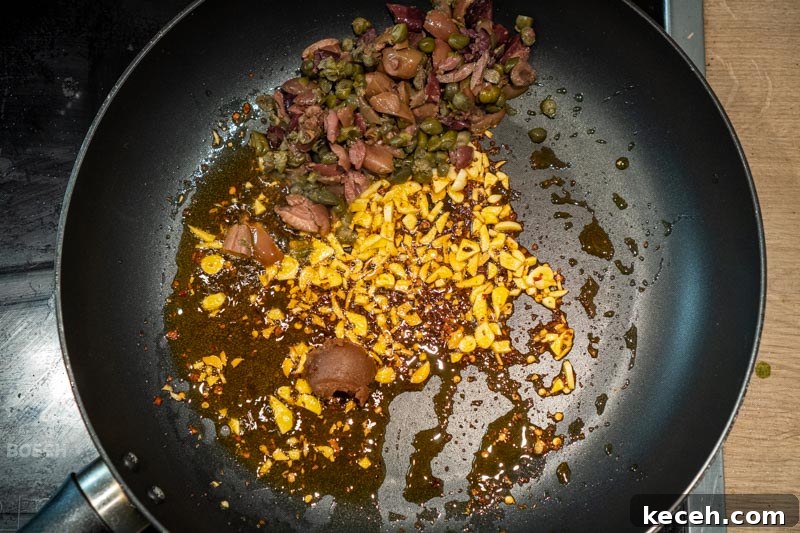
Add 2 teaspoons of white miso paste, the chopped olives and the rinsed capers. Miso replaces anchovies by providing funk, salt and umami; stir to begin dissolving the miso into the oil and aromatics.
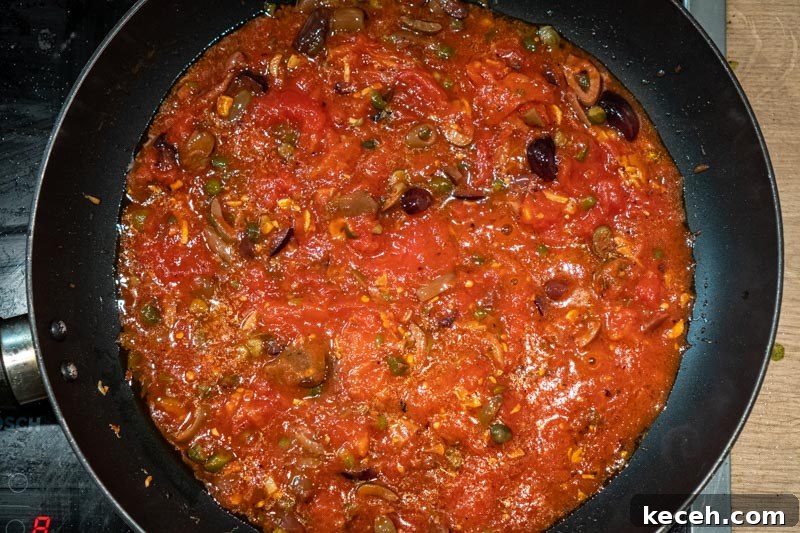
Pour in the hand-crushed tomatoes, stir well to dissolve any remaining miso, and bring the sauce to a gentle simmer. Let it cook just long enough to meld the flavors while the pasta finishes — puttanesca is meant to be relatively quick and bright.
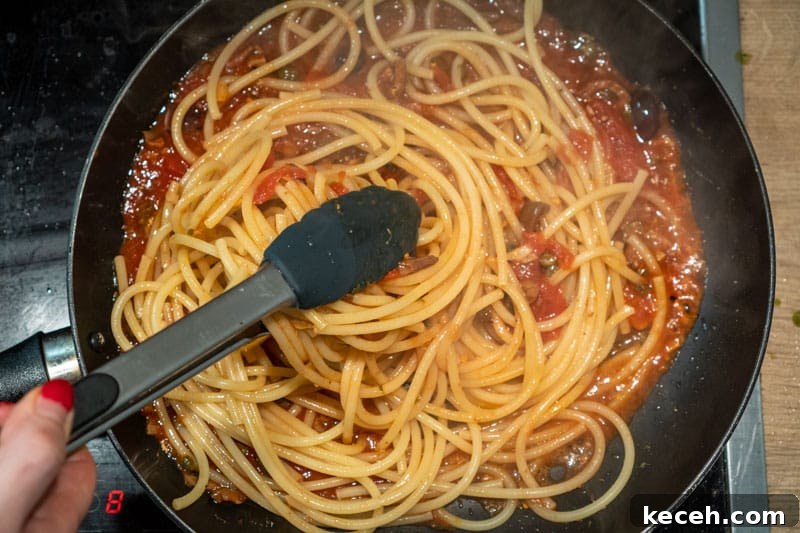
When the pasta is nearly done, transfer it with tongs straight from the pot into the skillet. Toss vigorously to coat the noodles and continue cooking and tossing until the pasta is al dente, about 2 more minutes. If the sauce seems tight, add a splash of the reserved pasta cooking water to loosen and help the sauce cling to the pasta.
Turn off the heat, stir in the chopped parsley, and season to taste with salt and freshly ground black pepper. Serve immediately while hot.
Vegan Puttanesca Without Anchovies
Traditionally made with briny anchovies, this vegan spin on a southern Italian favourite delivers the same bold flavors and comes together in under fifteen minutes.
Ingredients
- 500 g (1 lb) spaghetti
- 6–8 cloves garlic, roughly chopped
- ½ tsp chili flakes
- 2 tsp white miso paste
- 100 g (¾ cup) pitted black olives, roughly chopped
- 3 tbsp capers, rinsed and chopped
- 2 (400 g / 14 oz) cans whole peeled tomatoes, crushed by hand
- 2 tbsp flat-leaf parsley, chopped
- Olive oil for cooking
Instructions
- Bring a large pot of heavily salted water to a boil. Add pasta and cook 2 minutes less than package instructions.
- In a large skillet, heat 2 tbsp olive oil over medium heat. Add garlic and chili flakes and cook until garlic is golden, about 3–4 minutes.
- Add miso paste, olives and capers and cook 1–2 minutes, stirring to dissolve the miso.
- Stir in the crushed tomatoes and bring to a gentle simmer, ensuring the miso is fully incorporated.
- Transfer pasta to the skillet with tongs. Toss and cook until the pasta is al dente, about 2 minutes; loosen the sauce with reserved pasta water if needed.
- Turn off the heat, stir in parsley, season to taste with salt and pepper, and serve immediately.
Notes
- Spaghetti is traditional but bucatini or rigatoni also work well.
- Use high-quality black olives, such as kalamata, for the best flavor.
Nutrition
Approximate per serving: Calories 550 | Carbs 105 g | Protein 19 g | Fat 6 g | Sodium 975 mg
Making vegan puttanesca without anchovies is simple, and the result is every bit as flavorful and satisfying as the classic version.
If you try this recipe or have questions, leave a comment to share your experience.