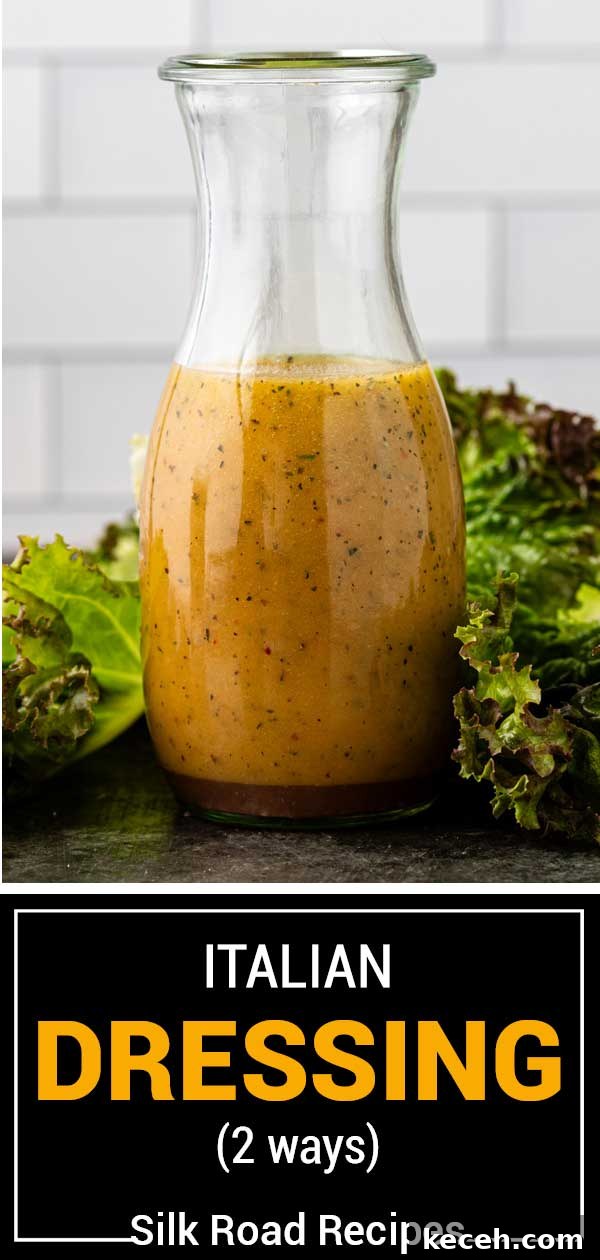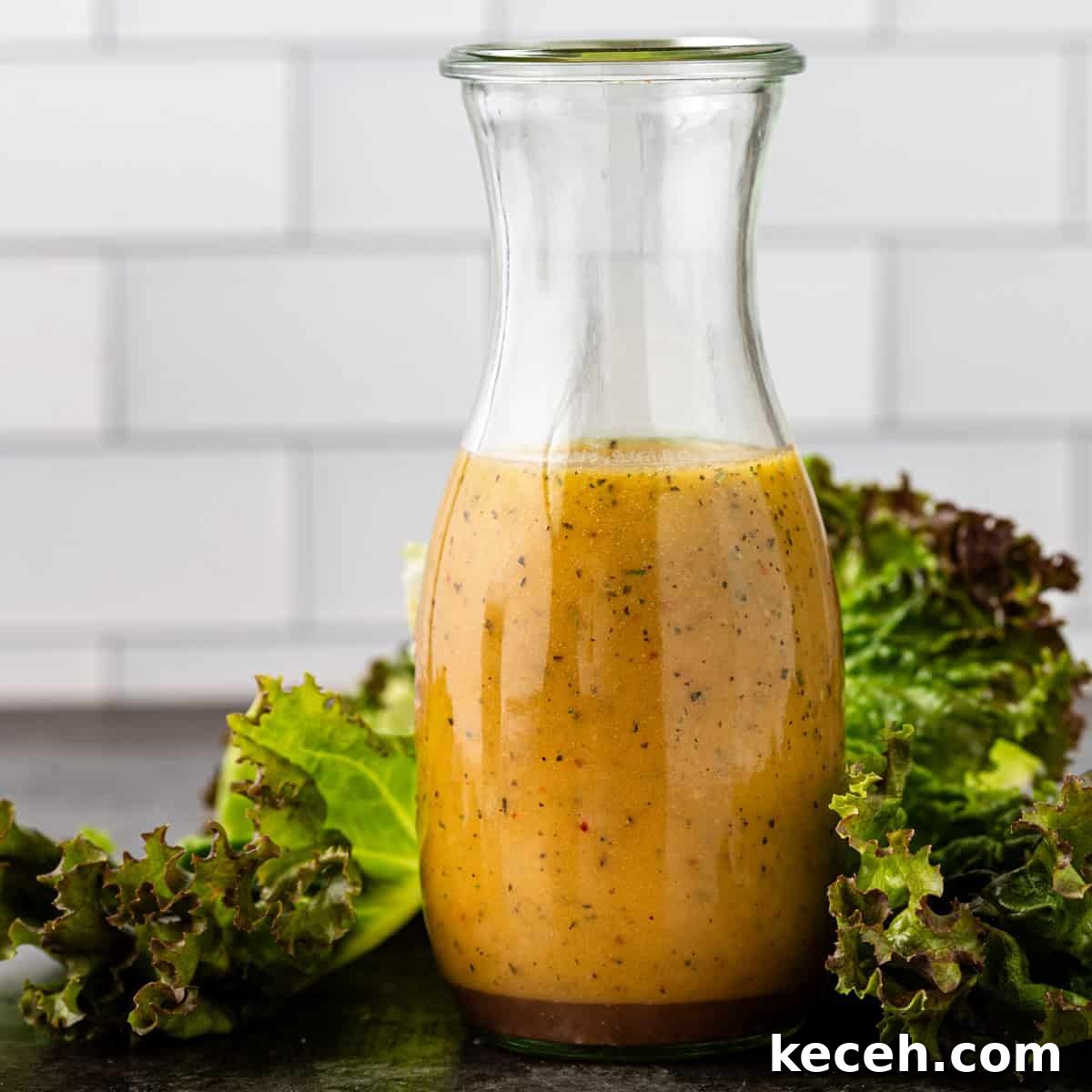
Want a quick and easy Italian salad dressing that’s better than store-bought? You’re in the right place. Ready in minutes, this Italian salad dressing is bright, tangy, and fresh. Use the basic recipe for a smooth vinaigrette, or add one simple ingredient to make it creamy.
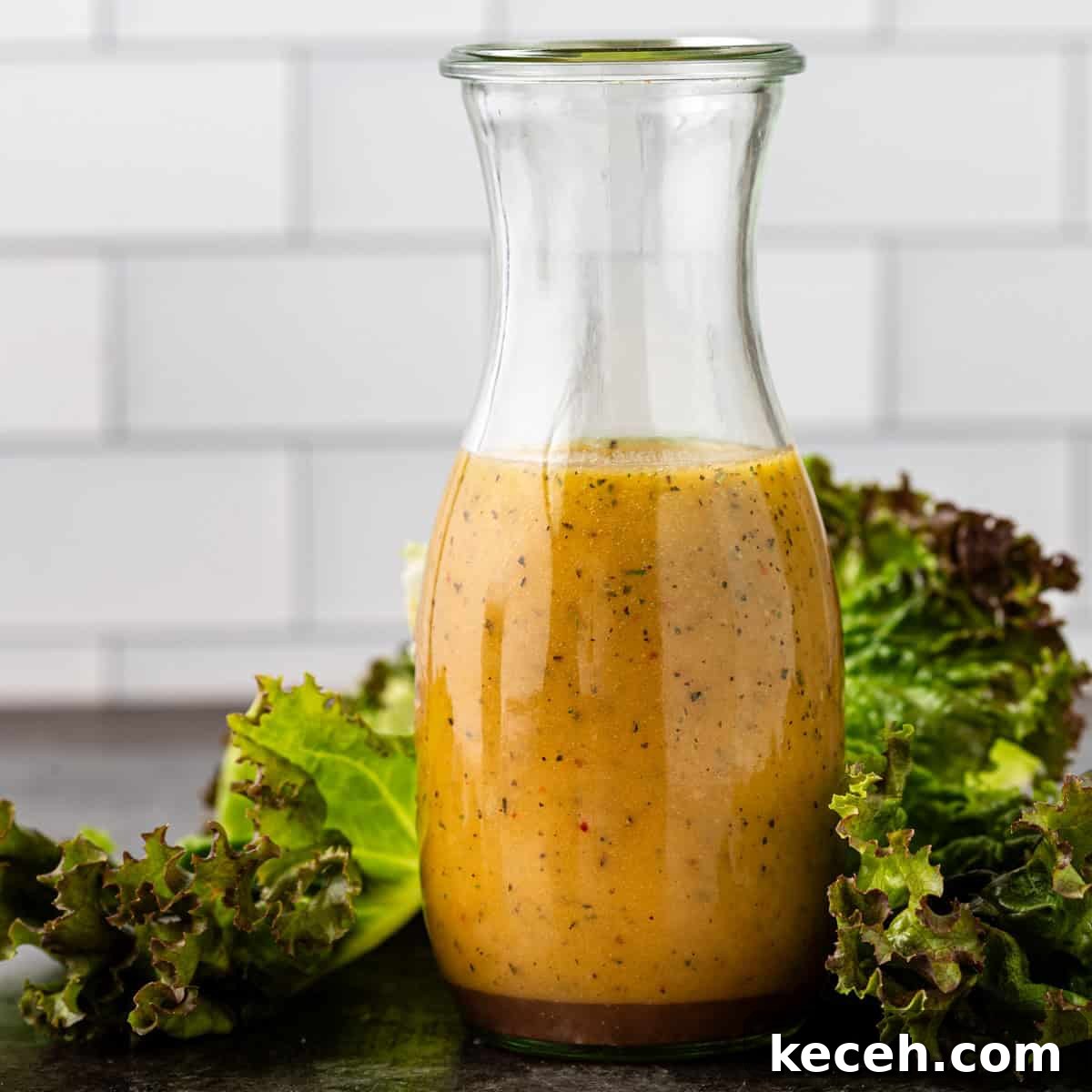
If you haven’t tried making condiments from scratch, it’s worth starting. Homemade dressings are usually cheaper and taste fresher because they don’t contain preservatives that can mute flavors.
Salad dressings are among the easiest condiments to make. Most recipes rely on a few pantry staples — olive oil, an acid, and an emulsifier — all of which keep well and are easy to store.
This Italian dressing uses simple ingredients you likely already have and works in many dishes (see the FAQs for ideas).
Table of Contents
- Plain or Creamy
- Ingredient Notes and Substitutions
- How to Make Italian Salad Dressing
- Recommended Tools
- Storing
- Frequently Asked Questions
- Italian Salad Dressing (2 Ways) Recipe
I find many bottled dressings too sweet or too salty. Making it at home lets you control seasoning and balance the acid and sweetness to your preference.
Tip From Kevin
Plain or Creamy
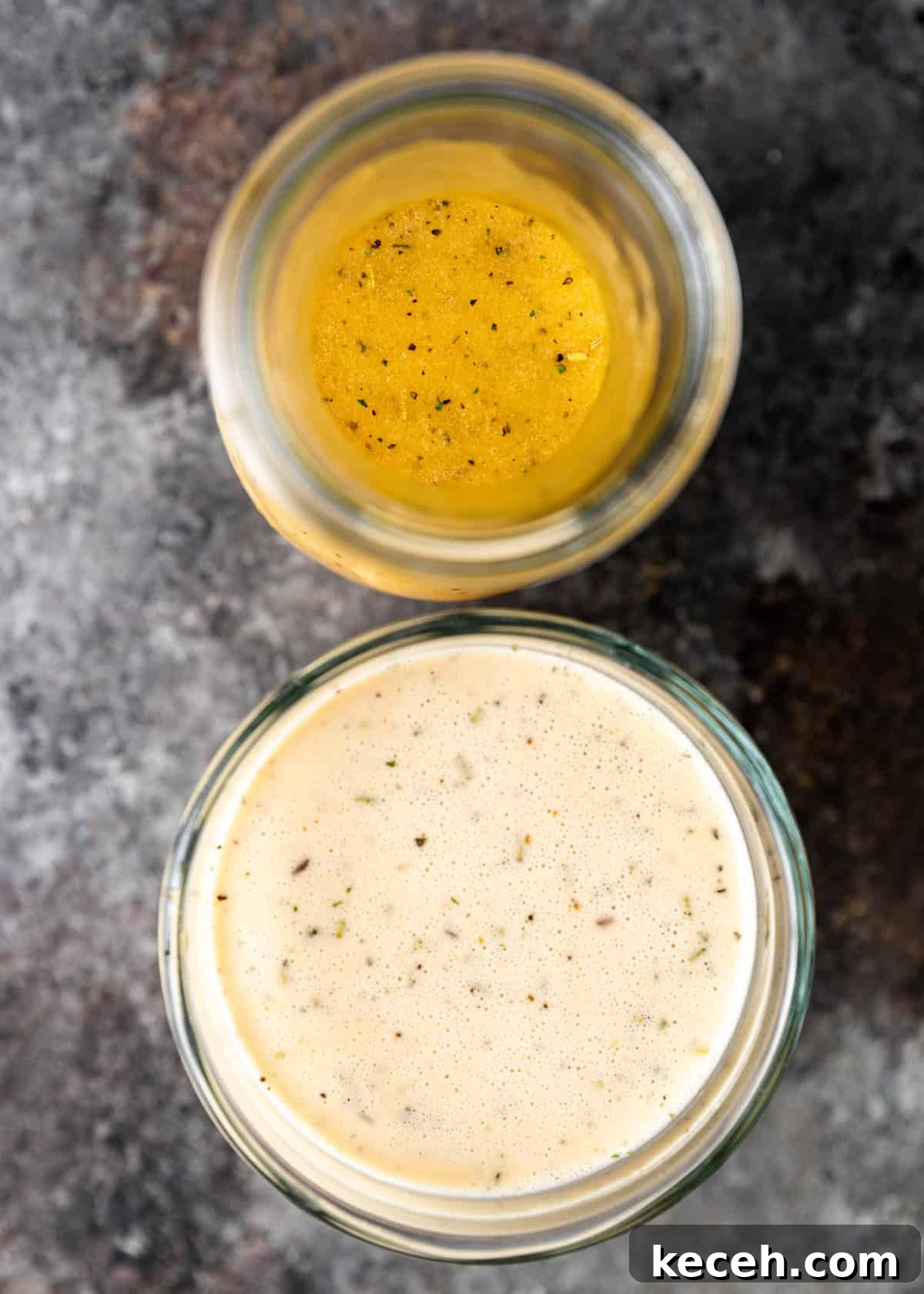
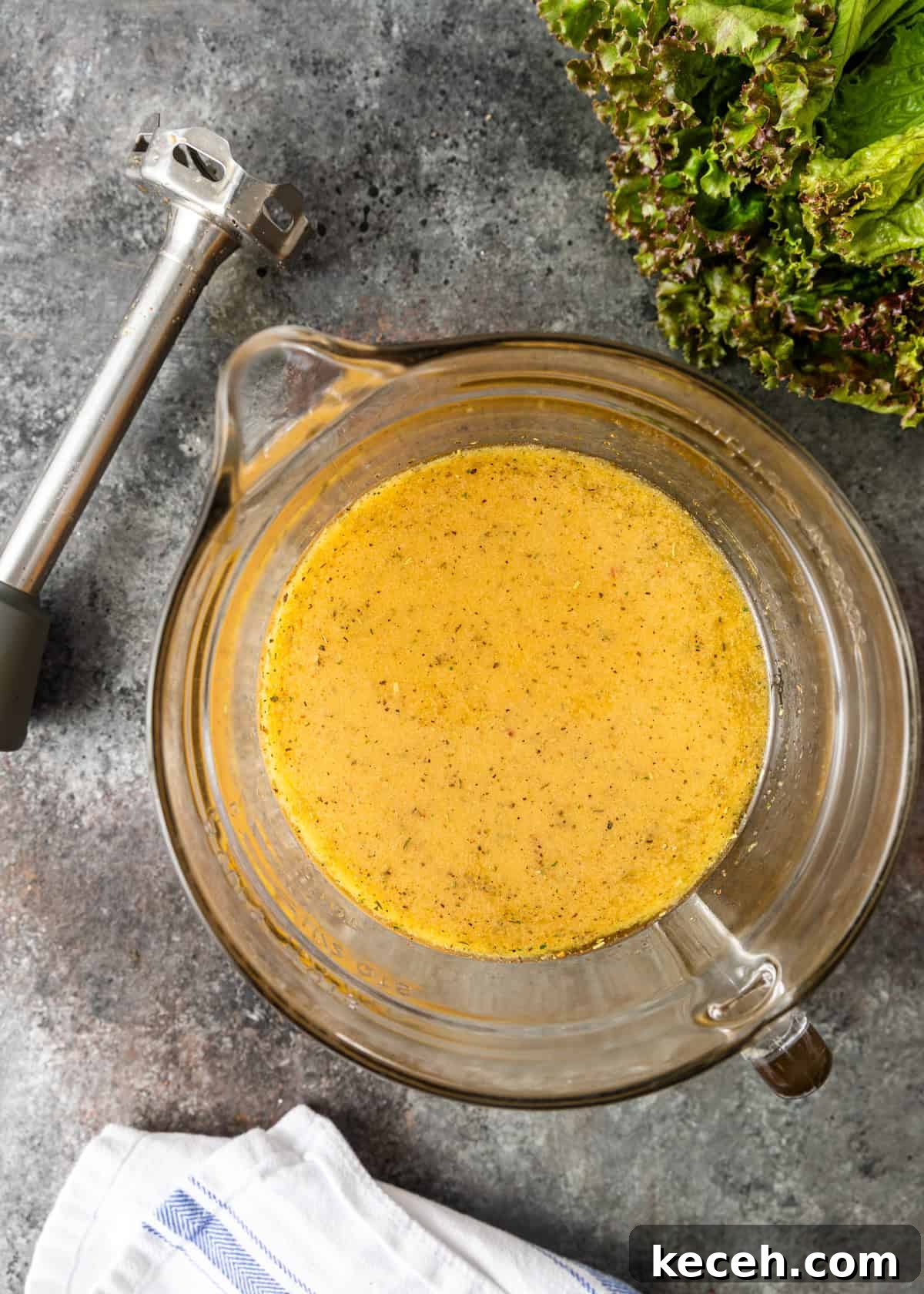
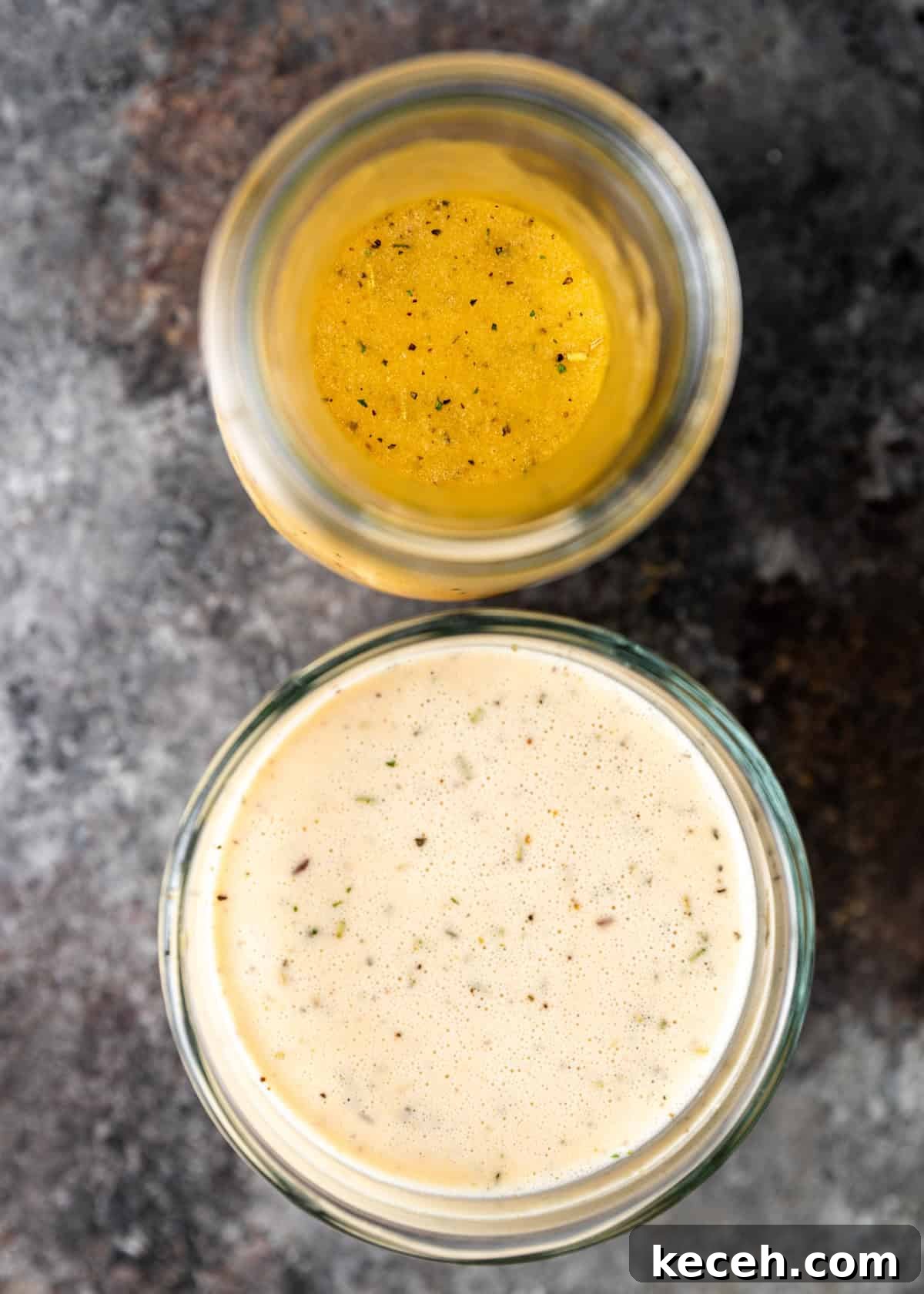
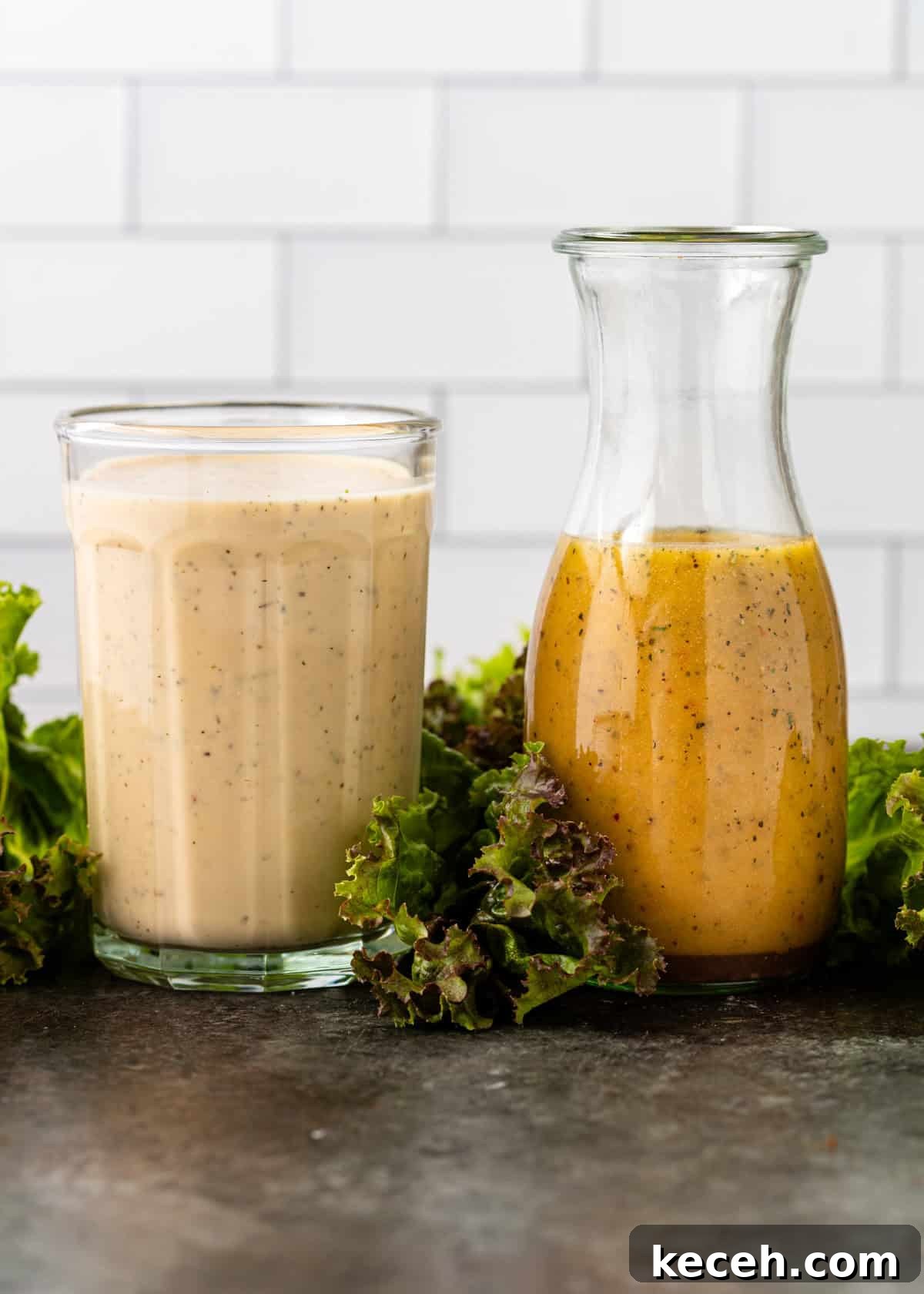
Traditional Italian dressing is a vinaigrette: oil and vinegar that remain separated unless shaken. Adding an emulsifier — like Dijon mustard or a small amount of yogurt or mayonnaise — turns the dressing into a stable, creamy emulsion with an even texture.
Ingredient Notes and Substitutions
(Check the recipe card below for exact quantities)
- Extra Virgin Olive Oil – Use good-quality extra virgin olive oil; it’s the base of the dressing and impacts flavor.
- Red Wine Vinegar – Red wine vinegar is classic; white wine vinegar works too.
- Fresh Lemon Juice – Freshly squeezed lemon juice brightens the dressing. Strain if you prefer no pulp. Add a little zest for extra citrus aroma.
- Garlic – Grate the garlic so the flavor disperses evenly without noticeable chunks.
- Dijon Mustard – Dijon acts as the emulsifier. Stone-ground mustard is an acceptable substitute.
- Italian Seasoning – If you don’t have a blend, mix at least three of: rosemary, parsley, marjoram, oregano, sage, or thyme.
- Red Pepper Flakes – A pinch (about 1/8 tsp) adds subtle heat; increase to taste if you prefer more spice.
- Salt & Sugar – Sugar balances acidity; honey can replace sugar if you prefer.
- Optional: Mayonnaise or Plain Greek Yogurt – Add to make a creamy Italian dressing.
How to Make Italian Salad Dressing
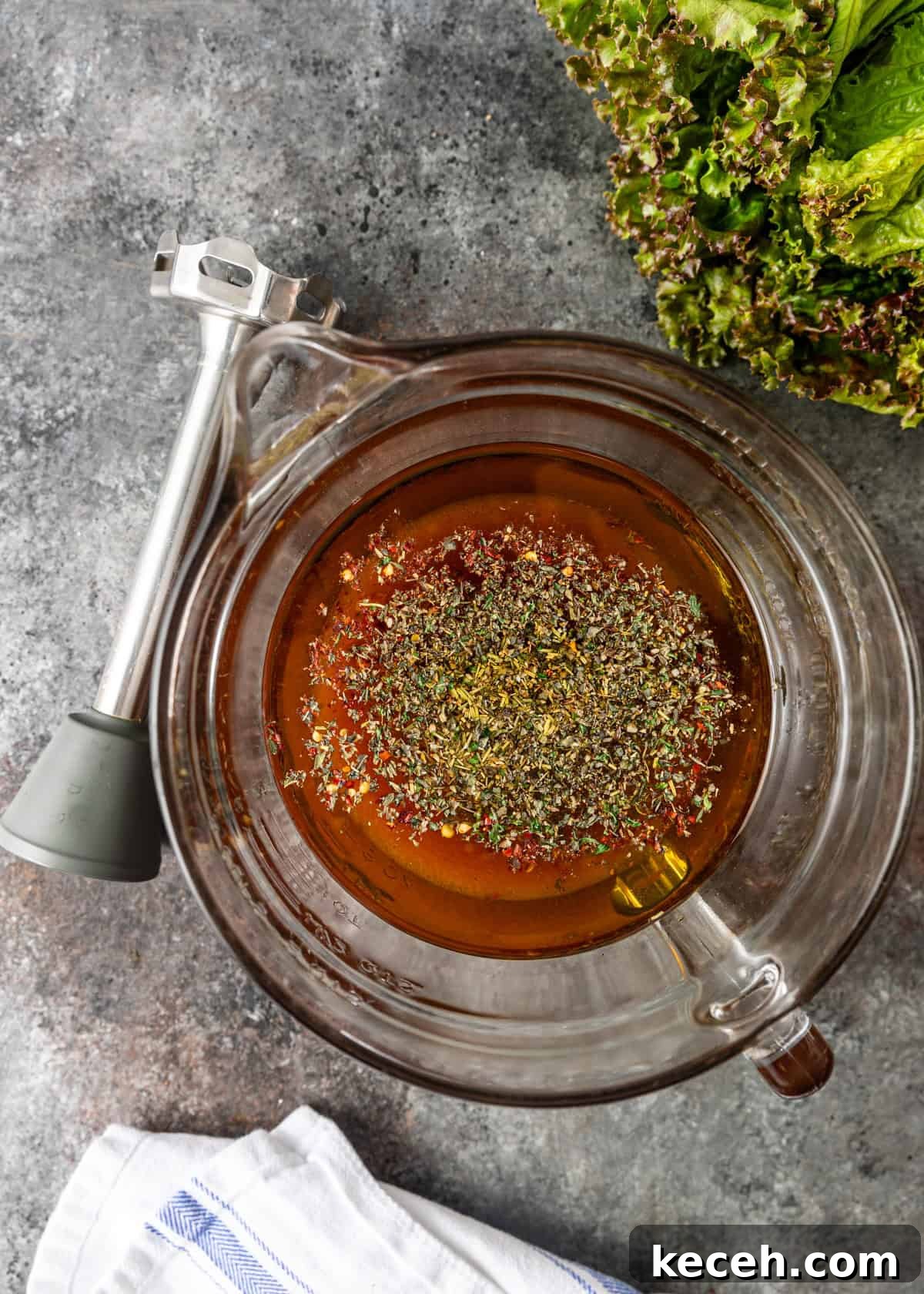
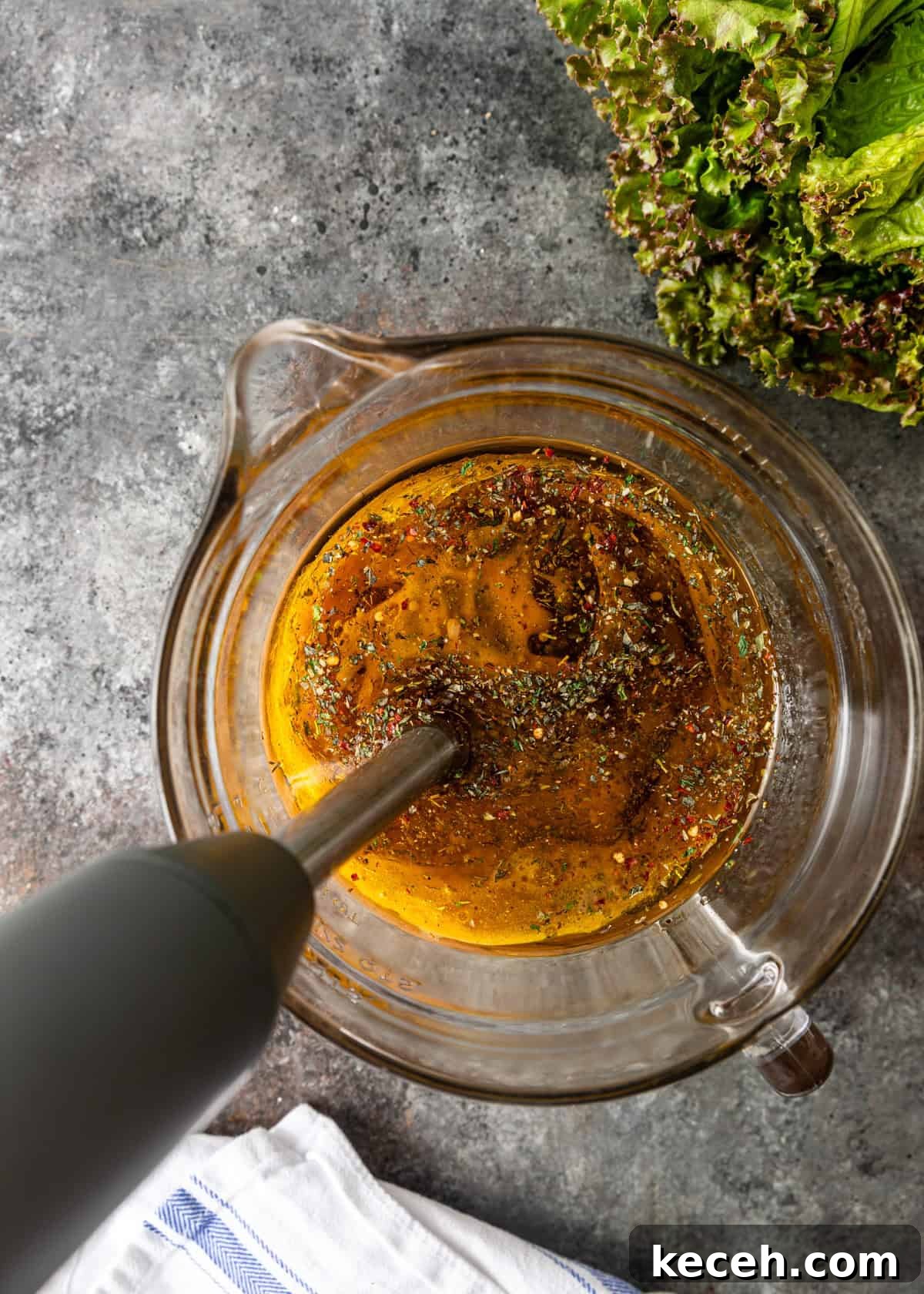
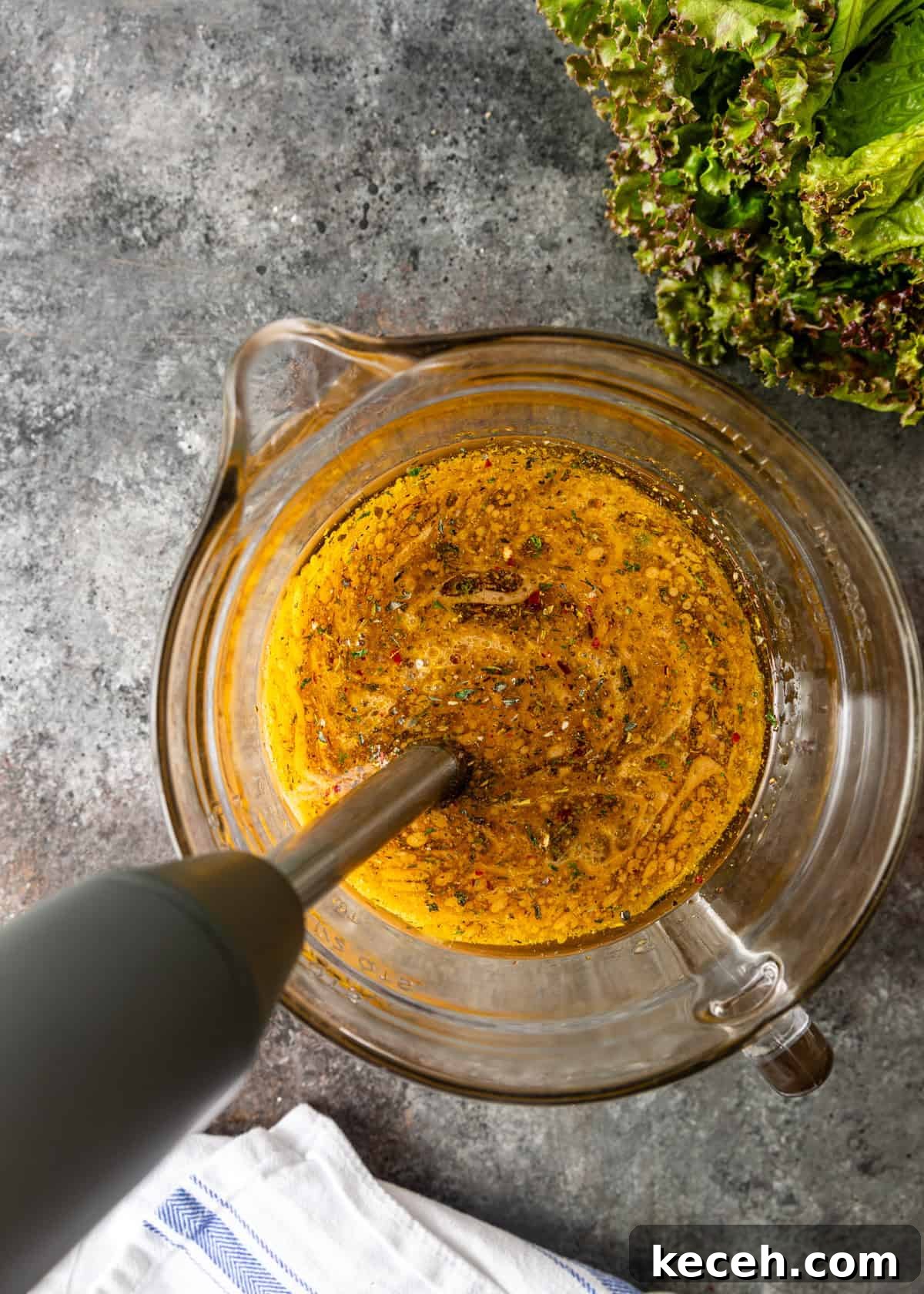
- Combine Ingredients. Add all ingredients to a bowl, measuring cup, or jar. Whisk vigorously or use an immersion blender to emulsify.
- Optional: Make It Creamy. For a creamy version, add 1/4 cup mayonnaise or plain Greek yogurt and blend until smooth.
- Season & Serve. Taste and adjust salt, sugar, or lemon. Serve immediately or chill for later.
Recommended Tools
- Grater – For finely grating garlic.
- Immersion Blender – A quick way to ensure a well-emulsified dressing; a whisk works fine too if you prefer.
Storing
Refrigerate the dressing for up to one week. Bring it to room temperature and shake or stir before using. Freezing is not recommended, especially for the creamy version, because emulsions can separate and lose texture after thawing.
Frequently Asked Questions
In Italy, dressings are often simple vinaigrettes of oil and red or white wine vinegar with just salt and pepper. Versions outside Italy frequently include additional flavorings like mustard and lemon for a more robust taste.
They share many ingredients, though Olive Garden’s version typically uses white wine vinegar and Parmesan and often includes mayonnaise, which makes it closer to the creamy style described here.
Beyond salads, this dressing is great on roasted or grilled vegetables, tossed with grains like couscous, lentils, or quinoa, or mixed into pasta salad. It can also be a flavorful dipping sauce for bread.
Italian Salad Dressing (2 Ways)
Ingredients
- 1 cup extra virgin olive oil
- 1/4 cup red wine vinegar
- 1/4 cup fresh lemon juice
- 2 cloves garlic, grated
- 1 tsp Dijon mustard
- 1 tsp Italian seasoning
- 1 tsp sugar (or honey)
- 1/2 tsp salt
- 1/8 tsp red pepper flakes
Instructions
- Place all ingredients in a measuring cup or bowl and whisk, or use an immersion blender to puree and emulsify.
- For a creamier version, add 1/4 cup mayonnaise or plain Greek yogurt and blend until smooth.
- Season with additional salt or sugar to taste. Use on salads, as a vegetable dressing, or as a dipping sauce for bread.
Nutrition
|
Carbohydrates: 1 g
|
Protein: 0.04 g
|
Fat: 9 g
The nutrition information is an estimate and should not replace professional advice.